

Filing an insurance claim for a 20-year-old roof can be complex, as coverage often depends on the roof’s age, condition, and the type of policy you hold. While some insurers may provide limited coverage based on the roof’s depreciated value, others might require inspections before approving claims.
Damage caused by covered events like storms or fires is typically eligible, but wear and tear, or neglect is not. To improve your chances of approval, maintain detailed records of inspections, repairs, and photos of the roof’s condition before and after damage.
Understanding Your Insurance Policy
Before an incident occurs, reviewing your homeowner’s insurance policy is crucial. Policies differ in coverage, and knowing the specifics of your plan can prevent surprises when it’s time to file a claim.
Coverage Types
Your insurance policy may cover different types of roof damage, depending on the cause and the policy terms. Common coverage types include:
- Storm Damage:Coverage typically applies to wind, hail, and heavy rain damage.
- Hail and Wind Damage: Many policies include protection for roofs damaged by hailstones or strong winds that cause shingle loss or structural issues.
- Falling Objects: If a tree or other debris damages your roof, your policy may cover repairs or replacement.
- Water Damage: Leaks resulting from storm damage may be covered, but pre-existing leaks or those caused by wear and tear often are not.
- Exclusions: Normal aging, poor maintenance, and certain natural disasters (like earthquakes or floods) may not be covered unless you have additional insurance.
Age Considerations
The age of your roof significantly affects the coverage you receive. For a newer roof, insurance companies are more likely to provide full replacement cost coverage.
| Roof Age | Typical Coverage Approach | Payout Structure |
| 0–10 Years | Full replacement cost coverage | Full reimbursement (minus deductible) |
| 11–20 Years | May be prorated or reduced | Partial payout based on depreciated value |
| 20+ Years | Highly scrutinized, often only ACV (Actual Cash Value) | Limited payout; possible denial or higher deductible |
How Roof Age Affects Insurance Coverage
However, if your roof is 20 years old or older, your insurer may only cover its depreciated value rather than the cost of a full replacement. This means you may receive a smaller payout, which may not be enough to fully repair or replace your roof. Some insurers may even require higher deductibles or deny coverage for older roofs.
Deductible and Limits
Your insurance policy will have a deductible—the amount you must pay out of pocket before the insurance coverage kicks in. For example, if your deductible is $1,000 and your roof repair estimate is $6,000, your insurance will only cover the remaining $5,000. Understanding this cost is essential, as some policies have percentage-based deductibles for wind and hail damage, which can be significantly higher than fixed deductibles.
Also, policy limits dictate the maximum amount your insurance will pay for roof repairs or replacement. If the repair cost exceeds your policy limit, you will need to cover the difference.
Filing an Insurance Claim for a 20-Year-Old Roof
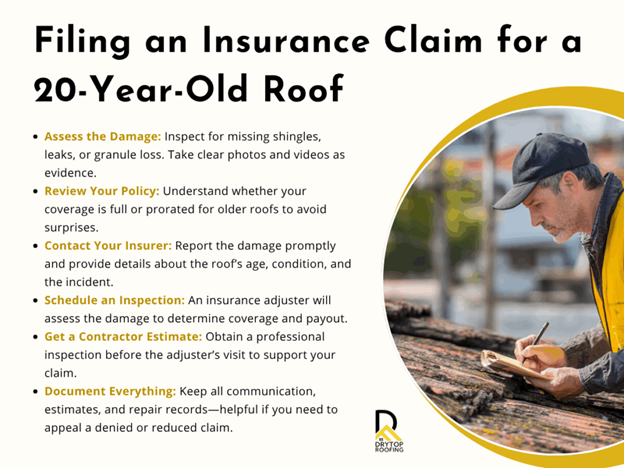
If your 20-year-old roof suffers damage from wind, hail, or another covered peril, filing an insurance claim is the first step toward getting it repaired or replaced. However, older roofs are more scrutinized by insurance companies, so having a clear strategy when filing can make all the difference.
- Assess the Damage – Before contacting your insurance company, inspect your roof for visible signs of damage, such as missing shingles, leaks, or granule loss. If the damage is severe, take photos and videos as proof.
- Review Your Policy – Some policies offer prorated coverage for older roofs, while others may only cover repairs instead of full replacements. Knowing your coverage details will prevent surprises later.
- Contact Your Insurance Provider – Notify your insurer as soon as possible and provide a detailed account of what happened. Be prepared to answer questions about the roof’s age, condition before the damage, and the specific incident that caused it.
- Schedule an Inspection – The insurance company will send an adjuster to evaluate the damage and determine if your claim qualifies under your policy. This step is crucial, as their findings will influence the payout.
- Hire a Roofing Contractor for an Estimate – Before the adjuster arrives, get a professional roofing inspection. A contractor’s estimate can help support your claim, especially if the insurance company underestimates the damage.
- Document Everything – Keep records of all communications, estimates, and any temporary repairs you make. If your claim is denied or the payout is lower than expected, detailed documentation can be useful in appealing the decision.
The Insurance Adjuster’s Role
Once you file a claim, the insurance company assigns an adjuster to assess the damage and determine the amount the insurer will pay. Their role is to inspect the roof, review your policy, and provide an estimate for repairs or replacement. However, their goal is to minimize the company’s payout, so it’s essential to be prepared.
| Stage | What the Adjuster Does | Why It Matters |
| Inspection | Assesses the roof for damage, wear, and cause | Determines whether the event is covered |
| Coverage Review | Compares findings with your policy terms | May lead to partial approval or denial |
| Cost Estimate | Uses industry standards to estimate repair/replacement | Influences the insurer’s payout offer |
| Final Decision Submission | Submits report to the insurer for claim resolution | Basis for initial payment or negotiation |
The Insurance Adjuster’s Role
- Inspection Process – The adjuster will examine the roof for covered damage. They may also check for signs of pre-existing wear and tear that could affect the claim.
- Determining Coverage – The adjuster will compare the damage to your policy’s terms. If your roof is 20 years old, coverage may be limited based on depreciation or exclusions.
- Estimating Repair Costs – Using industry guidelines, they will calculate the repair or replacement cost and submit their findings to the insurer.
- Final Decision – Once the adjuster completes their report, the insurance company will approve, deny, or adjust your claim. If the payout is lower than expected, you may negotiate or appeal with supporting evidence from a roofing professional.
Claim Process Timeline
Once you file an insurance claim, your provider follows a structured timeline to assess damages, approve repairs, and issue payments. While the timeline may vary depending on your insurance company and the complexity of the claim, the general process follows these stages:
Initial Response: Damage Assessment and First Payment
After you submit your claim, the insurance company assigns an adjuster to assess the damage. The adjuster will:
- Inspect the roof and surrounding structures.
- Determine the cause of damage and if it falls under your policy’s coverage.
- Estimate the cost of repairs or replacement.
Within a few weeks, you should receive an initial summary outlining your findings. If your claim is approved, the insurer will issue the first payment. This is usually a partial payment based on the adjuster’s estimate, minus any deductible and depreciation if applicable.
Repair Process: Scheduling and Compliance
Once you receive the first payment, you can schedule repairs with a contractor. Many insurance companies require homeowners to use an approved contractor to ensure compliance with their policies. During this stage:
- Choose a reputable roofing contractor who understands insurance claims.
- Ensure all work complies with local building codes and your insurer’s requirements.
- Keep documentation of all repair costs, including invoices and receipts.
Your insurance company may conduct inspections during this phase to verify that the repairs match the claim details.
Final Payment: Completing the Process
Once the repairs are finished, you must submit proof of completion, such as photos and contractor invoices, to your insurer. If your policy includes recoverable depreciation, you will receive the remaining balance after verification. This final payment ensures you are fully reimbursed for the approved repairs.
Potential Issues and Solutions
Despite following the claim process correctly, you may encounter obstacles such as claim denials or disputes over repair costs. Being prepared for these issues can help you respond effectively.
Claim Denial: Common Reasons and Solutions
Insurance companies may deny claims for several reasons, including:
| Problem | Solution |
| Low Payout | Submit a contractor’s detailed estimate for negotiation |
| Claim Denied | File an appeal with new documentation and expert opinion |
| Disagreement with Adjuster | Request a second inspection or hire a public adjuster |
| Slow Claim Processing | Follow up regularly and document all communications |
Solutions If Your Claim Is Denied or Underpaid
- Maintenance Issues: If your 20-year-old roof shows signs of neglect, such as missing shingles, rot, or prior damage, insurers may argue that the damage resulted from poor maintenance rather than a covered event.
- Policy Exclusions: Some policies have limitations on coverage for older roofs, especially if they are past their expected lifespan.
Solution: If your claim is denied, review your policy carefully. Gather evidence showing the damage was sudden and caused by a covered peril, not long-term wear and tear. A roofing professional’s report can help support your case.
Dispute Resolution: Negotiating Your Claim
If you receive a lower-than-expected payout or believe your claim was unfairly denied, you have options:
- Request a Second Inspection: If you disagree with the adjuster’s findings, you can request a re-evaluation.
- Hire a Public Adjuster: Unlike the insurance company’s adjuster, a public adjuster works on your behalf to assess damages and negotiate a fair payout.
- File an Appeal: Most insurance providers allow you to appeal a decision if you provide new evidence, such as contractor estimates or expert opinions.
Conclusion
Navigating the process of filing an insurance claim for a 20-year-old roof can be challenging, but being well-prepared is key. Since older roofs may face depreciation, knowing how your insurer calculates replacement costs is important. Documenting damage thoroughly with photos and videos can support your claim.
Consulting with your insurance provider early in the process can help clarify any specific requirements or limitations. By taking these steps, you can ensure a smoother claims process and protect your investment in your home. Remember, proactive management of your roof’s condition and insurance coverage can make a significant difference in securing the compensation you need.