
The best roofing material for Arizona is tile roofing because it can withstand extreme desert heat, resist sun damage, and remain durable for decades with minimal upkeep. Arizona homeowners face challenges that are unique compared to other parts of the country.
Scorching summers, monsoon storms, and significant temperature swings all put strain on a roof. Choosing the right material is not just a cosmetic decision; it impacts the comfort of a home, energy efficiency, and overall cost of ownership.
By weighing the pros and cons of each option, homeowners can make informed decisions that serve them well for years to come.
Arizona’s Extreme Weather and Its Impact on Roofs
Arizona’s climate is defined by high temperatures, rapid cooling at night, intense sun exposure, and heavy monsoon storms. These conditions cause roofing materials to expand, contract, and weaken over time.
Ultraviolet radiation also degrades many materials, leaving them brittle and discolored. The ideal roof in Arizona must therefore resist extreme heat, sudden temperature swings, and storm damage, while maintaining durability and energy efficiency.
Regional Differences and Unique Roofing Challenges
Not all parts of Arizona experience the same conditions. Southern cities like Phoenix, Tucson, and Yuma face relentless sunshine, dust storms, and heavy monsoon rains, making solar reflectivity and heat resistance essential.
In contrast, northern areas such as Flagstaff and Prescott deal with snow and freezing winter temperatures, requiring roofs that can handle snow loads. Dust and debris from desert winds further complicate roofing performance, especially on flat roofs where drainage can be blocked.
These variations mean homeowners must choose roofing solutions tailored to their specific region, focusing more on resilience than appearance.
Tile Roofing: A Timeless Arizona Choice
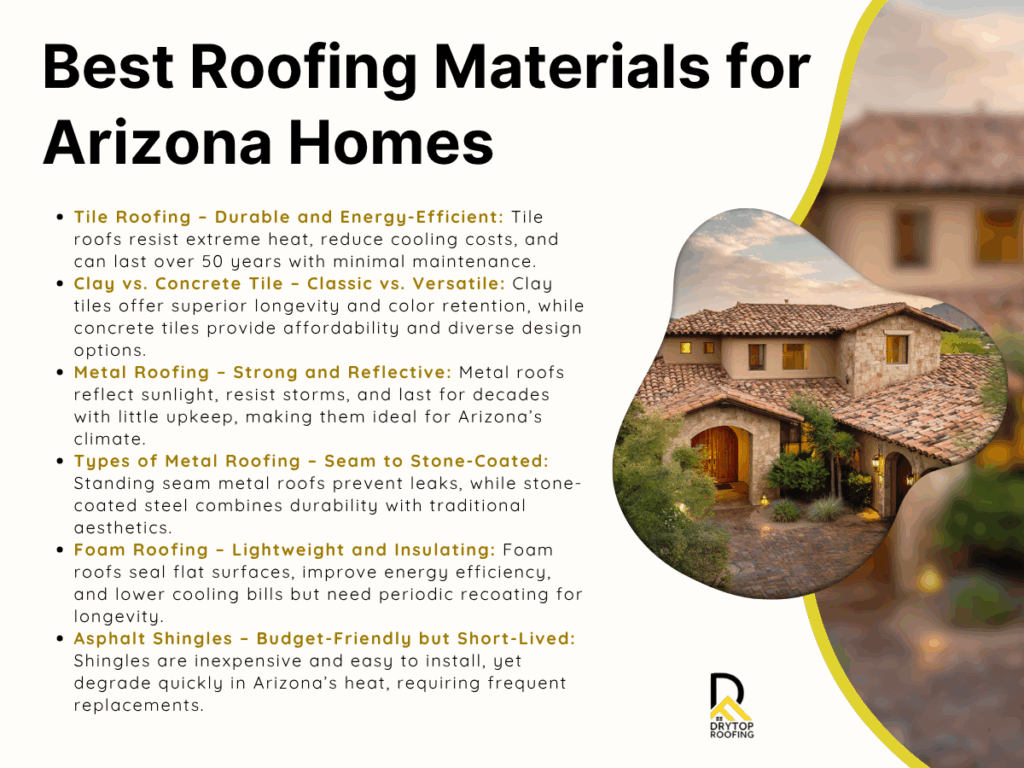
Tile roofs dominate many neighborhoods across Arizona. Both clay and concrete tiles are known for their ability to endure in hot, dry climates. They reflect sunlight, help maintain cooler indoor temperatures, and hold up against strong winds. Their weight also works as an advantage, anchoring them against storm damage.
Tile roofing is one of the most durable and energy-efficient options available for Arizona homes, lasting half a century or longer when maintained correctly. Though more expensive at the time of installation, their long lifespan makes them cost-effective in the long run.
Clay vs. Concrete Tile
Clay tiles, fired at high temperatures, resist fading and maintain their earthy tones even under constant desert sun. They have a low water absorption rate, which makes them less prone to warping or weakening during storms. Clay is heavier than concrete, but this added weight keeps roofs firmly anchored during Arizona’s powerful monsoon winds.
Concrete tiles are a more affordable alternative and come in a wide range of colors, textures, and shapes. They are slightly more porous, but with proper sealing, they remain durable. Their flexibility in design makes them appealing for modern suburban homes where variety is a priority.
Both clay and concrete perform well under Arizona’s climate, but clay leads in longevity while concrete offers cost savings and stylistic options. Clay is often preferred for Spanish or Mediterranean-style neighborhoods, while concrete adapts well to newer, mixed-style communities.
Pros and Cons of Tile Roofing
Despite their benefits, tile roofs do have drawbacks. Their weight requires strong roof framing during construction, which can increase building costs. Individual tiles may crack and need replacing, and walking on the roof without care can cause additional breakage. For this reason, inspections and repairs are best left to professionals. Still, tile roofing remains Arizona’s most popular choice, with a balance of beauty, durability, and energy efficiency.
Metal Roofing: Modern Durability
Metal roofing continues to gain popularity, thanks to advances in technology and coatings. Modern metal roofs reflect sunlight, resist fire, and stand up to harsh winds. Unlike older versions, today’s options are available in a wide range of finishes and colors, fitting both traditional and modern architecture.
With a lifespan of 40 to 70 years, metal roofing combines strength and efficiency ideally suited for Arizona’s desert environment. It is lightweight compared to tile, which reduces the structural load, and it requires little maintenance since it does not warp or crack.
Types of Metal Roofing
Standing seam metal roofs are especially effective in Arizona because the interlocking seams prevent water intrusion during monsoon storms. Corrugated panels provide an affordable choice for rural or agricultural properties, though they may not deliver the same sleek appearance as standing seam.
Stone-coated steel blends durability with the look of traditional shingles or tiles, appealing to homeowners who want resilience without sacrificing style.
Advantages of Metal Roofing
Another key advantage of metal is its role in reducing urban heat islands. In Phoenix, reflective metal roofing can lower surrounding temperatures by bouncing sunlight away instead of absorbing it. Many manufacturers now produce panels with specialized coatings that boost solar reflectivity, cutting cooling bills significantly.
Metal roofing is also one of the most eco-friendly materials on the market. Most panels contain recycled steel or aluminum and are recyclable at the end of their lifespan. Though the initial cost is higher, the decades of low maintenance, fire resistance, and energy savings often balance out the investment.
Benefits and Considerations
Foam roofing is lightweight, easy to install, and adaptable to irregular shapes. Its seamless nature makes it highly resistant to leaks, an advantage during monsoon storms. Many homeowners report a 10 to 20 percent drop in cooling bills after installation. This energy efficiency is one of foam’s strongest selling points.
The main drawback is the need for periodic recoating every 5 to 10 years. While this adds to long-term costs, it also extends the roof’s lifespan to 20 or even 30 years. For flat roofs in Arizona, foam remains one of the most practical and effective options.
Asphalt Shingles: A Budget Option
Asphalt shingles are the most common roofing material nationwide, but Arizona’s climate challenges them. Heat accelerates aging, causing shingles to curl, crack, and shed their protective granules. Though they are budget-friendly, their short lifespan makes them less suitable for the desert.
Three-tab shingles are the cheapest but typically last less than 15 years under Arizona’s sun. Architectural shingles are thicker and more durable, often reaching 20 years, but they still lag far behind tile, metal, or foam.
Shingles may be best suited for short-term homeowners or landlords who need a quick and inexpensive fix. For long-term residents, the repeated cycle of repairs and replacements often makes shingles more expensive in the end than sturdier materials.
Energy Efficiency and Cooling Impact
Energy efficiency is a top priority in Arizona, where cooling bills can climb higher than mortgage payments. Roofs that reflect sunlight and provide insulation make a big difference. Tile and foam excel at keeping interiors cooler, while metal with reflective coatings also performs strongly. Shingles generally rank the lowest.
Beyond material choice, efficiency improves when paired with good attic insulation, radiant barriers, and ventilation systems like ridge vents or attic fans. These additions reduce trapped heat and allow the roofing material to work at maximum potential.
Some utility companies even provide rebates for energy-efficient roofs, particularly reflective foam or coated metal. A reflective surface can lower roof temperatures by up to 50°F, which translates to direct indoor comfort. Choosing the right roof is not only about durability but also about controlling energy costs in Arizona’s extreme summers.
Durability and Maintenance
Durability is essential in a climate as demanding as Arizona’s. Tile roofs may lose a few tiles in storms, but replacements are straightforward. Metal roofs are highly durable, requiring only periodic inspections for fasteners or surface wear. Foam roofs depend on recoating schedules to maintain their waterproof seal, while shingles demand the most frequent attention.
A consistent maintenance routine ensures that a roof performs reliably in Arizona’s harsh environment. Ignoring inspections often results in leaks or costly damage after monsoons or extended heat waves.
Cost Considerations and Installation
Cost plays a large role in roofing decisions. Asphalt shingles have the lowest upfront cost but the shortest lifespan, making them less cost-effective long term. Tile and metal are expensive initially but last decades, offsetting the investment. Foam falls in between, affordable for flat roofs but dependent on recoating.
Labor and installation also matter. Tile requires specialized crews familiar with its weight and structure. Metal is simpler to install but premium systems like standing seam need skilled hands. Foam is faster and easier to apply, but homeowners must budget for maintenance down the road.
Warranty coverage should also influence the decision. Tile and metal often come with warranties of 30 years or more. Foam warranties can be renewed with scheduled recoating, while shingles typically carry shorter terms with limited coverage against Arizona’s intense heat.
Roofing systems endure constant exposure to environmental elements. Pitch pockets are designed to withstand extreme temperatures, moisture, and movement caused by thermal expansion.
By using durable sealants and quality materials, these waterproofing components ensure long-term performance, even under challenging conditions.
Comparison of Roofing Materials for Arizona
| Roofing Material | Average Lifespan | Energy Efficiency | Maintenance Needs | Cost | Best For |
|---|---|---|---|---|---|
| Clay Tile | 50+ years | Excellent | Low, but brittle | High | Long-term investment, desert style |
| Concrete Tile | 40–50 years | Very Good | Low | Medium | Affordable durability, versatile styles |
| Metal Roofing | 40–70 years | Very Good | Very Low | Medium-High | Modern or traditional designs, storm resistance |
| Foam Roofing | 20–30 years | Excellent | Moderate (recoating) | Medium | Flat or low-slope roofs |
| Asphalt Shingles | 15–20 years | Poor to Fair | High | Low | Budget-friendly, short-term use |
Conclusion
Choosing the best roofing material for Arizona comes down to balancing climate resilience, energy efficiency, budget, and design preferences. Tile roofing stands out as the top option due to its durability, performance, and energy-saving qualities. Metal offers a modern, low-maintenance alternative, while foam roofing provides an excellent solution for flat roofs. Asphalt shingles remain an option for those seeking affordability but fall short in longevity under Arizona’s intense climate.
Arizona’s harsh desert environment demands more than just a covering it requires a roof that protects, insulates, and endures for decades. By understanding the strengths and limitations of each material, homeowners can select a roof that delivers lasting comfort, value, and peace of mind.