
A roof in Arizona goes through intense sun, scorching heat, and unpredictable monsoon storms which speeds up its aging and wear process. Without the right care, even a brand-new roof can start showing signs of wear and tear much sooner than you’d expect.
Temperatures can soar above 110 degrees, and your roof absorbs most of that heat all day long. Over time, that exposure weakens materials, causing shingles to curl, tiles to crack, and protective layers to break down.
And just when your roof thinks it can catch a break at night, the desert chill kicks in, making it expand and contract, which leads to even more damage. How long would you expect a roof to last in Arizona? The answer depends on the type of roof you have and how well you take care of it.
How Long Different Roof Types Last in Arizona
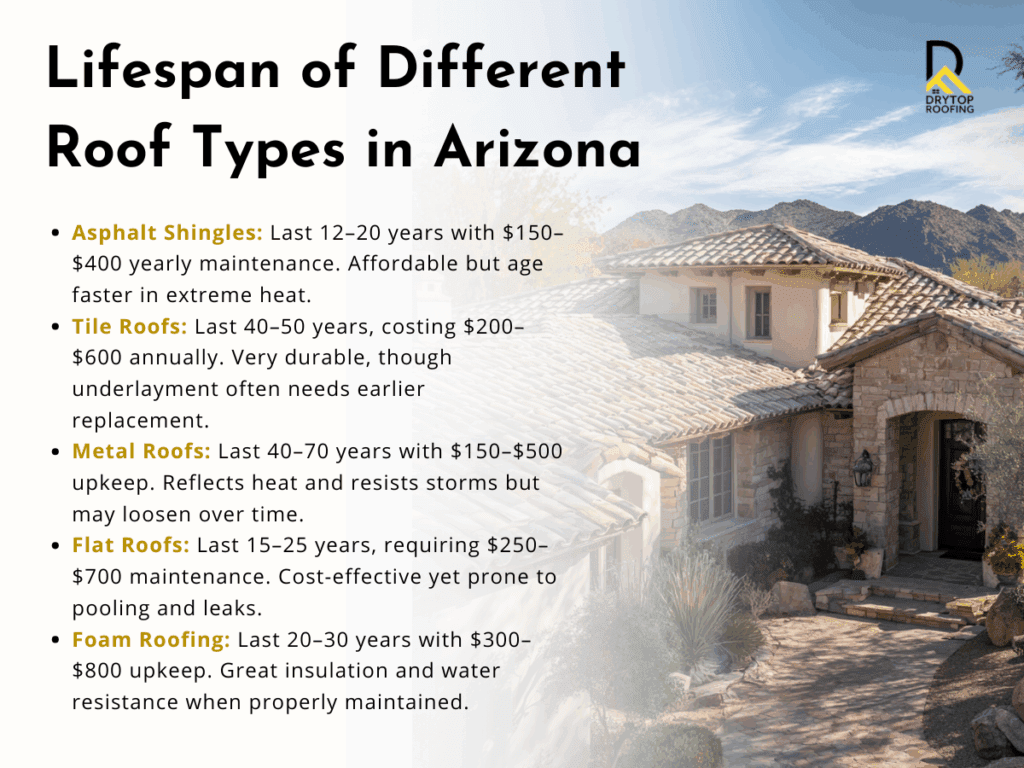
Different roof types take on the Arizona climate differently. How long a roof lasts depends on the material, the quality of the installation, and how well you take care of it. Some roofs can handle the heat and storms better than others, but even the best materials will wear down faster if they aren’t maintained properly.
| Roofing Material | Expected Lifespan (Years) | Average Annual Maintenance Cost ($) | Common Maintenance Needs |
|---|---|---|---|
| Asphalt Shingles | 12-20 | 150-400 | Shingle replacement, sealing, inspections |
| Tile Roofs | 40-50 | 200-600 | Underlayment replacement, cracked tile repairs |
| Metal Roofs | 40-70 | 150-500 | Fastener tightening, sealing, corrosion checks |
| Flat Roofs | 15-25 | 250-700 | Drainage checks, re-coating, crack repairs |
| Foam Roofing | 20-30 | 300-800 | Re-coating, patching, moisture checks |
If you’re planning to replace your roof or just want to know what to expect, it helps to understand how different materials hold up in Arizona’s extreme weather.
1. Asphalt Shingles
Asphalt shingles are one of the most common roofing materials across the country, but Arizona’s climate can cut their lifespan shorter than you might expect. While they are budget-friendly and easy to install, the desert sun is not kind to them.
The heat weakens the material, causing shingles to dry out and curl much faster than in cooler climates. In Arizona, asphalt shingles can last anywhere from 12 to 20 years, depending on the quality of the shingles and how well they are maintained.
Higher-quality, heat-resistant shingles might give you a few extra years, but even those can’t escape the effects of constant sun exposure.
2. Tile Roofs
Tile roofs are a popular choice in Arizona, and for good reason. They can handle the heat far better than asphalt shingles, and they also stand up well to strong winds and heavy rain.
The material itself doesn’t break down easily under the sun, which makes it a great option for homeowners looking for longevity. A well-installed tile roof can last 40 to 50 years or more, but that doesn’t mean it’s completely maintenance-free.
The tiles can last long but the underlayment often fails first. It’s installed beneath the tiles so you might not know if there’s damage in the roofing structure.
3. Metal Roofs
Metal roofs have gained popularity in Arizona due to their ability to reflect heat and withstand the elements. They don’t absorb as much heat as other materials, which can help keep your home cooler during the summer.
They also hold up well against monsoon storms and don’t crack or warp like other roofing materials. A properly installed metal roof can last 40 to 70 years, making it one of the longest-lasting options available.
However, metal expands and contracts with temperature changes, which can lead to loosening fasteners and potential leaks over time.
4. Flat Roofs
Flat roofs are frequently used in Arizona, especially on commercial buildings and some modern homes. Their simple design makes them cost-effective, but they come with unique challenges.
They, however, don’t shed water as easily compared to sloped roofs, which means standing water and debris buildup can lead to leaks and deterioration. Depending on the materials used, a flat roof can last 15 to 25 years, but frequent maintenance is key.
Applying a protective coating can extend its lifespan, and regular inspections help catch small cracks or pooling water before they cause bigger problems.
5. Other Roofing Materials
Asphalt, tile, metal, and flat roofs are the most common in Arizona, but other materials like foam roofing or synthetic shingles are also available. Foam roofing, for example, is often used on flat roofs because of its insulating properties and ability to resist water damage when properly maintained.
| Roofing Material | Expected Lifespan (Years) | Pros | Cons |
|---|---|---|---|
| Foam Roofing | 20-30 | Great insulation, seamless, lightweight | Needs regular re-coating, can be damaged by heavy impacts |
| Synthetic Shingles | 25-40 | Mimics natural materials, impact-resistant, UV-resistant | Higher cost, limited availability in some areas |
| Slate | 50-100 | Extremely long-lasting, fire-resistant, low maintenance | Heavy, requires strong roof support, expensive |
| Wood Shakes | 15-25 | Natural look, good insulation, environmentally friendly | High maintenance, vulnerable to fire and insects |
| Green Roofs | 30-50 | Energy-efficient, improves air quality, reduces heat absorption | High installation cost, requires structural support, needs upkeep |
These alternative materials vary in lifespan, but some can last up to 30 years with proper care. If you’re considering a less common roofing option, it’s important to research how well it holds up against extreme heat and whether it requires specialized maintenance.
The Biggest Threats to Your Roof in Arizona
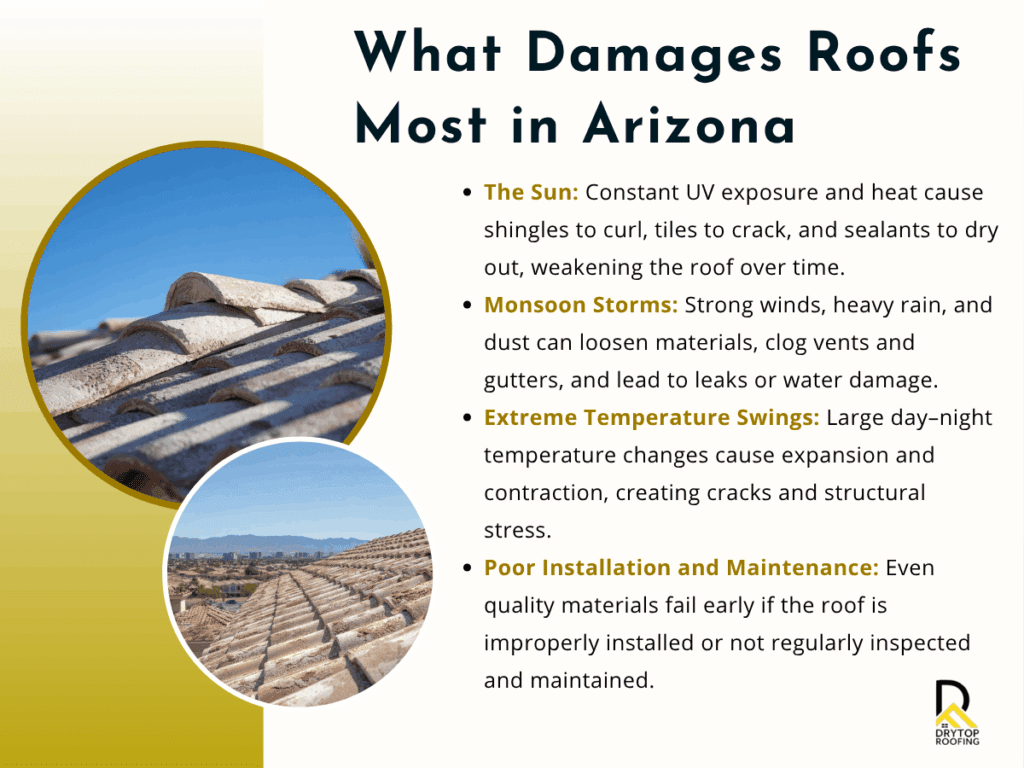
Arizona’s climate is one of the harshest in the country, and your roof takes the full impact of it every single day. If you’re not keeping an eye on potential threats, small problems can quickly turn into expensive repairs or even a full roof replacement.
1. The Sun
Arizona’s sun is relentless, and your roof absorbs a huge amount of heat every day. The constant exposure to UV rays weakens shingles, cracks tiles, and dries out sealants.
Over time, asphalt shingles start to curl and become brittle, making them more likely to break or blow off in strong winds. Even materials like tile or metal aren’t completely immune since the underlayment beneath them can still dry out and fail.
The intense heat makes roofing materials expand during the day and contract at night when temperatures drop. This constant movement weakens the structure over time, leading to cracks and leaks.
2. Monsoon Storms
Monsoon season brings a mix of strong winds, sudden downpours, and dust storms that can cause serious damage to your roof. High winds can loosen or rip off shingles, crack tiles, or even lift sections of a poorly secured metal roof.
Dust storms clog vents and cover your roof with debris, which can trap moisture and cause gradual deterioration. During heavy rains, water can seep into cracks and cause leaks if your roof has weak spots.
Gutters that aren’t cleaned regularly can overflow, leading to water pooling on your roof or even seeping into your home’s foundation.
3. Extreme Temperature Swings
The temperature in Arizona can drop by 30 to 40 degrees between day and night, which puts stress on your roofing materials. This constant expansion and contraction cause cracks in shingles, tiles, and underlayment, making your roof more vulnerable to leaks.
Over time, this process weakens the overall structure. If your roof already has minor cracks or loose materials, the shifting temperatures will only make things worse.
Proper insulation and ventilation can help reduce some of this stress, but no roof is completely safe from the effects of extreme temperature changes.
4. Poor Installation and Maintenance
Even the best roofing materials won’t last long if they aren’t installed correctly. Poor workmanship can lead to weak spots, improper sealing, or even sections of your roof that aren’t properly secured.
If shortcuts were taken during installation, your roof might start experiencing issues much sooner than expected. Small issues like missing shingles, cracked tiles, or minor leaks might not seem like a big deal at first, but they can quickly lead to major damage.
How to Make Your Roof Last Longer in the Arizona Heat
A roof is a major investment, and in Arizona’s extreme climate, it needs all the help it can get. Without regular care, small issues can turn into costly repairs long before they should.
Fortunately, there are ways to protect your roof and extend its lifespan.
1. Regular Roof Inspections
It’s easy to forget about your roof when there aren’t any visible issues, but waiting until something goes wrong can be expensive. Small cracks, loose shingles, and damaged tiles don’t always show from the ground, and by the time you notice, the damage may be serious.
Scheduling a professional inspection at least once a year helps catch issues before they lead to major repairs. A trained eye can spot weak spots, deteriorating materials, and other warning signs that might go unnoticed otherwise.
If you prefer to check on your roof yourself, look for missing or broken materials, sagging areas, and any signs of leaks inside your home.
2. Proper Ventilation
Many homeowners focus on the outside of the roof, but what’s happening underneath is just as important. Poor ventilation can trap heat in your attic, making your roof work even harder than it already does under the Arizona sun.
When heat builds up with no way to escape, roofing materials break down faster, and energy costs climb. A well-ventilated attic allows hot air to escape, reducing the strain on your roof and helping to regulate temperatures inside your home.
Ridge vents, soffit vents, and attic fans can all help improve airflow. If your attic feels like an oven even at night, it might be time to check if your ventilation system is doing its job.
3. Cleaning and Debris Removal
It doesn’t take much for debris to start causing problems. Leaves, dirt, and dust from Arizona’s frequent storms can pile up in valleys and gutters, trapping moisture and speeding up roof deterioration.
If this buildup is left alone, it can create the perfect conditions for leaks, mold, and rot. Clearing out gutters and removing debris after a storm helps prevent water from pooling on your roof.
If you have a flat roof, standing water can become an even bigger issue, so checking for proper drainage is essential.
How Much Does It Cost to Replace a Roof in Arizona?
Your roof is what keeps your home safe from Arizona’s harsh sun, monsoon storms, and sudden temperature swings. Ignoring small issues or skipping routine maintenance can shorten its lifespan, leading to costly repairs or even a full replacement long before you expected.
At some point, though, every roof reaches the end of its life. No matter how well you maintain it, roofing materials wear down over time, and there will come a day when repairs won’t be enough.
That’s where the cost of replacement becomes important. Knowing what to expect financially and planning ahead can make the process less stressful when the time comes.