
A tile roof in Arizona can last anywhere from 40 to 100 years, depending on the type of tile, quality of installation, and level of maintenance. Clay tiles often reach the higher end of that range, sometimes lasting a century, while concrete tiles typically last 40 to 60 years. The extreme desert climate, with its intense sun, monsoon rains, and temperature swings, plays a major role in how long a tile roof truly performs before needing major repairs or underlayment replacement.
This guide explores the key factors that affect a tile roof’s longevity, from material differences and installation quality to ongoing maintenance and climate impacts. It also outlines common repair issues, cost versus value considerations, and practical tips Arizona homeowners can use to extend the life of their tile roofs.
Typical Lifespans in Roofs in Arizona
Tile roofs are known for their durability, but in Arizona’s desert climate, their longevity depends on several factors such as the type of tile, underlayment quality, and maintenance. While the tiles themselves can last decades, the supporting layers beneath often need earlier replacement. Below is a breakdown of the typical lifespans for different roofing materials used in the state.
| Roof Type | Average Lifespan in Arizona | Notes |
|---|---|---|
| Clay Tile | 50 – 100+ years | Extremely durable; underlayment usually needs replacement every 20–30 years. |
| Concrete Tile | 40 – 60 years | Slightly less durable than clay; prone to fading and higher water absorption. |
| Synthetic/Composite Tile | 30 – 50 years | Longevity depends heavily on material quality and UV resistance. |
| Asphalt Shingles | 15 – 25 years | Shorter lifespan under Arizona’s sun and heat. |
| Metal Roofing | 40 – 70 years | Resistant to heat and fire; performance varies with installation quality. |
| Flat Roofs (Foam/Coating Systems) | 10 – 25 years | Common in Arizona; require regular recoating and maintenance. |
In summary, tile roofs are among the longest-lasting options in Arizona, often outlasting other common materials like shingles or foam. However, even the strongest clay or concrete tiles rely on proper underlayment and regular upkeep to reach their full potential lifespan in the desert’s harsh conditions.
What Determines How Long It Actually Lasts
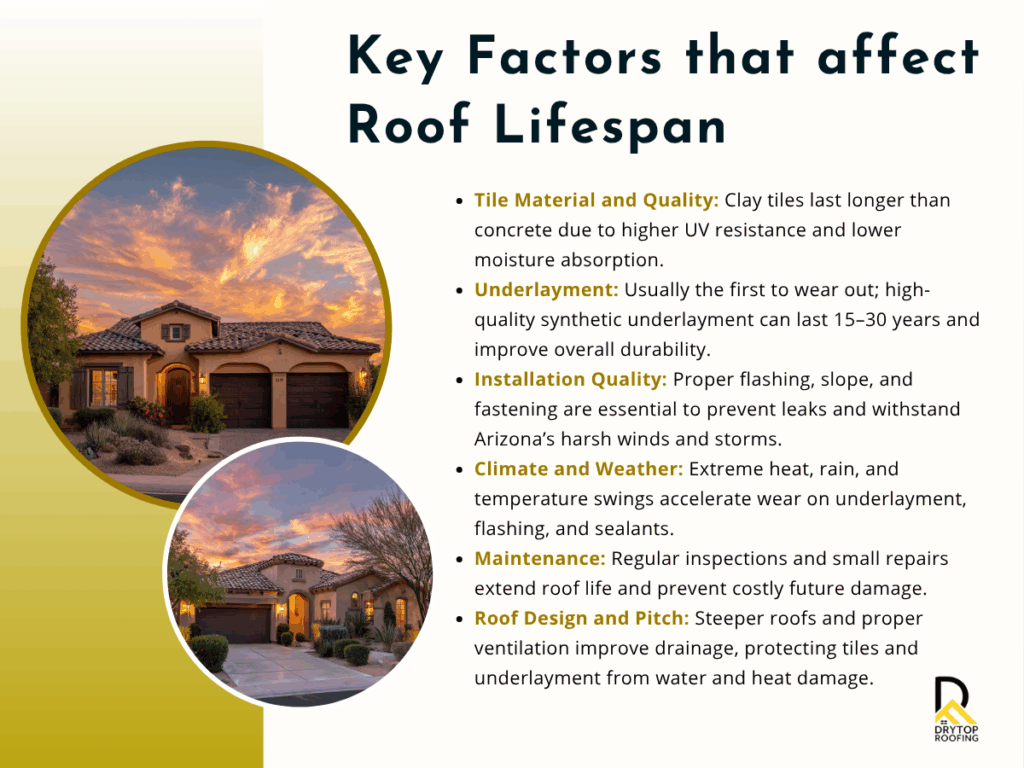
While tile roofs are built to endure, their actual lifespan in Arizona depends on more than just the material itself. Several key factors play a role in how long a roof will protect your home before major repairs or replacement are needed.
1. Tile Material and Quality
Clay tiles are denser and more resistant to UV rays, often lasting longer than concrete, which is more prone to fading and absorbing moisture. The thickness and quality of the tile also determine how well it withstands Arizona’s extreme heat and occasional cold snaps.
2. Underlaymentifferences and Unique Roofing Challenges
The underlayment beneath the tiles is often the first component to fail, with lifespans ranging from 15 to 30 years. Using a high-quality synthetic underlayment can significantly extend the roof’s performance compared to traditional felt.
3. Installation Quality
Even the best materials won’t last if installed improperly. Correct flashing, adequate slope, and secure fastening are essential to prevent leaks and ensure tiles remain in place during Arizona’s strong winds and monsoons.
4. Climate and Weather Conditions
Arizona’s intense sun, heavy rains, and drastic temperature swings can take a toll on roofing materials. These stresses often accelerate wear on underlayment, flashing, and sealants, even if the tiles themselves remain intact.
5. Maintenance
Routine inspections and timely repairs are critical to maximizing a roof’s lifespan. Replacing cracked tiles, clearing debris, and addressing small leaks early helps prevent bigger, more costly issues later on.
6. Roof Design and Pitch
A steeper roof pitch allows water to run off more effectively, reducing the risk of leaks. Good attic ventilation and proper drainage also help protect both the tiles and the underlayment.
In short, the life of a tile roof in Arizona depends on a balance of strong materials, professional installation, and consistent upkeep. With these elements in place, a roof can withstand the desert’s challenges and last for decades.
What Common Failures / Repairs to Expect
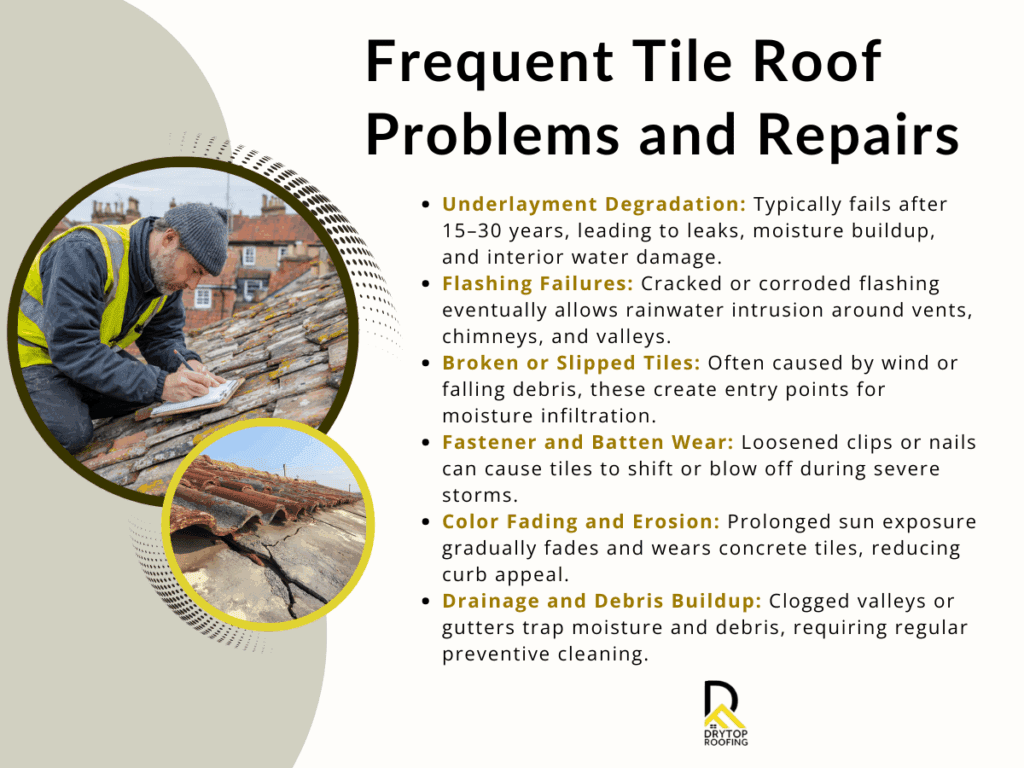
Even the most durable tile roofs in Arizona eventually show signs of wear, especially under the state’s intense sun and monsoon storms. Knowing the most common issues helps homeowners address small problems early before they turn into costly repairs.
1. Underlayment Degradation
The underlayment is usually the first part of a tile roof to fail, often after 15–30 years. Once it breaks down, water can seep beneath the tiles, leading to leaks, rot, or interior damage.
2. Flashing Failures
Flashing around chimneys, skylights, vents, and roof valleys can crack, lift, or corrode over time. This creates vulnerable spots where rainwater can penetrate, especially during heavy monsoons.
3. Broken or Slipped Tiles
Tiles can crack or shift due to strong winds, falling branches, or foot traffic during maintenance. Even a single broken tile can allow water intrusion, so timely replacement is essential.
4. Fastener and Batten Wear
The nails, clips, or battens holding tiles in place can loosen with age or due to heat expansion and contraction. When this happens, tiles may slip out of alignment or blow off during storms.
5. Color Fading and Surface Erosion
Concrete tiles, in particular, may fade or erode on the surface after years of sun exposure. While this doesn’t always compromise function, it can affect curb appeal and may require sealing or replacement.
6. Drainage and Debris Issues
Leaves, dirt, and dust can collect in roof valleys or gutters, trapping moisture against the underlayment. Regular cleaning helps prevent blockages and the water damage they can cause.
Most tile roof failures in Arizona are less about the tiles themselves and more about the supporting components like underlayment, flashing, and fasteners. Addressing these issues promptly and maintaining the roof regularly ensures it continues to perform for decades.
Practical Lifespan Expectations
While tile roofs in Arizona are known for their durability, the actual number of years they last depends on materials, installation, climate conditions, and ongoing care. Homeowners should view lifespan as a range influenced by these factors, rather than a fixed number.
| Scenario | Expected Lifespan | Notes |
|---|---|---|
| Basic concrete tile roof, good installation, moderate maintenance | 40 – 50 years | Tiles may last, but underlayment likely needs replacement after 20–30 years. |
| Quality concrete tile with upgraded underlayment and regular inspections | 50 – 60 years | Proper upkeep and durable materials extend longevity. |
| Clay tile, premium quality, ideal slope, excellent installation & maintenance | 75 – 100+ years | Clay tiles can last a century, but underlayment will still need periodic replacement. |
| Clay tile roof in harsh conditions with little maintenance | 50 – 60 years | Neglect shortens lifespan, even with durable materials. |
| Asphalt shingle roof (for comparison) | 15 – 25 years | Far shorter lifespan under Arizona’s extreme heat and sun. |
Tile roofs—especially clay—offer some of the longest lifespans available in Arizona, often outlasting alternative roofing options by decades. With proper care and timely underlayment replacement, a tile roof can remain a lasting investment that protects and adds value to a home well into the future.
Cost vs Value: Is It Worth It?
Tile roofs come with higher upfront costs than other roofing options, but in Arizona’s climate, they often prove to be a long-term investment. The balance between cost and value becomes clear when you consider both durability and performance.
- Longevity – Tile roofs can last two to four times longer than asphalt shingles, reducing the need for frequent replacements.
- Energy Efficiency – The natural thermal properties of tile help keep homes cooler, lowering air conditioning costs in Arizona’s intense heat.
- Home Value – Tile roofs add curb appeal and can increase property value, making homes more attractive to buyers.
- Maintenance Savings – While underlayment and small repairs are necessary, tiles themselves rarely need replacement, keeping long-term costs manageable.
- Durability – Tile roofs withstand fire, wind, and heavy rains better than many alternatives, offering reliable protection for decades.
While tile roofs require a larger initial investment, their long lifespan, energy savings, and added home value make them one of the most cost-effective roofing choices for Arizona homeowners.
Key Tips to Maximize Lifespan
Tile roofs can last decades in Arizona, but only with the right care and upkeep. Following a few key practices helps ensure your roof reaches its full potential lifespan.
- Choose High-Quality Materials – Clay or premium concrete tiles hold up better to Arizona’s heat and sun, offering greater durability.
- Use Durable Underlayment – Synthetic underlayments outperform felt, resisting UV damage and extending roof performance.
- Hire Professional Installation – Proper flashing, slope, and fastening are essential for long-term protection against storms.
- Inspect Regularly – Routine checks every few years, or after major weather events, catch problems early.
- Keep the Roof Clean – Removing debris and clearing gutters prevents water buildup and underlayment damage.
- Repair Promptly – Fixing cracked tiles or worn flashing quickly avoids costly structural damage.
Combining quality materials with professional installation and consistent maintenance ensures a tile roof in Arizona provides reliable protection for decades.
Final Thoughts on Tile Roof Longevity in Arizona
In Arizona, tile roofs stand out as one of the most durable and dependable roofing solutions, lasting anywhere from 40 years to over 100 depending on the tile type, installation quality, and level of care. While clay and concrete tiles are built to endure extreme heat and heavy storms, components like underlayment and flashing typically wear out sooner, making regular inspections and timely maintenance essential.
With proper care, a tile roof delivers durability, energy efficiency, and curb appeal. For Arizona homeowners, it’s a smart investment that provides lasting protection and long-term value.