
The most effective way to protect your home from storm damage is to address roof vulnerabilities, drainage problems, nearby tree hazards, and loose outdoor items before severe weather arrives. In Prescott, start before monsoon season, so there is time to inspect the roof, complete repairs, and review insurance coverage.
Key Takeaways
- Schedule a professional roof inspection before monsoon season, especially if your roof is older or has a history of leaks.
- Repair damaged flashing, shingles, tiles, underlayment, and roof penetrations before heavy rain and wind expose weak points.
- Keep gutters and downspouts clear, so stormwater can move away from the roof and foundation.
- Trim hazardous branches and secure outdoor items that could become wind-driven debris.
- Consider impact-resistant roofing when replacement is already necessary.
- Review homeowners and flood insurance before storm season so you understand deductibles, exclusions, and coverage limits.
- Document the roof and exterior before storms to create a record of the property’s condition.
Why Proactive Storm Preparation Matters
Storm preparation is most useful when it focuses on existing vulnerabilities. A cracked tile, loose shingle, deteriorated seal, damaged flashing, or clogged drainage path may not cause an obvious problem during dry weather. Wind-driven rain can quickly expose those weaknesses.
The National Weather Service’s Northern Arizona monsoon guidance states that the official monsoon season runs from June 15 through September 30, although monsoonal moisture often reaches northern Arizona later than the calendar start date. That gives homeowners a predictable period for planning inspections and maintenance before summer thunderstorms arrive.
The goal is not to make a house storm-proof. No roof can be guaranteed against every wind, hail, or debris event. The practical goal is to correct weaknesses, improve drainage, reduce hazards, and understand the roof’s condition.
How to Protect Your Home From Storm Damage: 7 Steps
1. Schedule a Roof Inspection Before Monsoon Season
A pre-storm inspection gives you time to find problems before rain tests them. A roofer can evaluate shingles or tiles, flashing, penetrations, exposed underlayment, roof edges, drainage areas, and visible signs of previous leaks or repairs.
It is especially useful for older roofs, previous storm damage, ceiling stains, displaced tiles, missing shingles, or recurring leaks.
DryTop Roofing offers free roof inspections so homeowners can understand the roof’s condition before deciding whether work is necessary.
An inspection should not automatically lead to replacement. Isolated damage may only require targeted repair.
2. Repair Vulnerable Roofing Components
Once an inspection identifies a problem, address the failure point rather than covering the symptom.
Flashing around chimneys, skylights, vents, walls, valleys, and other transitions can become a water entry point if it loosens, deteriorates, or is installed incorrectly. Missing or damaged shingles can expose the layers beneath them. On tile roofs, the visible tile is only part of the water-management system, so the underlayment matters too.
Surface sealants may temporarily slow a leak without correcting failed flashing, deteriorated underlayment, or another underlying problem.
A small defect does not always mean a large repair. What matters is the source and extent of damage.
3. Clean Gutters and Downspouts
Gutters cannot handle heavy rainfall effectively when leaves, pine needles, roof granules, or other debris block the flow of water. Overflow can wet the fascia and place unnecessary water around the home.
FEMA storm-preparation guidance recommends clearing clogged rain gutters and downspouts, trimming vegetation around the home, and securing outdoor objects before severe wind events.
Clean gutters before storm season and after debris-producing winds. Check for sagging, separated joints, and downspouts that discharge against the foundation. Direct runoff away from the structure.
Damaged or detached gutters may also accompany storm damage elsewhere on the roof, so inspect the surrounding areas when damage is found.
4. Trim Hazardous Trees and Branches
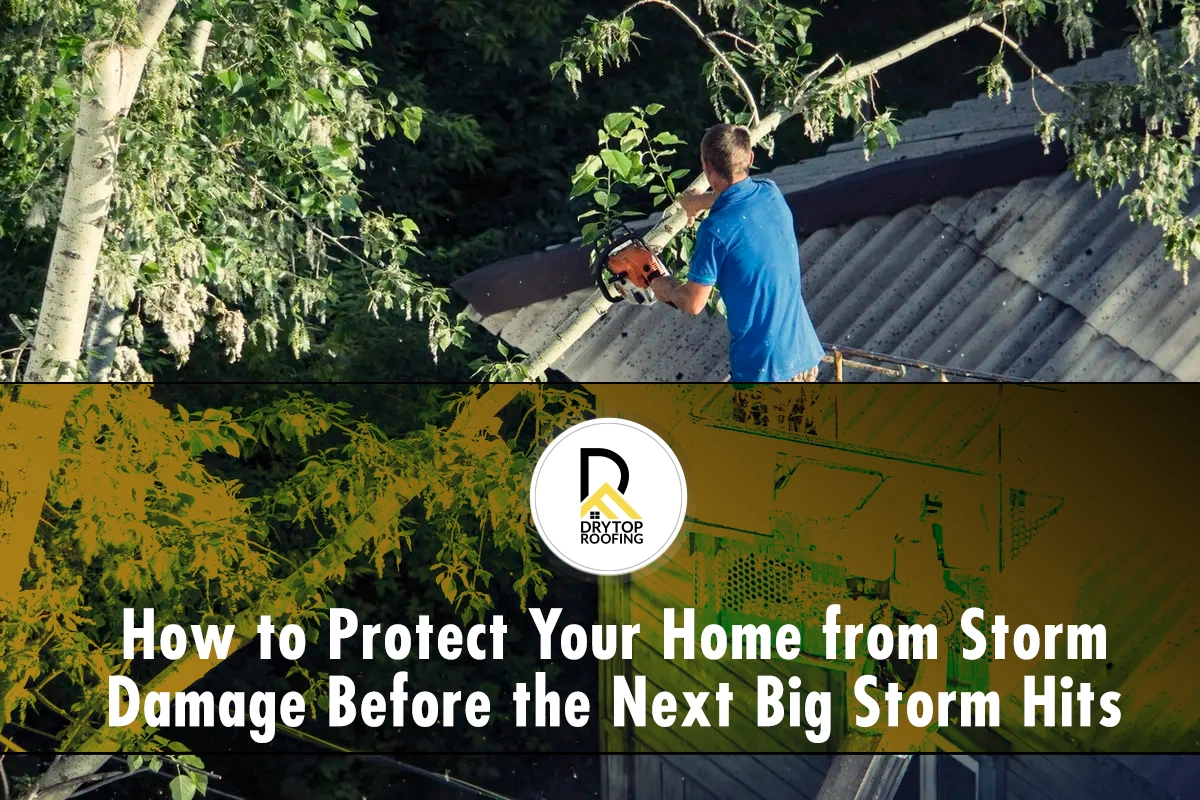
Branches hanging over the roof can scrape roofing materials, clog gutters, and fall during strong winds. Dead, cracked, leaning, or structurally compromised trees present a greater concern.
Focus on hazards near the roof, windows, power lines, and structures. Large limbs and questionable trees should be evaluated by a qualified tree professional.
Do not climb onto the roof to trim branches. Roof surfaces can be slippery, fragile, steep, or difficult to access safely.
5. Secure Loose Outdoor Items
Wind can turn ordinary yard items into damaging debris. Before storms, secure or move patio furniture, grills, lightweight decorations, umbrellas, tools, toys, and unsecured containers.
Make a quick yard check part of your routine when strong winds or thunderstorms are forecast.
Loose project materials such as lumber, metal, or roofing products can also become wind-driven debris.
6. Consider Impact-Resistant Materials When Replacement Is Needed
If your roof already needs replacement, ask about materials designed for better impact performance and whether they make sense for your property.
Impact ratings can help compare products, but they should not be treated as guarantees against natural hail. Real storms vary in hail size, shape, wind speed, angle, duration, roof slope, temperature, and material condition.
Material choice should consider service life, maintenance, budget, appearance, and roof structure. Shingles, metal, and tile have different trade-offs in Arizona.
Review the best roofing material for Arizona and discuss the tradeoffs with a contractor before choosing an upgrade.
7. Review Insurance Before a Storm Happens
Do not wait until damage occurs to learn how your policy works. Review your deductible, wind and hail provisions, roof settlement terms, exclusions, and whether roof losses are settled at replacement cost or actual cash value.
Coverage depends on the policy and cause of loss. Maintenance-related deterioration and sudden storm damage may be treated differently.
Flooding requires separate attention. The National Flood Insurance Program explains that most homeowners’ insurance does not cover flood damage, so homeowners concerned about surface flooding should review flood insurance options separately.
Photograph the roof and exterior before storm season. If damage occurs, follow your insurer’s instructions and document the condition before making permanent repairs, when safe.
What DryTop Looks for Before Storm Season
A useful inspection looks beyond missing shingles to how the roofing system may perform in wind and rain.
Depending on the roof type, an inspection may include an examination of cracked materials, flashing, penetrations, valleys, edges, drainage, sealants, previous repairs, and underlayment concerns.
On older tile roofs, for example, the tiles may still look serviceable while the underlayment beneath them has deteriorated. Replacing one cracked tile will not correct a leak caused by failed material underneath it.
DryTop should explain findings, separate urgent issues from maintenance, and discuss repair versus replacement based on actual condition.
Things to Know Before Arizona Storm Season
Roof age provides context, not a diagnosis. An older roof deserves closer evaluation, but age alone does not prove replacement is necessary.
Small defects can become larger problems. Damaged flashing or exposed underlayment can let water reach materials below.
Photographs create a useful baseline. Dated images can help compare pre-storm and post-storm conditions and provide documentation if you later discuss damage with a contractor or insurer.
Monsoon dates are predictable; individual storms are not. Use the seasonal window for preparation, then monitor local National Weather Service forecasts through summer.
Take Action Before Storm Damage Happens
Protect your home from storm damage while conditions still allow careful inspection and informed decisions.
DryTop Roofing serves Prescott, Dewey-Humboldt, and Northern Arizona. If you are unsure whether your roof has cracked tiles, damaged flashing, aging underlayment, or previous storm damage, start with an inspection rather than assuming you need a replacement.
Schedule a free roof inspection and get a clear explanation of what the roof needs, what can wait, and what should be addressed before severe weather arrives.
Frequently Asked Questions
What is the most important way to protect a roof before the monsoon season?
Start with an inspection that identifies existing vulnerabilities. Cleaning drainage paths, securing outdoor items, and trimming hazardous branches also matter, but roof-specific decisions should be based on the roofing system’s condition.
When should I schedule a pre-storm roof inspection in Prescott?
Spring leaves time to evaluate findings and schedule repairs before the monsoon season begins on June 15. Actual monsoon moisture varies each year, so do not treat that date as a guarantee that storms begin immediately.
Can I inspect my roof myself?
You can look for visible problems from the ground, check ceilings and safely accessible attic areas for signs of water, and photograph conditions from a safe location. Walking on a roof adds fall risk and may damage roofing materials, so leave roof-surface evaluation to a qualified professional.
Does homeowners’ insurance cover all types of storm-related damage to the roof?
No. Coverage depends on the cause of damage and policy terms. Wind or hail losses may be covered when requirements are met, while deterioration, neglected maintenance, exclusions, deductibles, and roof settlement provisions can affect payment. Review your policy with your insurer or agent.
What should I do if I find damage after a storm?
Document visible conditions from a safe location, prevent additional damage when you can do so safely, and arrange a professional inspection. If you plan to file a claim, review DryTop’s guidance on filing an insurance claim and follow your insurer’s reporting requirements.