

A pitch pocket, also known as a pitch pan, is a type of roof flashing designed to seal penetrations on a roof, such as pipes, conduits, or structural elements. It consists of a metal or polymer container filled with a sealant, like bitumen or elastomeric caulking, to create a watertight barrier.
This is crucial for preventing water ingress that can damage the roof’s insulation and structure. Pitch pockets are especially important for irregular or complex penetrations where standard flashing methods are insufficient, ensuring long-term waterproofing and roof integrity.
What is a Pitch pocket on a Roof?
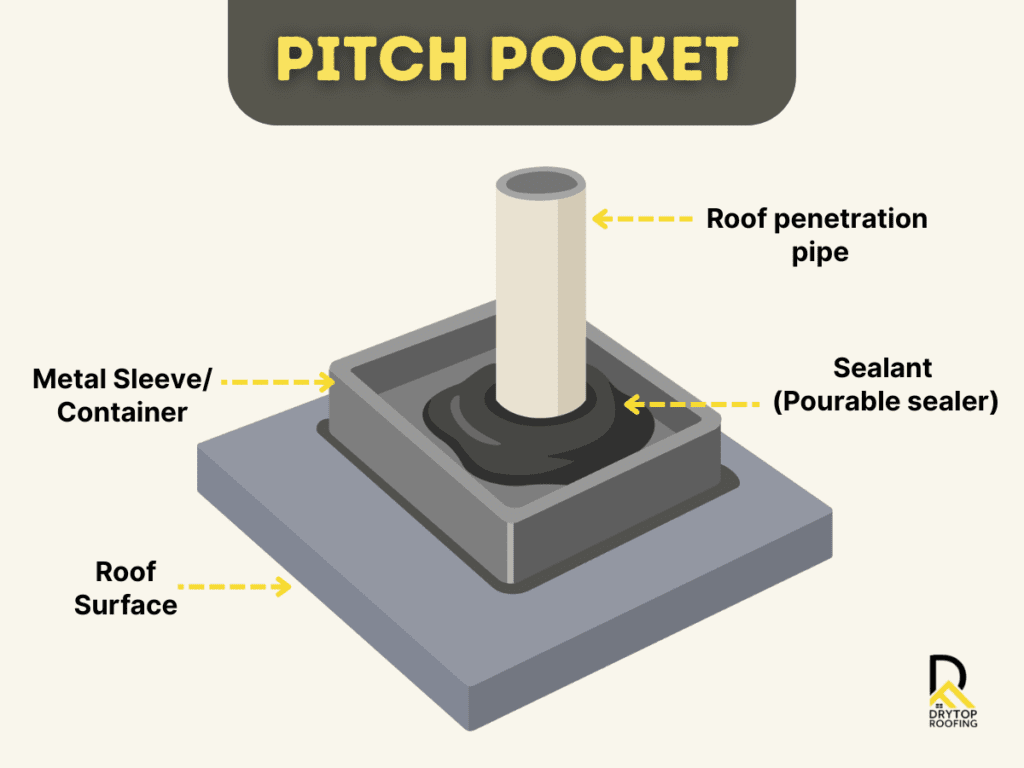
A pitch pocket is a metal or plastic sleeve that surrounds penetrations in a roof, such as electrical conduits, HVAC supports, or plumbing vents. These penetrations create openings in the roofing material, making them vulnerable to leaks. The pitch pocket is filled with a sealant (commonly a pourable sealer) that prevents water from seeping through the gaps.
| Component | Description |
|---|---|
| Definition | A container or sleeve filled with sealant to waterproof roof penetrations |
| Also Known As | Pitch pan, sealant pocket, penetration pocket, pitch box |
| Common Materials | Metal or polymer for the container; bitumen, mastic, or pourable sealant inside |
| Used Around | HVAC supports, plumbing vents, conduits, electrical wires, antenna mounts |
| Main Function | Creates a watertight seal around irregular or grouped roof penetrations |
What Is a Pitch Pocket?
Unlike pre-formed flashings, which are designed for specific pipe sizes and shapes, pitch pockets offer versatility. They can be customized for irregularly shaped penetrations, making them a preferred choice in commercial and flat roofing systems.
Pitch pockets are also known as pitch pans, penetration pockets, pitch boxes, or sealant pockets. These terms are often used interchangeably in the roofing industry.
Purpose and Function of a Pitch Pocket
The primary purpose of a pitch pocket is to create a waterproof seal around roof penetrations. Unlike pre-manufactured flashing boots, which may not always accommodate irregular shapes, pitch pockets are custom-installed to fit specific penetration points. Their function includes:
- Sealing Roof Penetrations: Pitch pockets are designed to encapsulate roof penetrations, such as pipes, conduits, HVAC lines, and structural supports. This prevents water from seeping into the building through these openings.
- Protecting the Roof System: Without proper sealing, water infiltration can cause damage to insulation, decking, and interior spaces, leading to costly repairs and structural issues.
- Flexibility for Various Applications: Pitch pockets can be used in commercial and industrial roofing applications, making them a versatile choice for waterproofing different types of roof penetrations.
- Supporting Structural Integrity: By maintaining a watertight seal, pitch pockets help preserve the overall integrity of the roofing system, reducing the risk of premature deterioration.
- Compensating for Movement: Roofing materials expand and contract due to temperature changes. Pitch pockets accommodate minor movement while maintaining a secure seal, preventing cracks and leaks.
Importance of Waterproofing on a Roof
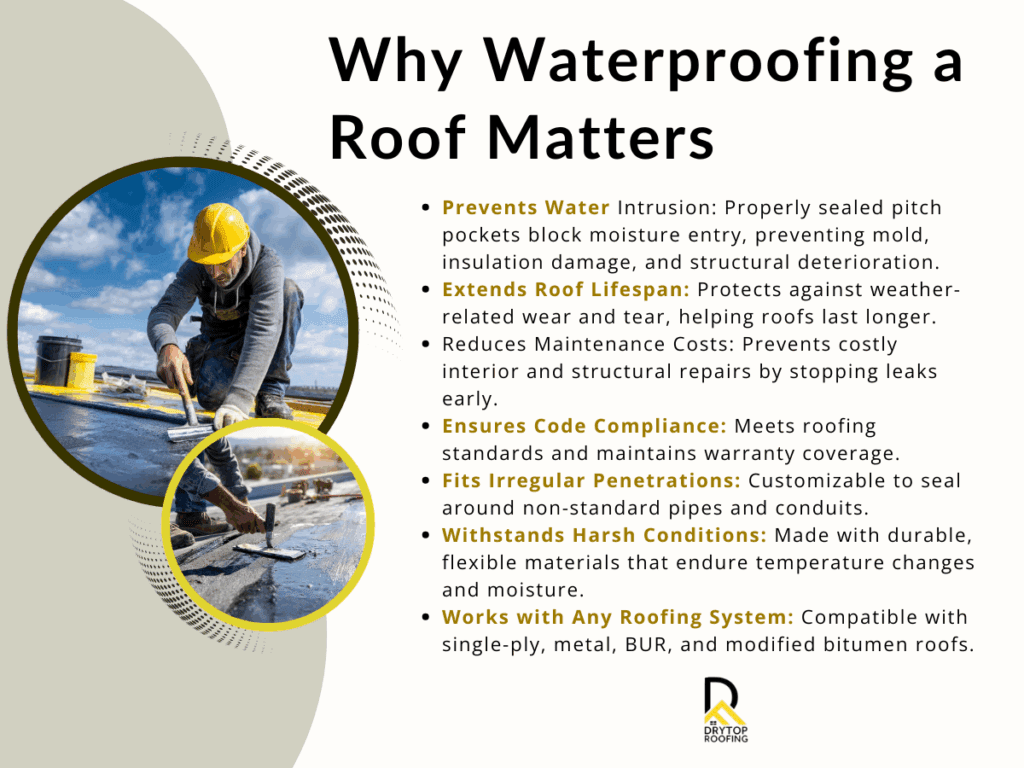
Waterproofing is a critical aspect of roofing, ensuring that buildings remain free from leaks and water damage. Pitch pockets play an essential role in achieving this by addressing some of the most vulnerable areas of the roof.
Preventing Water Intrusion
Water intrusion is one of the most common causes of roofing failures. Without proper sealing, penetrations create openings for moisture to enter, leading to mold growth, insulation damage, and structural degradation.
Pitch pockets provide an effective barrier by encapsulating penetrations and sealing them with waterproofing materials like mastic or polyurethane sealants.
Enhancing Roof Longevity
Roofs are exposed to harsh weather conditions, including heavy rain, snow, and UV radiation. Over time, unsealed penetrations can deteriorate, leading to significant damage.
A well-installed pitch pocket extends the life of a roofing system by preventing early wear and tear caused by water infiltration.
Reducing Maintenance Costs
Unchecked leaks lead to costly repairs and potential damage to building interiors. Implementing proper waterproofing solutions with pitch pockets minimizes maintenance expenses by addressing potential leaks before they become serious problems.
Regular inspection and reapplication of sealants ensure continued performance and cost savings.
Compliance with Roofing Standards
Many roofing codes and industry standards require adequate sealing of penetrations to maintain warranty coverage and structural integrity. Properly installed pitch pockets help meet these requirements, ensuring compliance with roofing best practices and building codes.
Custom Solutions for Unique Penetrations
Unlike prefabricated flashing, pitch pockets can be customized to fit irregularly shaped penetrations. This adaptability is crucial in commercial and industrial settings, where multiple conduits, pipes, and supports pass through the roof.
By accommodating various sizes and shapes, pitch pockets provide an effective waterproofing solution for non-standard penetrations.
Weather Resistance and Durability
Roofing systems endure constant exposure to environmental elements. Pitch pockets are designed to withstand extreme temperatures, moisture, and movement caused by thermal expansion.
By using durable sealants and quality materials, these waterproofing components ensure long-term performance, even under challenging conditions.
Roofing systems endure constant exposure to environmental elements. Pitch pockets are designed to withstand extreme temperatures, moisture, and movement caused by thermal expansion.
By using durable sealants and quality materials, these waterproofing components ensure long-term performance, even under challenging conditions.
Integration with Other Roofing Systems
Pitch pockets is compatible with various roofing materials, including single-ply membranes, built-up roofing (BUR), modified bitumen, and metal roofing. This versatility allows them to be integrated seamlessly into different roofing systems without compromising performance or aesthetics.
Best Practices for Installation and Maintenance
To maximize waterproofing efficiency, pitch pockets must be installed and maintained properly:
- Correct Sizing: Ensure that the pitch pocket is appropriately sized for the penetration to provide a snug fit.
- Proper Sealant Application: Use high-quality, UV-resistant sealants to prevent premature breakdown.
- Routine Inspections: Regularly check for cracks, gaps, or deterioration in the sealant and reapply as needed.
- Sloped Design Consideration: To prevent water pooling, pitch pockets should be installed with slight elevation or drainage to direct water away from the penetration point.
Installation and Maintenance of pitch pockets
Proper installation and regular maintenance of pitch pockets are critical for ensuring their effectiveness in waterproofing a roof. Since they are commonly used around HVAC supports, electrical conduits, and antenna mounts, they need to be carefully sealed to prevent moisture from seeping into the roof.
| Step | Details |
|---|---|
| Surface Preparation | Clean and dry the roof area; apply primer if required |
| Positioning | Place the pitch pocket around the penetration without gaps |
| Base Sealing | Use adhesive or roofing sealant to secure the pocket’s base |
| Filling with Sealant | Pour a compatible, flexible sealant to fill the pocket |
| Curing & Final Inspection | Allow proper curing time; inspect for gaps, cracks, or low fill areas |
Installation Steps for a Pitch Pocket
Installation Process
- Preparation of the Roof Surface
Before a pitch pocket is installed, the roofing surface must be thoroughly cleaned and dried. Any dust, dirt, or debris can prevent a secure bond between the roofing material and the sealant. If necessary, a primer may be applied to enhance adhesion. - Positioning the Pitch Pocket
The installer places the pitch pocket around the penetration, ensuring it fully encircles the object. It is crucial that there are no gaps between the pocket and the surface to prevent leaks. - Sealing the Base
To secure the pitch pocket in place, a compatible roofing adhesive or sealant is applied to the base. This step helps create a watertight barrier and prevents moisture from getting underneath the pocket. - Filling the Pitch Pocket with Sealant
Once the pocket is securely in place, a pourable sealer is added inside. This liquid sealant fills the pocket, flowing around the penetration to create a durable, waterproof seal. The sealer must be compatible with the roofing material and remain flexible to accommodate movement caused by temperature changes and vibrations. - Curing and Inspection
The sealant needs time to cure properly, which may vary depending on the type of product used. After curing, an inspection ensures that no gaps, cracks, or weak spots are present. Some roofs may require a top layer of protective coating to further reinforce the seal.
Benefits of Using Pitch Pockets for Waterproofing
Pitch pockets play a vital role in waterproofing a roof, especially in commercial and industrial settings. Their ability to seal around non-standard penetrations makes them an essential component of a leak-proof roofing system.
| Benefit | Explanation |
|---|---|
| Effective waterproofing | Provides a tight seal around penetrations prone to leaks |
| Suitable for irregular shapes | Works with grouped wires, odd-shaped supports, etc. |
| Long-term performance | Durable materials withstand UV rays, rain, snow, and heat |
| Easy to maintain | Sealant can be reapplied without major roof alterations |
| Cost-effective protection | Prevents expensive repairs from long-term water damage |
| Versatile across roofing systems | Compatible with BUR, modified bitumen, single-ply, and metal roofing |
Benefits of Using Pitch Pockets
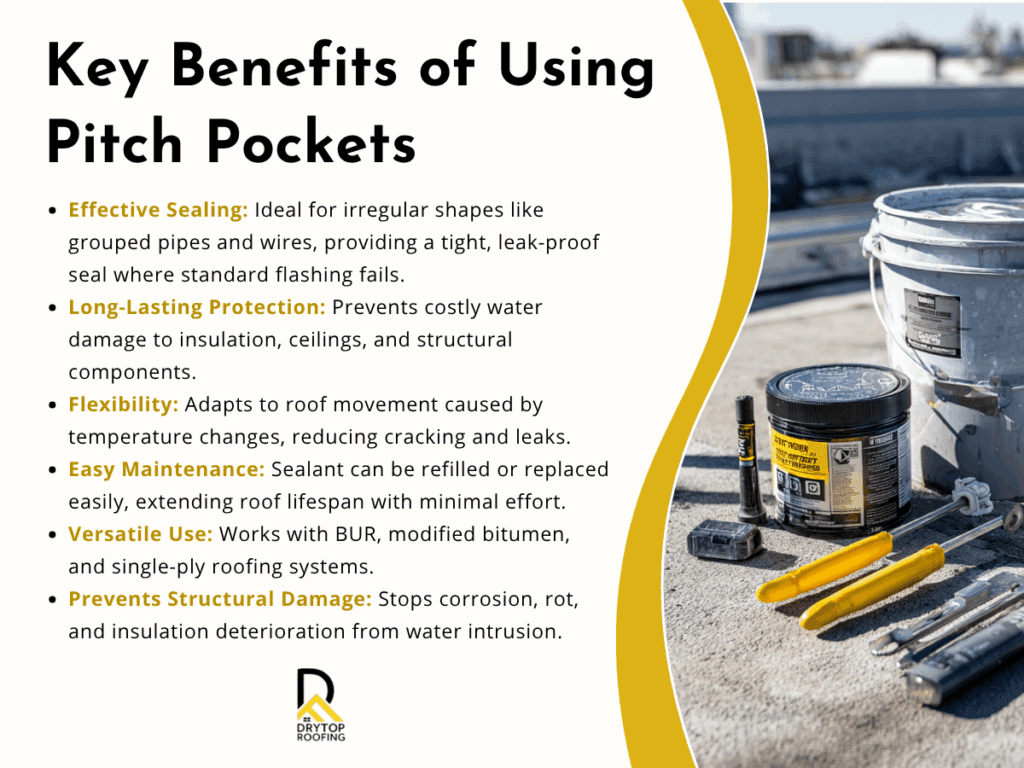
1. Effective Sealing for Irregular Penetrations
Unlike pre-formed flashing, pitch pockets can accommodate irregularly shaped objects such as grouped wires, pipe clusters, and support posts. This flexibility ensures a snug and secure seal, preventing water intrusion in areas where standard flashing would fail.
2. Long-Lasting Protection Against Water Damage
A properly installed pitch pocket filled with high-quality sealant can last for years with minimal maintena
3. Adaptability to Roof Movements
Roofs expand and contract due to temperature changes, and penetrations may shift slightly over time. The flexible sealant inside a pitch pocket can accommodate this movement, reducing the risk of cracks and leaks.
4. Easy Maintenance and Repairs
Compared to other waterproofing solutions, pitch pockets are relatively easy to maintain. If the sealant degrades or shrinks, it can be topped off or replaced without major roof modifications. This cost-effective approach helps extend the lifespan of the roofing system.
5. Compatibility with Different Roofing Systems
Pitch pockets can be used on a variety of roofing materials, including built-up roofs (BUR), modified bitumen, and single-ply membranes. This versatility makes them a go-to solution for roofing professionals handling different types of commercial and industrial buildings.
6. Prevention of Structural Deterioration
Unchecked water infiltration can lead to corrosion of metal supports, rot in wooden structures, and deterioration of insulation. By ensuring that all penetrations are properly sealed, pitch pockets help preserve the integrity of the roof and the entire building structure.
Conclusion
Regular inspections and maintenance of pitch pockets are essential to ensure they remain effective over time. Understanding the importance of pitch pockets can help homeowners and building managers take proactive steps to safeguard their properties.
By incorporating pitch pockets into roofing designs and maintaining them properly, individuals can ensure a durable, leak-free roof that withstands various weather conditions. This proactive approach not only extends the roof’s lifespan but also reduces the likelihood of future repairs, providing peace of mind and financial savings in the long run.