
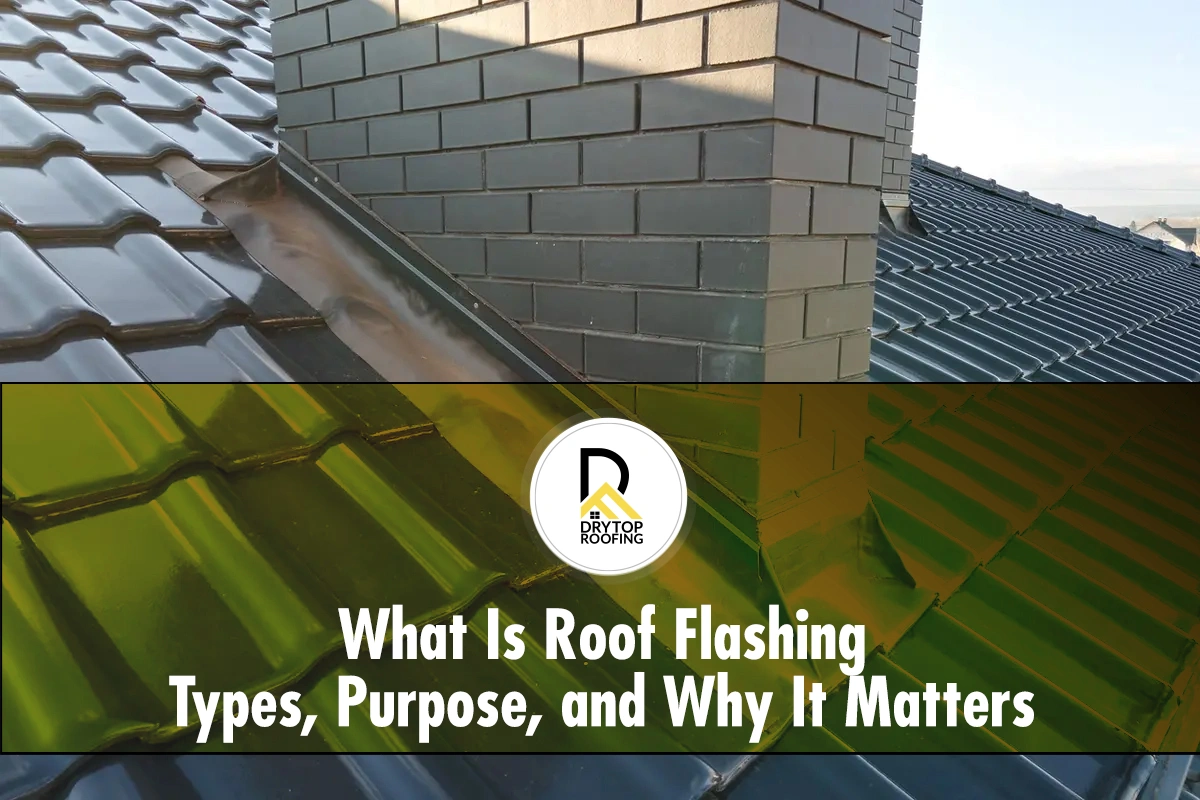
Roof flashing is often overlooked but crucial for preventing leaks. This thin metal barrier sits at every seam, joint, and penetration, directing water away before it enters your home.
If you see water stains near your chimney, rust around vent pipes, or leaks during Arizona monsoons, failing flashing is likely the cause. Knowing how flashing works helps you make smarter maintenance decisions.
Key Takeaways
- Roof flashing is thin metal installed at vulnerable roof areas to redirect water and prevent leaks.
- Common types include step, valley, drip edge, chimney, and pipe flashing.
- Arizona’s extreme heat causes flashing to warp, crack, and fail faster than in milder climates.
- Research shows that approximately 90% of roof leaks are caused by flashing problems at chimneys, vents, and roof-to-wall intersections.
- Replacing flashing during a new roof installation is the best way to ensure long-term protection.
What Is Roof Flashing?
Roof flashing is a thin metal material, typically galvanized steel, that roofers install at the seams and joints where your roof surface (the top layer of shingles or tiles) meets walls, chimneys (vertical masonry for fireplaces), vents (pipes for air or exhaust), skylights (roof windows), and valleys (internal angles where roof slopes meet). These are the spots where shingles or tiles cannot create a complete seal on their own.
Flashing fills these gaps and channels water away from openings before it penetrates the roof deck or attic. In Arizona, flashing must also withstand daily temperature swings of 40 degrees or more.
Why Roof Flashing Matters
Flashing’s job is to keep water out at your roof’s weakest points. When it fails, water soaks into the decking, travels along rafters, saturates insulation, and eventually appears as ceiling stains or interior drips.
According to roofing research, approximately 90% of roof leaks are tied to flashing problems at chimneys, vents, and roof-to-wall intersections. Poorly manufactured and installed flashings are the number one cause of roof leaks.
Wet wood loses structural integrity, wet insulation loses its R-value, and mold grows in hidden spaces. A small flashing gap can turn into thousands of dollars in repairs if you ignore it.
Common Types of Roof Flashing
Roofers use different flashing types in different areas of your roof.
Step Flashing
Step flashing runs along the sides of walls, chimneys, and dormers (roof projections with windows). Roofers install one piece of metal under each shingle row in a layered, step pattern. This locks the flashing to the shingle course and redirects water flowing down vertical surfaces.
Valley Flashing
Valleys are V-shaped channels where two roof slopes meet. They collect high volumes of water during storms. Valley flashing is a wide sheet of metal installed under the shingles in these valleys. This metal acts as a barrier, safely guiding water off the roof rather than allowing it to gather and seep beneath the shingles.
Drip Edge Flashing
Drip edge flashing runs along the perimeter of your roof, directing water away from the fascia board (the horizontal board that edges the roof) and into your gutters. In Arizona’s intense sun, wood fascia boards dry out and crack quickly without this protection.
Chimney Flashing
Chimneys need a layered flashing system: base flashing at the bottom, step flashing on the sides, and counter flashing embedded in masonry. These layers manage water from different directions.
Pipe and Vent Flashing
Plumbing vents and exhaust fans exit through your roof and need rubber or metal collars (protective rings) to seal around them. In Arizona’s intense UV exposure, rubber boot flashing (sealing sleeves for pipes) deteriorates and typically needs to be replaced every 10 to 15 years, even when the rest of your roof is still in good condition.
Best Flashing Materials for Arizona Roofs
Not all flashing materials hold up equally in Arizona’s climate. The most common options are galvanized steel, aluminum, and copper.
Galvanized steel is the most widely used option. The zinc coating resists rust, and the material handles thermal expansion reliably. For most Arizona homes, galvanized steel with a protective coating offers the best balance of durability and cost.
Copper is the premium choice. It can last 100 years or more, develops a natural patina, and performs well in harsh climates. The higher upfront cost is offset by its long service life. Since flashing replacement is expensive when it fails, copper’s lifespan is a real cost advantage.
Aluminum is lightweight (not heavy), resistant to rust (does not easily corrode), but less durable (less able to withstand wear or pressure) than steel and more prone to damage from hail (frozen rain) or debris (loose material).
For any flashing in Arizona, heat-resistant sealants rated for continuous temperatures above 180 degrees Fahrenheit are non-negotiable. When selecting roofing materials for hot climates, give the flashing system the same attention as the roofing material itself.
How Arizona’s Climate Damages Flashing Faster
Extreme heat and UV exposure cause sealants around chimneys, vents, and skylights to dry out, melt, or crack. When roof surface temperatures regularly exceed 115 degrees Fahrenheit, the daily expansion and contraction stress every joint.
Temperature swings add damage. Metal expands in heat and contracts at night. This daily cycle creates micro-cracks in sealants and gaps at joints over time.
Monsoon season adds a third challenge. From July through September, wind-driven rain hits roof valleys and corners at angles that standard water flow does not. Scheduling regular roof maintenance before the monsoon season is the most cost-effective way to catch flashing problems early.
Signs Your Roof Flashing Is Failing
Watch for these warning signs:
- Water stains on ceilings or walls near chimneys, skylights, or exterior walls
- Visible rust, cracks, or holes in the metal flashing
- Lifted or loose shingles around flashing areas
- Leaks that appear after storms, but not during light rain
- Musty odors in your attic
- Cracked or dried sealant is visible around flashings.
Ceiling paint bubbling is also a clear sign that water is working its way down from a flashing failure above.
Flashing Installation and Replacement
Proper installation integrates flashing with underlayment, shingles, and sealants. It requires skill and experience, and shortcuts are not tolerated.
Most manufacturers recommend replacing flashing during reroofing, specifically recommending that all metal flashings be replaced whenever possible. Old flashing will not last as long as new shingles or tiles. If you leave the original flashing in place, you will pay for flashing repairs before your new roof reaches the end of its useful life.
After major storms, have a professional inspect your flashing. Wind-driven debris can bend or displace it, and heavy rains reveal weak spots. Learn more about our storm damage roof repair service if you are dealing with post-storm issues.
Protect Your Arizona Home with Proper Flashing
At DryTop Roofing AZ, we install and repair flashing systems built for Arizona’s climate. Our team knows which materials hold up in desert conditions and how to integrate flashing into your roof so it lasts. If you are planning a new roof or dealing with leaks after recent storms, schedule a roof inspection today. We will assess your flashing before small problems become expensive repairs.
Frequently Asked Questions
How long does roof flashing typically last?
Copper can last 100 years or more. Stainless steel lasts over 50 years. Aluminum and galvanized steel typically last 20 to 40 years. In Arizona, expect lifespans to land on the lower end of those ranges due to heat and UV exposure.
Can I repair flashing myself?
Minor resealing might be manageable for experienced DIYers, but most flashing work is best left to a professional. Improper repairs can create new leak paths and may void your roof warranty.
How much does flashing replacement cost?
A single vent flashing replacement may cost a few hundred dollars. A full chimney flashing replacement can cost over $1,000. These costs are still far lower than the cost of repairing water damage caused by failed flashing.
Does flashing need to be replaced with a new roof?
Yes. Replacing flashing during a roof replacement ensures all components age at the same rate. Some contractors leave flashing off estimates to lower the price, but this creates problems down the road.
What is the most common cause of flashing failure in Arizona?
Sealant deterioration from extreme heat and UV exposure is the primary cause, followed by thermal stress from daily temperature swings and improper installation.
How can I tell if my leak is from flashing or shingles?
Leaks near chimneys, skylights, vents, valleys, or roof-to-wall transitions almost always indicate
flashing issues. Leaks in the middle of a roof section usually indicate shingle damage. Water can travel along rafters before showing up inside, so a professional inspection is often needed to confirm the source.