
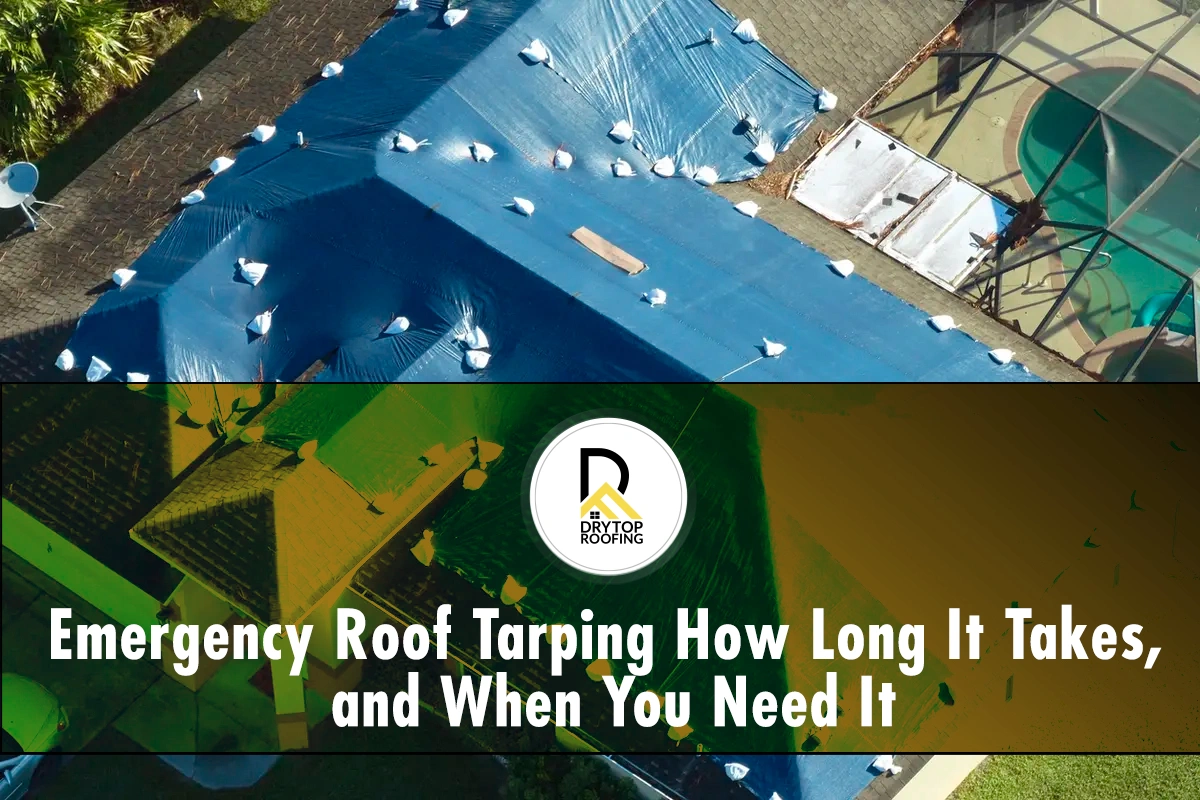
Emergency roof tarping is a same-day protective measure that covers storm-damaged areas of a roof with heavy-duty waterproof material until permanent repairs can be completed. Most residential tarping jobs take 1 to 2 hours to complete and should be done within 24 hours of any storm that leaves your roof exposed to the weather.
Key Takeaways
- Typical time to complete: 1-2 hours for a standard residential tarp.
- When to request it: Any time your roof has exposed decking, active leaks, or missing material with rain in the forecast.
- Does insurance cover it: Yes, most standard homeowners policies reimburse documented emergency tarping costs.
- Who should install it: A licensed roofing contractor with safety equipment.
- How long tarps last: 30 to 90 days under normal conditions, less under Arizona UV exposure.
What a Roof Tarp Actually Does
A tarp does not repair storm damage. It stops the damage from getting worse.
When a storm removes shingles, breaks tiles, or displaces flashing, the exposed area becomes a direct entry point for water. Arizona’s monsoon season delivers multiple storm events across a predictable window from June 15 through September 30. A roof that survives one storm with exposed decking may not survive the next one without interior water damage.
Emergency tarping creates a temporary waterproof barrier over the compromised area. It buys time for permanent repair materials to be ordered, the insurance adjuster to complete their assessment, and a contractor to schedule the full scope of work. When done correctly, it prevents a single storm event from becoming a mold, rot, or structural problem.
When You Need Emergency Roof Tarping
Not every storm situation requires emergency tarping. These are the scenarios where calling for same-day coverage is the right call.
Exposed roof decking after shingle or tile loss. Any time the underlying wood decking is visible after a storm, moisture can penetrate the structural layer within hours. Wet decking can lead to rot and may require a full deck replacement. Covering it the same day stops a repair from becoming a replacement.
Active leak with more rain in the forecast. If water is coming through the ceiling and the next storm is 24 to 48 hours away, permanent repairs cannot be made in time. The Insurance Information Institute advises homeowners to make reasonable temporary repairs right away, noting that insurers typically reimburse documented emergency costs.
Tree or large debris impact. A fallen tree or branch creates a concentrated impact zone that often breaks the weather barrier entirely. Even after debris removal, the area beneath may be open to rain. A licensed roofer can assess the zone and tarp it the same day.
Damaged or displaced flashing. Flashing around chimneys, skylights, and vents is the most common water entry point on any roof. Storm winds can pull flashing away from the surface without obvious visible damage from the ground. Interior water stains near penetration points after a storm signal flashing displacement that may require tarping until a full assessment is completed.
The insurance adjuster visit is days away. After a major storm, adjusters are booked out for several days. The Insurance Information Institute notes that homeowners should take steps to protect their property before the adjuster arrives, and that temporary repair costs are typically covered as part of the total settlement. Do not wait for adjuster approval before calling a roofer.
After-hours storm damage with no immediate repair window. Storms at night or on weekends cannot be permanently repaired for several days due to contractor availability and material lead times. Tarping fills that gap while a permanent appointment is scheduled.
How Long Does Tarping Take
The timeline depends on the roof’s size, pitch, extent of damage, and the presence of debris. Here is what a typical residential tarping job looks like from start to finish.
|
Phase |
What Happens |
Typical Time |
|
Safety assessment |
Contractor evaluates roof surface, debris, and structural condition |
15 to 30 minutes |
|
Material positioning |
Tarp is measured, cut, and positioned over the damaged zone |
20 to 40 minutes |
|
Securing the tarp |
Tarp is weighted, nailed, or strapped at edges and ridgeline |
20 to 30 minutes |
|
Photo documentation |
Contractor photographs tarp placement and surrounding damage |
10 to 15 minutes |
|
Total typical job |
Standard single-area residential tarp |
1 to 2 hours |
A properly installed tarp extends at least two to three feet beyond the damaged area on all sides. It is secured at the ridge to prevent wind uplift and is weighted or fastened at all edges. In Arizona, UV-degraded tarps lose integrity faster than in other climates, so scheduling permanent repair within 30 days of tarping is strongly recommended.
Larger jobs involving tree removal, multiple damaged zones, or steep-pitch roofs take longer. Your roofer can give you an accurate time estimate after the initial safety assessment.
Things to Know About Tarping and Your Insurance Claim
Save every receipt. According to the Insurance Information Institute, homeowners’ insurance policies typically reimburse reasonable emergency repair costs, including tarping materials and labor. Save all receipts, photograph the tarp installation, and submit documentation to your insurer with your claim. Keep in mind that tarping reimbursements count toward your total claim settlement, so avoid overpaying for emergency work.
Do not attempt tarping yourself. Roof surfaces after a storm are wet, unstable, and covered with debris. Falls are the leading cause of fatality in construction work, according to OSHA. Leave tarping to a licensed contractor with proper fall protection equipment.
Photograph everything before the tarp goes on. Once installed, the tarp covers all underlying damage. Make sure your contractor documents all visible damage with photos first. These photos are critical evidence for the adjuster and should be kept with your claim file.
Emergency roof tarping is a protective measure that buys time for a permanent fix, not a finished repair. Do not allow a tarp to remain on your roof longer than 60 to 90 days without scheduling permanent work.
Call DryTop for Same-Day Tarping
Emergency roof tarping is not optional when your roof has been breached. Every hour of delay before the next rain increases the scope of repairs. DryTop Roofing provides same-day tarping for homes in Prescott, Dewey-Humboldt, and Northern Arizona. We document all damage before the tarp goes on, provide photo records for your insurance claim, and stay through the full repair from temporary protection to a finished roof. Call 928-515-4546 or schedule your inspection online now.
Frequently Asked Questions
Will my homeowners’ insurance cover tarping after a storm?
Yes, in most cases. The Insurance Information Institute advises homeowners to make temporary repairs right away and save all receipts, as insurers typically reimburse reasonable emergency costs. Tarping costs are included in your total claim settlement. Submit receipts and photos of both the damage and the installed tarp with your claim documentation. Learn more about how the insurance claim filing process works.
How much does professional roof tarping cost?
Professional tarping for a residential roof typically ranges from $150 to $600, depending on the extent of the damage, roof pitch, and any debris present. Larger jobs or roofs requiring scaffolding cost more. Always get a written estimate before work begins. Be cautious of unusually low bids, as they may signal poor installation.
Can I tar my own roof after a storm?
You should not attempt to tarp your own roof after a storm. Wet, damaged surfaces are extremely hazardous. A misstep on a compromised roof can result in a serious fall. A licensed contractor has the fall protection equipment to complete the job safely. Spend your time documenting damage from the ground and calling a roofer for same-day service.
How long does an emergency roof tarp last?
Under typical conditions, a heavy-duty tarp lasts 30 to 90 days. In Arizona’s intense UV environment, standard tarps degrade faster than in cooler climates. UV-resistant tarps hold up longer but are not a substitute for permanent repair. Schedule permanent repairs within 30 days to prevent tarp failure from causing a second water-damage event.
Does the insurance adjuster need to see the roof before it is tarped?
No. You do not need to wait for the adjuster before installing tarping. The Insurance Information Institute is clear that homeowners should take steps to prevent further damage right away, before the adjuster arrives. Document the original damage thoroughly with photos before the tarp is placed, and provide those photos to the adjuster during their visit. Check whether insurance covers roof replacement in Arizona if the damage is extensive.