
Arizona homeowners often face extreme weather that puts their roofs to the test. Between scorching summer heat, sudden monsoon storms, and high winds, roof damage is not uncommon. So, does insurance cover roof replacement in Arizona? The short answer is yes but it depends on what caused the damage and the details of your insurance policy.
Understanding how roof insurance coverage works can help you avoid surprises when it’s time to file a claim or replace an aging roof.
Understanding Roof Insurance Coverage in Arizona
Before jumping into claims, it’s important to know how roof coverage is structured. Most Arizona homeowners insurance policies cover roof damage caused by sudden and accidental events that couldn’t have been prevented by regular maintenance. These typically include wind, hail, fire, or falling objects like tree branches.
However, coverage can vary widely. Many policies in Arizona exclude gradual deterioration, poor installation, or lack of maintenance. For example, if the shingles are curling and cracking from years of sun exposure, your insurer might classify it as wear and tear, not storm damage. This distinction matters because insurers expect homeowners to maintain their roofs.
Arizona’s desert climate adds another layer of complexity. The constant exposure to UV rays and rapid temperature changes accelerates roof aging. Insurance companies know this and often inspect the roof’s age and material before approving a claim. Homeowners with tile or metal roofs tend to have an easier time maintaining coverage since these materials last longer in hot climates.
If your roof is older, say 15 to 20 years, your insurer might still offer coverage but limit the payout to the roof’s actual cash value (ACV) rather than the replacement cost value (RCV). This means they’ll subtract depreciation based on the roof’s age, leaving you responsible for the difference.

Common Causes of Roof Damage That Insurance Covers
To understand when you’re protected, it helps to know what events typically qualify for coverage. Insurance usually pays for roof replacement if the damage results from a sudden, accidental, or weather-related event rather than gradual wear.
Storm and Wind Damage
Monsoon season in Arizona brings heavy rain, dust storms, and powerful gusts that can rip shingles or tile from the roof. If a storm lifts or dislodges materials, water may seep into the underlayment or attic. This type of damage is typically covered, provided you file a claim promptly and can document when it occurred.
Hail Damage
Hailstorms can be rare in some parts of Arizona but are frequent in areas like Flagstaff or Prescott. Even small hailstones can bruise asphalt shingles or crack clay tiles. If your roof shows visible dents, pitting, or cracked tiles after a hailstorm, insurers often approve repairs or replacement. Inspections immediately after the event strengthen your claim.
Fire and Smoke Damage
Wildfires and accidental house fires are also covered causes. Fire-damaged roofs almost always qualify for full replacement, especially when flames compromise the structure. Insurers may send an adjuster to confirm the extent of the damage and ensure the replacement materials meet current building codes.
Falling Objects
A large branch crashing through your roof during a storm or high winds is another covered event. Insurance companies recognize this as accidental damage. However, if the tree was diseased or poorly maintained, coverage might be denied on grounds of negligence.
Vandalism or Accidental Impact
Less common but still covered, vandalism or accidental damage such as a neighbor’s construction debris hitting your roof typically falls under the personal property and dwelling coverage sections of your policy.
When Roof Damage Is Not Covered
While homeowners insurance provides peace of mind, it’s not a maintenance plan. Damage caused by neglect, poor workmanship, or natural aging is rarely covered by insurance. Insurers consider it the homeowner’s responsibility to care for the roof through inspections and timely repairs.
Wear and Tear from Arizona’s Climate
Roofs in Arizona age faster due to relentless heat, ultraviolet exposure, and occasional heavy rain. Asphalt shingles tend to dry out and crack, while underlayments become brittle. If your roof deteriorates gradually from these factors, insurers will classify it as normal wear and tear rather than sudden damage.
Improper Installation
If the roof wasn’t installed according to manufacturer guidelines or local building codes, your insurance may deny coverage. Problems such as inadequate flashing, missing sealant, or incorrectly fastened tiles can void your protection because the root cause lies in construction defects, not natural events.
Mold, Algae, or Pest Damage
Mold and pests like termites fall into a gray area. Some policies exclude them entirely, while others only cover damage if it results directly from a covered event (for instance, water intrusion after a windstorm that leads to mold).
Neglected Maintenance
Insurers expect you to take proactive measures such as cleaning gutters, replacing damaged tiles, and sealing cracks. If an adjuster determines that neglect worsened the damage, the claim might be reduced or denied.
In short, the more evidence you have that the roof was properly maintained before the incident, the stronger your case will be.nce pricing, especially in regions like Phoenix or Tucson where heat exposure is extreme.
Contractors often provide detailed estimates to reflect the unique demands of Arizona’s climate and building codes.
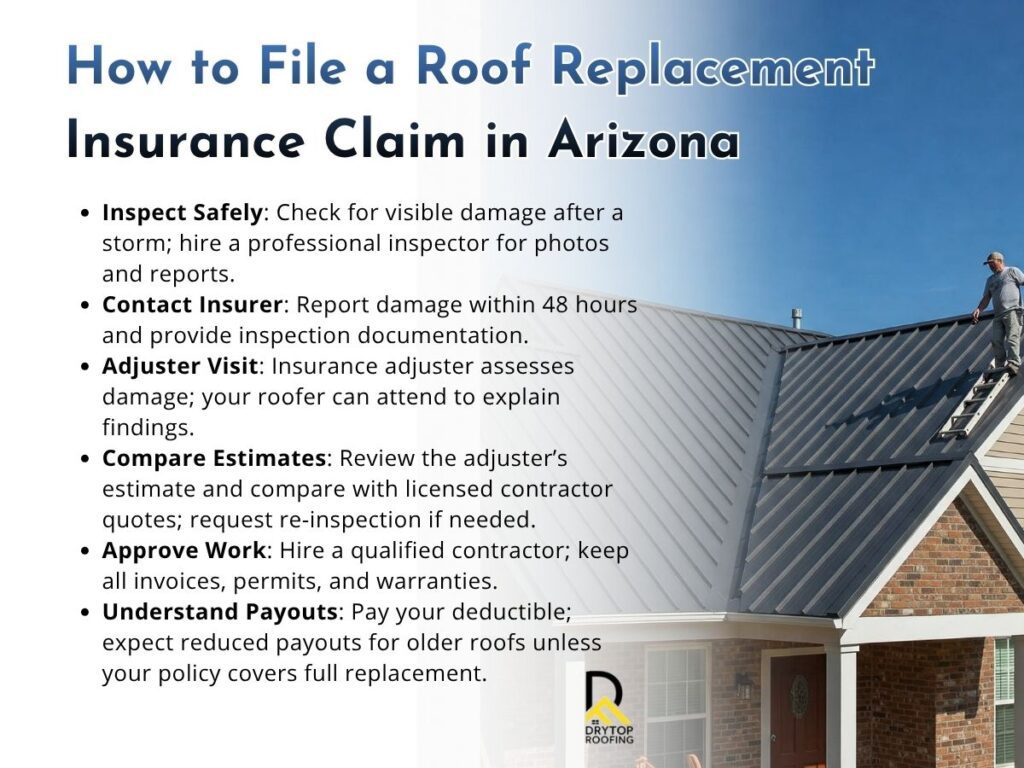
How to File a Roof Replacement Insurance Claim in Arizona
Filing a claim can feel intimidating, but with the right steps, you can maximize your chances of approval. The most important step is documenting everything before, during, and after the damage occurs.
Step 1: Inspect the Roof Safely
After a storm or suspected event, look for visible signs of damage from the ground or attic. Missing shingles, debris buildup, leaks, or water stains on ceilings may all signal roof problems. Avoid climbing the roof yourself; hire a professional roofing inspector who can take detailed photos and prepare a condition report.
Step 2: Contact Your Insurance Company
Notify your insurance provider as soon as possible ideally within 48 hours of discovering the damage. Many insurers have deadlines for reporting storm or hail damage, and delays may hurt your claim. Provide the inspection report and any photos you took.
Step 3: Schedule an Adjuster Visit
The insurer will send a claims adjuster to assess the damage. This visit determines whether the event qualifies for coverage and how much compensation you’ll receive. If you have a trusted roofing contractor, you can request that they be present to explain the technical aspects of the damage.
Step 4: Compare the Estimate
The adjuster will provide a cost estimate for repairs or replacement. You have the right to review this estimate and compare it with quotes from licensed roofing companies. If there’s a discrepancy, you can request a re-inspection.
Step 5: Approve Work and Keep Records
Once the claim is approved, hire a contractor familiar with Arizona’s roofing standards. Keep copies of all invoices, permits, and warranties. This documentation protects you if future issues arise or if you need to prove proper installation.
Step 6: Understand Deductibles and Payouts
Most policies require a deductible amount you pay out of pocket before insurance covers the rest. The insurer may pay the contractor directly or reimburse you after you provide proof of payment. For older roofs, expect the payout to reflect depreciation unless your policy covers full replacement cost.
Roof Age, Material, and Coverage Value
Not all roofs are treated equally under insurance rules. The age, material, and maintenance history of your roof directly affect how much you’ll receive from insurance.
| Roofing Material | Average Lifespan | Common Insurance Consideration |
|---|---|---|
| Asphalt Shingles | 15–20 years | May be depreciated after 10–15 years |
| Clay or Concrete Tile | 30–50 years | Often fully covered if under 30 years |
| Metal | 40–70 years | May qualify for full replacement due to durability |
| Wood Shakes | 20–30 years | Some insurers exclude due to fire risk |
Insurance companies also look at maintenance records. If you can show consistent upkeep like roof cleaning or replacing damaged tiles they’re more likely to honor full or partial coverage.
For older roofs nearing the end of their expected lifespan, insurance companies often shift from replacement cost coverage to actual cash value, meaning you’ll receive only the depreciated amount.
For instance, if a 15-year-old asphalt roof is valued at $10,000 but has depreciated 50 percent, you might only get $5,000 after paying your deductible. Understanding this difference helps you plan financially before disaster strikes.
Tips to Keep Your Roof Insurable in Arizona
A well-maintained roof not only protects your home but also ensures continued coverage. Routine maintenance and documentation can be the difference between an approved claim and a costly denial.
- Schedule Annual Inspections: Have your roof professionally inspected at least once a year, ideally before and after monsoon season.
- Keep Photo Records: Store digital photos of your roof in good condition. These serve as proof that any damage was sudden and not due to neglect.
- Clean Gutters and Trim Trees: Blocked gutters or overhanging branches can cause water and debris buildup. Clean them regularly to prevent avoidable damage.
- Repair Minor Damage Promptly: Fix small leaks or cracks right away. Insurers may deny coverage if they believe a small issue was ignored until it became a major problem.
- Review Your Policy Annually: Confirm that your policy includes replacement cost coverage rather than actual cash value. If your insurer offers endorsements or roof-specific add-ons, consider adding them for peace of mind.
- Work with Licensed Contractors: Arizona’s Registrar of Contractors requires licensing for roofers. Always confirm credentials before hiring. Poor workmanship can lead to denied claims or voided warranties.
Filing an Insurance Claim for a 20-Year-Old Roof
When your roof reaches 20 years, insurance claims become more complex. Most insurers cover only actual cash value or apply depreciation, especially for asphalt shingles at the end of their lifespan. If you suspect storm damage, get a qualified roofer to inspect and document issues like lifted shingles or hail dents.
Provide clear evidence that separates aging from sudden impact. Ask your agent about roof upgrade clauses some Arizona homeowners replace old roofs to qualify for future full coverage. Keep records of maintenance, repair receipts, and inspection photos. Strong documentation improves your chances of receiving partial or full replacement costs.