

Yes, filing a roof claim can potentially increase your insurance premium, but the effect depends on several factors. The impact varies based on your insurance company, claim history, the type of damage, and your specific policy terms.
Roof damage can be stressful and expensive, which is why many homeowners hesitate to file a claim. Understanding how roof claims affect homeowners insurance, when premiums might rise, and what strategies you can use to protect your home and wallet is essential.
Will a Roof Claim Increase Your Insurance? This guide will walk you through everything you need to know to make an informed decision.
Understanding Homeowners Insurance and Roof Coverage
Homeowners insurance is designed to protect your home and belongings from unexpected damage. Most standard policies cover roof damage caused by perils such as:
- Hail
- Windstorms
- Fire
- Lightning
- Vandalism
However, coverage often excludes damage caused by neglect, wear and tear, or lack of maintenance. Understanding these details is crucial before filing a claim.
Types of Roof Damage Typically Covered
| Type of Damage | Covered? | Notes |
|---|---|---|
| Hail or wind damage | Yes | Must be sudden and accidental |
| Fire or lightning | Yes | Usually fully covered |
| Falling trees or debris | Yes | If it’s sudden and accidental |
| Roof leaks from wear/age | No | Considered maintenance issue |
| Poor installation or manufacturing defects | No | Not covered under standard policies |
Knowing what your insurance covers can prevent unnecessary claims that may raise your premiums.
Types of Roof Damage Typically Covered
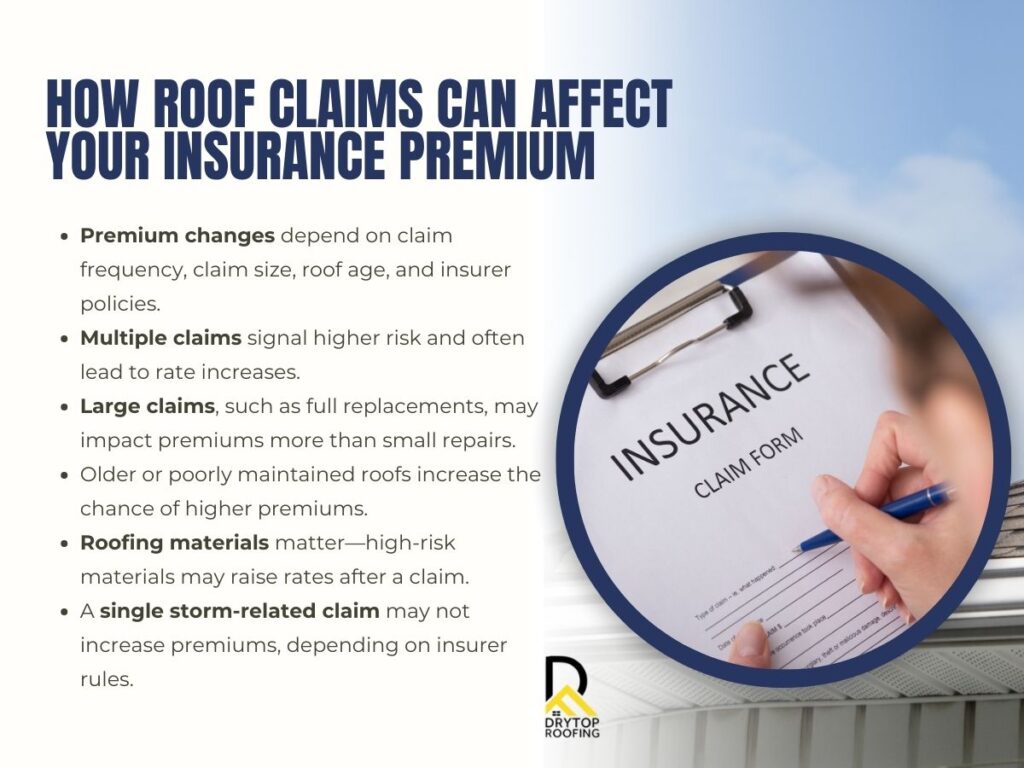
Insurance companies use multiple factors to calculate your premium. Filing a roof claim can sometimes trigger a rate increase, but the effect varies depending on:
1. Claim Frequency
Repeated claims in a short period suggest a higher risk to the insurer. Multiple claims, even minor ones, can signal poor maintenance or ongoing issues, potentially leading to higher premiums.
2. Claim Amount
Large claims may have more impact than smaller ones. For example, a full roof replacement due to storm damage may raise your premium more than a minor shingle repair.
3. Age and Condition of Roof
Older roofs are already considered a higher risk. Filing a claim on a roof nearing the end of its lifespan may prompt your insurer to increase your rates or even refuse coverage upon renewal.
4. Type of Roof Material
Certain roofing materials, like wood shake, are more prone to damage and may be seen as higher risk. Insurance companies may adjust premiums based on the material involved in a claim.
5. Deductible Amount
Your deductible—the amount you pay out-of-pocket before insurance coverage kicks in—also plays a role. High deductibles may reduce claim frequency and lessen premium increases.
Will Your Roof Claim Automatically Increase Premiums?
Not necessarily. While some claims do trigger rate increases, others may not. Many insurers offer “first-claim forgiveness” or may treat one-time, unavoidable events differently.
Factors influencing this include:
- The nature of the damage (storm vs. maintenance-related)
- Your prior claims history
- State regulations governing insurance practices
- The insurer’s internal policies
For example, a single roof claim from a severe hailstorm may not raise your premium, whereas multiple claims for minor leaks could.
Understanding Your Insurance Policy
Before filing a claim, review your policy carefully. Key points to check:
- Coverage Limits – Ensure your roof damage falls within the policy’s payout limits.
- Exclusions – Check what types of damage are not covered (wear and tear, poor maintenance, pre-existing conditions).
- Deductible Requirements – Know how much you’ll pay out-of-pocket.
- Claim Impact Clauses – Some policies explicitly outline how claims may affect premiums or renewals.
Being informed helps homeowners make smarter decisions and avoid unnecessary claims.
When Filing a Roof Claim Makes Sense
Filing a roof claim can be the right choice if:
- The damage is sudden, accidental, and covered by your policy.
- The repair or replacement cost exceeds your deductible by a significant margin.
- You need professional assistance to ensure safety and compliance with building codes.
In many cases, filing a claim for covered storm damage or hail is the most financially sound decision.
When You Might Avoid Filing a Claim
There are situations where filing a claim may not be worth it:
- Minor repairs below or slightly above your deductible
- Older roofs nearing the end of their lifespan
- Multiple claims filed in recent years
- Insurance premiums in your area are particularly sensitive to claims
Sometimes paying out-of-pocket for small repairs is a better strategy to protect future premiums.
Strategies to Minimize Premium Increases
Even if you need to file a roof claim, there are several strategies to reduce the risk of higher insurance premiums:

1. Maintain Your Roof Regularly
Routine inspections and maintenance prevent small issues from turning into major problems. Insurers often view well-maintained roofs as lower risk, which can help keep premiums stable.
2. Choose Durable, Impact-Resistant Materials
Investing in materials like metal, tile, or impact-resistant shingles reduces the likelihood of damage. Stronger roofs are less prone to claims, which can positively influence your insurance rates.
3. Consider a Higher Deductible
Opting for a higher deductible can lower your overall premium and may discourage filing minor claims. This strategy shifts small repair costs to you while keeping your insurance rates more predictable.
4. Shop Around and Compare Policies
If your premium increases after a claim, it may pay to explore other insurance providers. Some companies are more lenient regarding claims history, offering competitive rates for homeowners with past claims.
5. Document Everything Thoroughly
Keep detailed records of all roof inspections, repairs, and contractor communications. Photos, receipts, and professional estimates not only streamline the claims process but also help resolve disputes and support your case with the insurer.
The Roof Claims Process: Step-by-Step
Understanding the claims process can help you manage roof damage efficiently, minimize errors, and protect your insurance status. Follow these steps:
- Assess the Damage – Hire a licensed roofing contractor to inspect your roof and provide a detailed estimate. Document all visible damage with photos.
- Contact Your Insurance Company – Report the claim promptly and submit all documentation, including photos and estimates.
- Schedule an Adjuster Visit – The insurer will send an adjuster to verify the damage and assess coverage.
- Review the Settlement – Carefully check that the payout offered aligns with repair or replacement costs.
- Complete Repairs – Hire licensed professionals to carry out the repair or replacement.
- Keep Records – Save all receipts, photos, estimates, and correspondence for future reference or disputes.
Following this process ensures a smoother claim experience, reduces errors, and helps protect your insurance history.
Roof Claims and Insurance in Hot Climates
In hot climates like Arizona, insurance companies pay particular attention to roof conditions due to increased risks:
- UV damage can accelerate aging
- Heat and thermal expansion can cause cracking or warping
- Monsoon storms increase the chance of hail or wind damage
Proper roof maintenance and timely inspections are especially important to avoid multiple claims that could increase premiums.
Common Myths About Roof Claims
There are several misconceptions about roof claims that can cause homeowners to hesitate unnecessarily. Understanding the truth helps you make informed decisions.
| Myth | Reality |
|---|---|
| Any roof claim will automatically raise my premium. | Not necessarily. Factors such as claim type, claim history, and insurer policies determine whether premiums increase. |
| Filing a roof claim is not worth it. | If the damage is significant and covered, filing a claim can save thousands of dollars, even if premiums increase slightly. |
| Older roofs aren’t covered. | While roof age matters, many insurance policies still cover sudden, accidental damage, even on older roofs, depending on the terms of the policy. |
Alternatives to Filing a Roof Claim
If you’re concerned about premium increases, there are several options to address roof repairs without filing an insurance claim:
- Out-of-Pocket Repairs – For minor issues, paying yourself may be more cost-effective and preserve future insurance rates.
- Home Warranty Coverage – Some home warranties provide coverage for roof components under specific conditions.
- Roofing Financing – Many contractors offer financing for larger repairs, allowing you to replace or fix your roof without involving insurance.
These alternatives give homeowners flexibility, protect your insurance record, and allow for strategic decision-making when handling roof damage.
Conclusion
Filing a roof claim does not automatically mean your insurance premium will rise, but it can have an impact depending on claim type, frequency, roof age, and insurer policies. Understanding your coverage, maintaining your roof, and carefully evaluating whether to file a claim can protect both your home and your wallet.
For homeowners in hot climates or areas prone to storms, proactive roof maintenance and careful planning can prevent costly surprises. When in doubt, consult a licensed roofing contractor and speak with your insurance agent to make the most informed decision.