
Replacing a roof in Arizona involves more than simple square footage calculations, as climate, materials, and labor rates all shape the final cost. Homeowners planning such a project must consider the unique weather conditions of the region, which can demand materials resistant to both heat and monsoon rains.
How much does it cost to replace a roof on a 2,200 square foot house in Arizona? The average Arizona home experiences extreme UV exposure, requiring roofing products designed for durability under constant sunlight. This reality directly affects material lifespan, maintenance schedules, and the overall value of a roof replacement.
Financial preparation for such a project depends on how regional market factors and material quality intersect. Informed decisions ensure that costs are not only predictable but also justified by long-term performance and energy savings.
Factors Influencing Roof Replacement Costs in Arizona
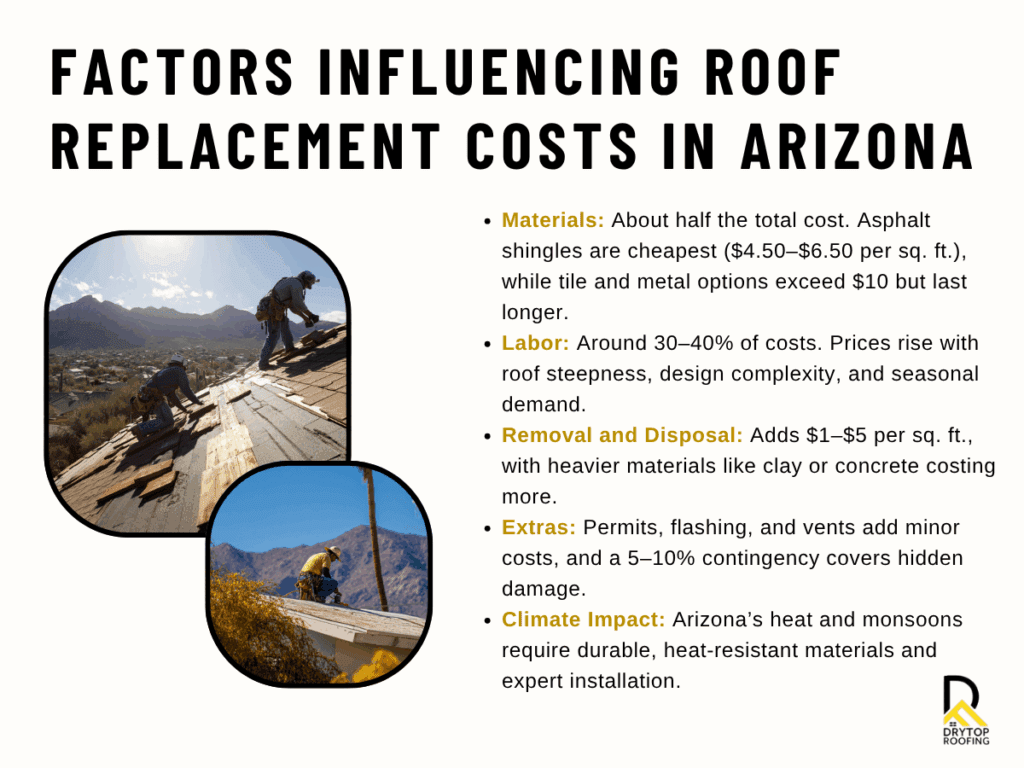
Replacing a roof on a 2,200-square-foot house typically ranges between $8,000 and $20,000, depending on the materials and contractor rates. Variations in local labor pricing, removal fees, and underlayment needs can further expand or contract that range.
| Cost Component | Average Cost Range | Description |
|---|---|---|
| Roofing Materials | 45% – 55% of total cost | Includes shingles, tiles, or panels plus underlayment and fasteners. |
| Labor | 30% – 40% of total cost | Skilled installation, removal of old roofing, and cleanup. |
| Roof Removal & Disposal | $1,000 – $2,500 | Depends on the type and weight of old material removed. |
| Permits & Inspections | $150 – $500 | Required by most Arizona municipalities before work begins. |
| Flashing, Vents & Accessories | $300 – $800 | Seals roof penetrations and improves water drainage. |
| Contingency / Repairs | 5% – 10% | Covers hidden damage or decking replacement once work starts. |
Every Arizona roof faces challenges unique to desert environments, including intense sun, temperature swings, and occasional heavy rainfall. These stressors influence not only the choice of materials but also the installation methods required for longevity.
- Material Selection and Pricing Differences
Material choice is the most significant cost driver in any roofing project. Asphalt shingles generally remain the most economical, averaging $4.50 to $6.50 per square foot installed, while premium tile or metal roofs can exceed $10 per square foot.
Clay tile roofs, favored in many Arizona neighborhoods for their visual appeal, can last up to fifty years with proper maintenance. Their cost reflects both aesthetic value and resilience against prolonged heat exposure.
Metal roofing, though initially expensive, offers reflective qualities that reduce cooling costs in the summer months. Many homeowners now view it as an investment in both efficiency and durability.
- Labor and Installation Complexity
Labor costs account for nearly half of a roofing project’s total expense. Arizona’s construction market fluctuates based on season and regional demand, often leading to higher rates during the cooler months when roofers are busiest.
Steeper roof pitches or complex architectural layouts increase labor time and material waste. Homes with multiple valleys, dormers, or skylights often require additional flashing and sealing.
Selecting an experienced roofing contractor ensures accurate installation that prevents premature leaks and material failure. A reputable professional also guarantees compliance with local building codes and warranty requirements.
- Tear-Off and Disposal Costs
Removing the old roof is typically priced at $1 to $5 per square foot, depending on the number of layers being removed. Heavy materials like concrete or clay tiles add disposal weight and increase hauling fees.
Skipping removal to apply new materials over old ones may save money initially but can void manufacturer warranties. Proper removal exposes hidden damage and allows for underlayment replacement, improving long-term performance.
Disposal fees vary across Arizona counties, especially in urban areas with stricter landfill regulations. Budgeting for this step avoids last-minute surprises when contractors calculate final invoices.
Regional Climate and Its Impact on Roofing
Arizona’s environment presents some of the harshest conditions for residential roofing in the United States. Constant sunlight, seasonal monsoon rains, and thermal expansion challenge even premium materials over time.
Roofing contractors in regions like Phoenix, Tucson, and Yuma often tailor material recommendations to local microclimates.
- Heat Resistance and UV Protection
The desert climate accelerates the breakdown of lower-quality roofing materials. Prolonged exposure to sunlight weakens asphalt granules and causes premature cracking.
High-performance shingles with UV-resistant coatings extend lifespan significantly compared to standard variants. Investing in these options reduces maintenance costs over decades of service.
Metal and tile roofs perform exceptionally well under Arizona’s solar intensity. Their ability to reflect heat rather than absorb it helps stabilize attic temperatures and reduce cooling loads.
- Monsoon Season and Water Resistance
Heavy rains during monsoon season expose weaknesses in roof design and installation. Proper underlayment and water barriers prevent costly interior damage caused by leaks and trapped moisture.
Roofs with inadequate drainage or clogged gutters can experience structural stress over repeated storm cycles. Regular maintenance before the season begins helps preserve roof integrity.
Clay tile and standing seam metal roofs provide strong resistance to sudden rainfall and high winds. Their overlapping design directs water flow efficiently, minimizing exposure to vulnerable seams.
- Energy Efficiency and Insulation
Cool roof systems have become increasingly popular throughout Arizona. These materials reflect sunlight and lower indoor temperatures, reducing reliance on air conditioning.
Insulated roofing materials contribute to stable indoor comfort year-round. Over time, they help offset installation costs through measurable energy savings.
Federal tax incentives and state rebate programs often apply to energy-efficient roofing upgrades. Homeowners should verify eligibility through the U.S. Department of Energy or local utility providers.
Estimating Total Roof Replacement Costs
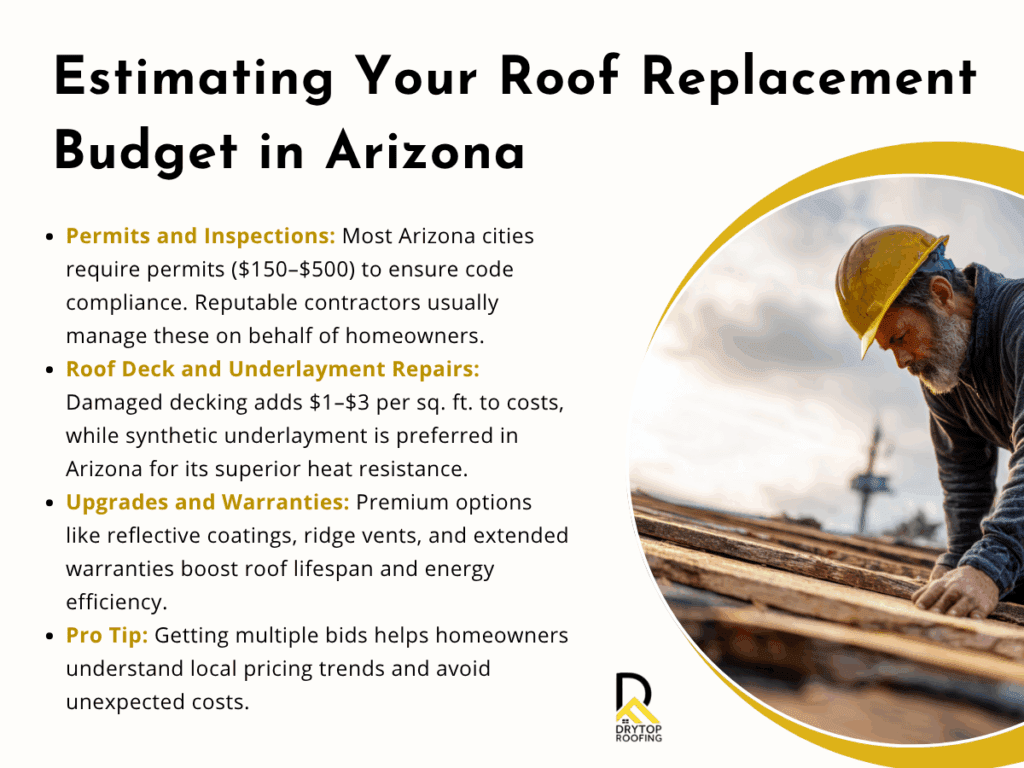
Calculating a realistic budget involves more than multiplying area by price per square foot. Accurate estimates account for materials, labor, permits, and optional upgrades that enhance performance or aesthetics.
Homeowners who gather multiple bids typically gain better insight into regional pricing trends. Transparent estimates help avoid unexpected charges once the project begins.
- Permit and Inspection Fees
Most Arizona municipalities require building permits for roof replacements. Fees generally range from $150 to $500, depending on project scope and jurisdiction.
Inspections ensure that roofing work complies with local codes and safety regulations. Failing to secure proper permits can delay future property sales or insurance claims.
Reputable contractors handle permit applications and inspections on behalf of their clients. This administrative support ensures compliance and peace of mind during the process.
- Roof Deck and Underlayment Repairs
Underlying structural elements often determine total cost as much as the visible materials do. Damaged roof decking must be replaced to provide a stable foundation for new materials.
Underlayment acts as a critical moisture barrier between decking and shingles or tiles. In Arizona’s climate, synthetic underlayments outperform traditional felt due to superior heat tolerance.
Replacing rotten or warped decking typically adds $1 to $3 per square foot to the total. Identifying these needs early prevents cost overruns during construction.
- Optional Upgrades and Extended Warranties
Extended warranties and premium upgrades often add long-term value. Reflective coatings, ridge vents, and advanced sealants can significantly enhance durability and efficiency.
Upgrading to hail-resistant shingles may also lower insurance premiums. Many Arizona homeowners view these additions as strategic investments rather than discretionary expenses.
Manufacturers frequently offer tiered warranty options covering both materials and labor. Reading terms carefully ensures that coverage remains valid for decades of ownership.
Cost Breakdown by Material and Roof Size
Roof replacement costs in Arizona vary based on materials, labor rates, and local supply conditions. Weather patterns, roofing design, and slope complexity also influence pricing, especially in regions like Phoenix or Tucson where heat exposure is extreme.
Contractors often provide detailed estimates to reflect the unique demands of Arizona’s climate and building codes.
How Much Does It Cost To Replace A Roof On A 2,200 Square Foot House
| Roofing Material | Average Cost per Sq. Ft. | Estimated Total Cost (2,200 sq. ft.) | Average Lifespan (Years) |
|---|---|---|---|
| Asphalt Shingles | $4.50 – $6.50 | $9,900 – $14,300 | 20 – 25 |
| Concrete Tile | $8.00 – $12.00 | $17,600 – $26,400 | 40 – 50 |
| Clay Tile | $10.00 – $15.00 | $22,000 – $33,000 | 50+ |
| Metal Roofing | $9.00 – $13.00 | $19,800 – $28,600 | 40 – 60 |
| Foam Roofing | $6.00 – $8.00 | $13,200 – $17,600 | 20 – 25 |
| Flat Roof (Modified Bitumen) | $5.00 – $7.00 | $11,000 – $15,400 | 15 – 20 |
Choosing the Right Contractor for Roof Replacement
Hiring the right professional determines whether a roof lasts decades or demands repairs within a few years. In Arizona’s demanding climate, craftsmanship and attention to detail hold equal weight with product selection.
A trustworthy contractor provides transparent pricing, written warranties, and references from satisfied customers. Their expertise directly affects both performance and long-term maintenance costs.
- Licensing and Insurance Requirements
Contractors in Arizona must hold a ROC (Registrar of Contractors) license to perform roofing work legally. This certification ensures compliance with state safety standards and consumer protection laws.
Homeowners should verify licensing status through the Arizona Registrar of Contractors database before signing any agreement. Confirming liability and workers’ compensation insurance further protects against financial risk.
Unlicensed work may appear cheaper initially, but it exposes homeowners to potential penalties or warranty voids. Proper documentation preserves both quality assurance and legal recourse.
- Comparing Estimates and Materials
Obtaining at least three written estimates allows homeowners to identify fair pricing and detect red flags. Transparent proposals detail materials, labor, and disposal costs clearly.
Comparing line items reveals how different contractors structure their bids and allocate resources. Cheaper quotes sometimes reflect lower-quality materials or insufficient labor time.
Prioritizing value over price often results in superior workmanship and fewer long-term issues. Homeowners who evaluate both expertise and product options achieve better overall results.
- Warranties and Aftercare Services
Reputable roofers back their work with manufacturer and workmanship warranties. These protections safeguard against premature material failures or installation errors.
Extended warranties often cover defects for twenty years or more, depending on product line and service level. Reviewing terms ensures that homeowners understand claim procedures and coverage limitations.
Post-installation maintenance programs add value through periodic inspections and cleaning. These services help roofs reach or exceed their expected lifespan
Best Roofing Material for Arizona: Choosing the Right Roof for Your Home
Replacing a roof on a 2,200-square-foot house in Arizona requires careful planning that accounts for materials, labor, and environmental conditions. Understanding regional pricing helps homeowners balance cost with performance and longevity.
Selecting durable materials suited for Arizona’s heat and storm cycles ensures that the investment holds value over time. Partnering with licensed, reputable contractors further protects both property and finances.
For those evaluating long-term options and regional durability, Best Roofing Material for Arizona explores which roofing types offer the greatest return on investment. Informed decisions about design, materials, and maintenance preserve comfort, safety, and value for years to come.