
A tile roof in Arizona offers durability and resilience, but its effectiveness depends heavily on the quality of the underlayment hidden beneath the tiles. This protective barrier shields the home from water infiltration, ensuring the longevity of both the roofing system and the structure itself.
Replacing underlayment is a significant investment that homeowners in Arizona often face due to the state’s intense heat and seasonal monsoon rains. The expenses associated with underlayment replacement vary widely based on roof size, materials, and contractor expertise.
Homeowners who prepare for the financial and practical aspects of this process can protect their property, preserve home value, and avoid costly water damage.
Cost Factors for Tile Roof Underlayment Replacement
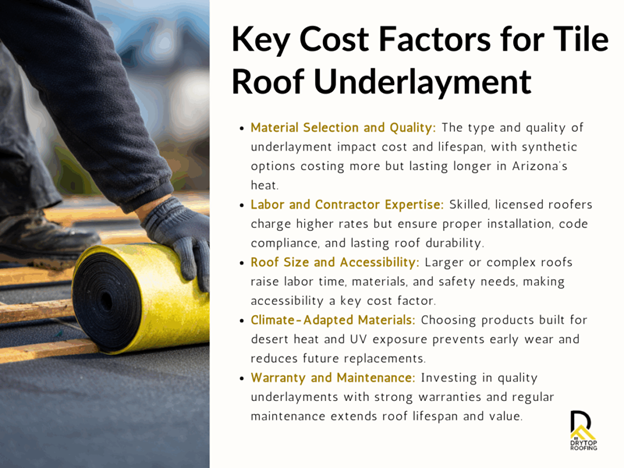
Tile roof underlayment replacement in Arizona is not a one-size-fits-all project, and several variables influence the final price. The harsh desert climate accelerates wear, making it vital to choose durable materials and experienced contractors.
Roof size plays the largest role in determining overall cost, as more square footage requires more materials and labor. Additional factors such as roof pitch, accessibility, and type of tile all contribute to the price range that Arizona homeowners can expect.
1. Material Selection and Quality
The choice of underlayment material directly affects both the price and longevity of the roof system. Synthetic underlayments generally cost more upfront than felt options, but they withstand Arizona’s heat for a significantly longer time.
Premium underlayments often come with extended warranties, which provide peace of mind but add to the initial expense. Many homeowners view this as a worthwhile investment, as replacement timelines are pushed further into the future.
Local roofing suppliers often recommend products tailored for desert climates, reducing risks associated with premature breakdown. Selecting a contractor familiar with these options ensures that the installation maximizes the benefits of each material.
2. Labor and Contractor Expertise
Labor typically accounts for a substantial portion of the overall project cost, particularly with roofs that involve complex designs or steep pitches. Contractors with proven experience in tile roof systems often charge more, but they deliver higher quality and reliability.
Homeowners should request detailed estimates that break down labor and materials separately to gain transparency. Hiring licensed and insured professionals protects the property owner from liability and ensures adherence to building codes.
Established contractors in Arizona often provide maintenance recommendations that extend the life of the new underlayment. A strong service relationship can lead to better workmanship guarantees and long-term support.
3. Roof Size and Accessibility
Large roof surfaces naturally increase the total project cost since more underlayment, fasteners, and labor hours are required. In Arizona, sprawling single-story homes often come with expansive roof structures that significantly impact the budget.
Accessibility also influences pricing, as homes with multiple levels or obstructed entry points require additional safety measures and equipment. These conditions slow down progress and can raise labor expenses.
Contractors often conduct an on-site inspection to determine potential obstacles that may affect costs. Clear communication about roof complexity helps homeowners receive accurate and realistic estimates.
Types of Tile Roof Underlayment and Costs
Tile roof underlayment comes in several varieties, each with different levels of performance, durability, and cost. The choice often depends on budget, expected longevity, and how well each product holds up against extreme sun and heavy monsoon rains.
Comparing materials side by side helps ensure the right balance between upfront investment and long-term value.
| Underlayment Type | Average Cost (Installed) | Lifespan in Arizona | Key Benefits |
| Asphalt-Saturated Felt | $2 – $3 per sq. ft. | 10 – 15 years | Lowest cost, widely available |
| Synthetic Underlayment | $4 – $6 per sq. ft. | 20 – 30 years | Durable, UV-resistant, lighter weight |
| Peel-and-Stick Membrane | $6 – $8 per sq. ft. | 30+ years | Superior waterproofing, long-term protection |
1. Asphalt-Saturated Felt
Asphalt-saturated felt has been the traditional underlayment for decades, offering affordability and widespread availability. It typically lasts between 10 and 15 years in Arizona before the heat and UV exposure begin to break it down.
Costs for felt underlayment usually range from $2 to $3 per square foot installed, making it the lowest-priced option. Although economical, it requires earlier replacement compared to other materials, which can increase long-term expenses.
Many contractors no longer recommend standard felt for tile roofs in Arizona due to the harsh climate. However, it may still appeal to homeowners seeking the lowest initial investment on smaller roofing projects.
2. Synthetic Underlayment
Synthetic underlayment is engineered from polymers that resist tearing, UV rays, and moisture. This type has gained popularity in Arizona because it performs well under prolonged sun exposure and heavy rainstorms.
Costs generally fall between $4 and $6 per square foot installed, which is higher than felt but balanced by longer lifespan. In many cases, synthetic products last 20 to 30 years, making them a practical investment for tile roofs.
Lightweight rolls also make installation faster and safer for contractors, which can slightly reduce labor costs. Homeowners often choose synthetic underlayment for its blend of durability and moderate pricing.
3. Peel-and-Stick Membranes
Peel-and-stick membranes are premium underlayment products that create a watertight seal directly on the roof deck. Their adhesive backing prevents slipping, offering extra protection against leaks in vulnerable areas.
Costs range from $6 to $8 per square foot installed, placing this option at the higher end of the market. The superior waterproofing and extended lifespan, often exceeding 30 years in Arizona, justify the added expense for many homeowners.
Contractors often recommend peel-and-stick membranes for high-value homes or areas prone to storm damage. The investment ensures maximum protection and reduces the likelihood of costly water intrusion.
Average Costs in Arizona
Arizona homeowners can expect a wide cost range when replacing underlayment on tile roofs, with variables depending on size, materials, and labor. Establishing average pricing helps property owners set realistic expectations before contacting contractors.
Most projects are calculated based on square footage, and quotes typically include both removal of existing underlayment and installation of the new barrier. Prices in Arizona tend to be slightly higher than in cooler states due to extreme climate challenges.
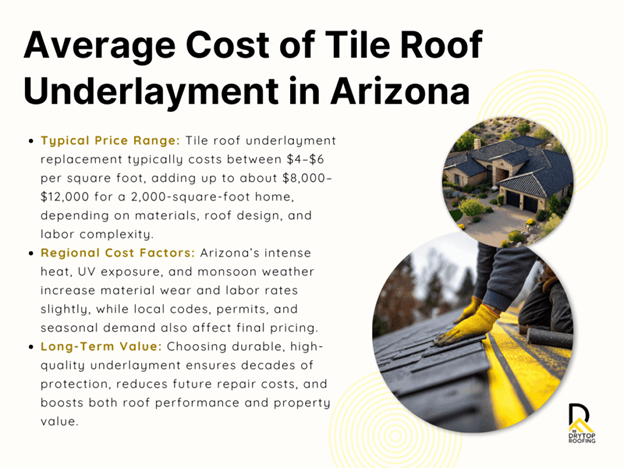
1. Typical Price Range
The average cost for underlayment replacement on a tile roof in Arizona falls between $4 and $6 per square foot. This includes removal of old materials, surface preparation, and installation of new underlayment.
A standard 2,000-square-foot roof may therefore cost between $8,000 and $12,000, depending on material selection and complexity. Larger or more complicated roofs can easily exceed this range, especially when premium products are chosen.
Contractors often provide tiered estimates that allow homeowners to weigh long-term value against initial cost. Comparing multiple bids helps ensure that pricing is fair and competitive.
2. Regional Cost Considerations
Arizona’s roofing market reflects unique challenges created by intense heat, UV exposure, and sudden rainfall. These conditions shorten the lifespan of lower-quality underlayments, making durable products a practical necessity rather than a luxury.
Local contractors often factor in the demand for specialized products and labor during peak seasons. Homeowners who schedule projects outside the summer rush may find more competitive pricing and quicker availability.
Municipal building codes in cities like Phoenix, Tucson, and Scottsdale may also impact total cost, requiring permits and inspections that add to the final budget. Navigating these regulations with an experienced contractor prevents delays and unexpected fees.
3. Long-Term Value
Though upfront costs may feel high, quality underlayment replacement extends roof life and prevents water damage. A well-installed barrier can last decades, saving thousands of dollars in potential repair bills. According to Herbert Frank, Founder of Roofing Systems of Florida, homeowners should evaluate tile roof underlayment replacement based on lifecycle value rather than upfront cost alone. Investing in premium materials and proper installation often results in lower ownership costs, fewer repairs, and better long-term protection for the home.
Investing in premium materials reduces the likelihood of early failure, especially under Arizona’s demanding climate. The added security offers peace of mind and enhances the property’s resale appeal.
Homeowners often find that long-term savings and improved protection justify the initial expenditure. Evaluating costs as part of an overall property maintenance plan ensures the best return on investment.
Additional Considerations for Arizona Homeowners
Replacing underlayment is more than a financial decision, as climate, timing, and maintenance play major roles in protecting the property. Homeowners in Arizona face unique conditions that make planning essential.
Proactive decisions can extend roof life, minimize disruptions, and ensure that the new underlayment provides lasting protection. Weighing these additional considerations helps avoid unexpected costs and complications.
1. Climate Impacts on Lifespan
Arizona’s desert climate exposes roofs to relentless sunlight, which can quickly break down inferior underlayment. Seasonal monsoon storms then exploit weak points, causing leaks that damage ceilings, walls, and insulation.
Homeowners who delay replacement risk costly water damage that far exceeds the expense of proactive underlayment installation. Routine inspections help identify signs of deterioration before they escalate into major problems.
Choosing UV-resistant underlayment materials is critical in extending roof performance. Many contractors specifically recommend products engineered for extreme desert heat.
2. Timing and Seasonal Planning
Scheduling underlayment replacement during cooler months reduces worker fatigue and ensures faster project completion. Arizona summers make roofing projects challenging, often increasing labor time and expense.
Contractors generally have greater availability outside peak summer and monsoon seasons, which allows for more flexible scheduling. Homeowners can benefit from off-season discounts and shorter waiting periods.
Planning ahead also reduces the risk of unexpected water damage during storm season. A properly timed project protects the home during the months it needs it most.
3. Maintenance After Replacement
After investing in new underlayment, ongoing maintenance becomes essential to maximize its lifespan. Annual roof inspections detect early signs of tile displacement or underlayment exposure.
| Maintenance Task | Frequency | Estimated Cost | Benefit |
| Professional Inspection | Annually | $150 – $300 | Detects early issues |
| Debris Removal | Twice yearly | $200 – $400 | Prevents moisture buildup |
| Minor Tile Repairs | As needed | $200 – $600 | Protects underlayment from exposure |
| Gutter Cleaning | Twice yearly | $150 – $300 | Ensures proper drainage |
Regular cleaning removes debris that can trap moisture or obstruct proper water drainage. Addressing small issues quickly prevents premature wear and avoids the need for major repairs.
Many roofing contractors offer maintenance packages that combine inspections with minor repairs. This service ensures the underlayment continues performing as expected for years to come.
How to Choose the Best Roofing Companies in Prescott, AZ
Tile roof underlayment replacement in Arizona is a major investment that protects homes against heat, sun, and seasonal storms. The right balance of material choice, cost planning, and proper installation ensures durability and long-term value.
Choosing the best roofing company is essential to achieving those results, especially in regions such as Prescott where local expertise plays a key role. Homeowners who focus on licensed contractors with strong reputations gain confidence that their underlayment will perform as expected.
A well-chosen roofing partner provides not only quality workmanship but also ongoing support for inspections and maintenance. With trusted professionals handling the project, property owners can enjoy decades of protection and peace of mind.