
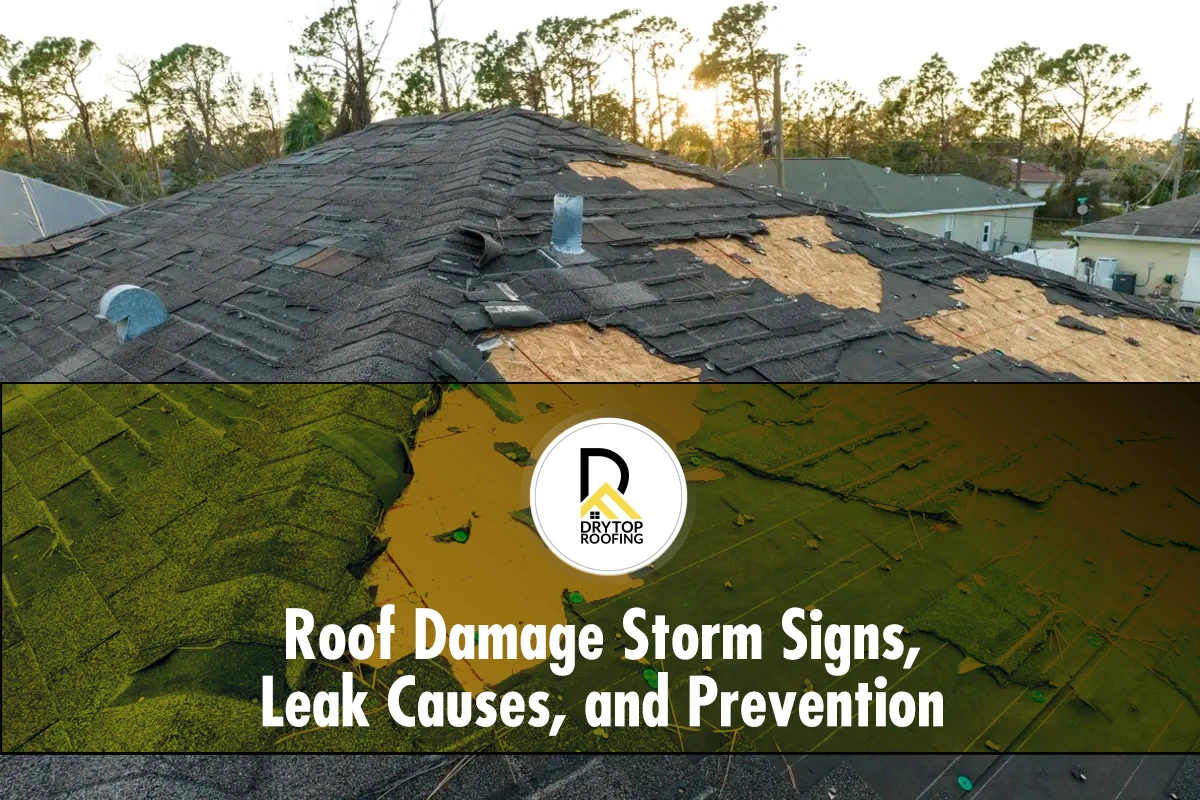
Roof damage starts small and spreads fast. A lifted shingle, a bent flashing edge, or a tiny gap at a vent boot can turn one hard storm into a leak, wet insulation, stained drywall, and swollen framing.
In Arizona, damage often follows monsoon wind, hail, and heavy rain. Heat then bakes whatever the storm weakened. You need a clear system to spot problems early, stop leaks, and prevent the next repair cycle. Here is how to do it.
Key Takeaways
- Most leaks start at edges, joints, and penetrations, not in the middle of a roof plane.
- Interior signs, such as ceiling stains and damp attic insulation, often appear before exterior damage becomes visible.
- Hail can bruise shingles and crack tile in ways you cannot see from the ground.
- Flashing failures cause a large share of leaks after storm events.
- Regular maintenance and targeted upgrades reduce both repair frequency and cost.
Exterior Storm Signs You Can Spot from the Ground
Keep your feet on the ground. Use binoculars to scan the full roof plane, then focus on edges and penetrations.
Shingles and Surface Materials
- Missing shingles or exposed nail lines.
- Lifted corners or creased shingles from wind uplift.
- Bald patches and heavy granule loss, which shorten shingle life.
- Dents on metal components are a common indicator of hail impact.
Tile Roofs and Ridge Areas
- Slipped tiles that expose the underlayment beneath.
- Cracked tiles with hairline breaks that are easy to miss.
- Loose ridge caps that let wind-driven rain enter.
Flashing and Transition Points
- A bent drip edge is allowing water to run under the first course.
- Open seams in chimney flashing at the deck line.
- Gaps in wall flashing that allow water to seep behind stucco and into the framing.
Gutters and Drainage
- Overflowing gutters are pushing water under the roof edges.
- Detached downspouts are dumping water at the foundation and soaking the fascia.
- Packed valleys damming water near the valley metal.
If you suspect storm damage, schedule a professional inspection. DryTop can check the full system and document findings for repairs. Use the Storm Damage Roof Repair page to get on the schedule.
Interior Warning Signs You Should Not Ignore
Damage often appears inside before you can see it outside. Check these areas with a flashlight.
Ceilings and Walls
- Brown rings or streaks on ceilings indicate an active leak path.
- Bubbling paint or soft drywall suggests moisture is present.
- New cracks near corners can signal wet framing.
Attic Checks
- Wet insulation directly above a damaged area.
- Dark roof decking, damp rafters, or rusty nails from recurring moisture.
- Daylight is visible through the deck, which requires urgent repair.
If you see active dripping, catch water in a bucket and move valuables. Then call a roofer. DryTop handles leak repairs with a clear repair plan. Start with Roof Repairs.
Why Leaks Happen After Storm Damage
Most storm leaks begin at edges, joints, and penetrations. Water follows gravity, wind, and capillary action, so stains may appear far from the entry point.
Flashing Failures
Flashing seals roof-to-wall joints, chimneys, skylights, and vent pipes. When it bends, corrodes, or separates, water finds a path. The National Roofing Contractors Association identifies flashing as the primary barrier at roof junctions and penetrations; without it, leaks are predictable. Common failure points include loose step flashing at sidewalls, missing kickout flashing at wall ends, cracked pipe boots around plumbing vents, and failed sealant at metal laps.
If your roof has multiple penetrations, a pitch pocket may be the weak link. DryTop explains this in detail at What Is a Pitch Pocket on a Roof?.
Wind-Driven Rain
High winds lift shingles and drive water into laps and under edges. FEMA’s guidance on wind damage identifies severe wind as a major driver of structural damage to homes. Creased shingles from uplift, lifted starter strips at eaves, ridge cap blow-offs, and exposed underlayment at rakes are all common results. Once the seal breaks at any of these points, damage spreads with each subsequent storm.
Hail Impact
Hail bruises asphalt shingles and cracks tile in ways that seem minor from the ground, but weaken the waterproofing layer underneath. NOAA’s National Severe Storms Laboratory notes that wind-driven hail can cause significant damage to residential structures. Watch for soft spots or random impact marks with granule loss on shingles, cracked tile corners, or dented vents. If soft metals like flashing show dents, assume the area above took hits you cannot easily see.
Underlayment Wear on Tile Roofs
On Arizona tile roofs, the underlayment does the actual waterproofing. Tiles deflect UV and impacts, but the membrane stops water. When it ages out, leaks appear during heavy rain, even when the tiles look fine. DryTop explains the cost and timing of this repair in “How Much to Replace Underlayment on a Tile Roof in Arizona.”
A Practical Post-Storm Checklist
Run this process within 24 to 48 hours after any significant storm.
- Check inside first. Walk hallways, bathroom ceilings near exhaust fans, closets on exterior walls, and the attic access point. Mark any stains with a pencil line and date. A stain that grows confirms active water entry.
- Walk the perimeter. Look for missing materials, overflow marks on gutters, and fresh drip lines on fascia boards.
- Check penetrations from the ground. Focus on plumbing vents and boots, attic vents and turbine bases, skylights, and chimney flashing. Most leaks originate at these points.
- Document everything. Take wide shots of each slope and close-ups of each defect. Include context photos that show the location. Keep notes on the storm date and any local weather alerts. This documentation supports insurance claims and repair scopes.
For a formal photo report, schedule your inspection through Roof Inspections.
Prevention That Works in Arizona
Maintenance Habits
- Clean gutters twice per year and after heavy storms. Clogged gutters accelerate eave damage.
- Clear roof valleys after wind events. Debris packs in valleys, causing ponding.
- Trim branches at least 6 feet from the roof edge. Branch strikes crack tiles and damage shingles.
- Confirm bathroom fans vent outside, not into the attic. Misdirected fans create moisture that mimics leak stains.
DryTop offers scheduled care through its Roof Maintenance program.
Targeted Upgrades
- Use high wind-rated shingle installation methods in wind-prone zones.
- Add self-adhering membranes at vulnerable edges and penetrations.
- Replace cracked pipe boots before they fail.
- Install kickout flashing at roof-to-wall ends to prevent hidden water intrusion behind stucco.
If the same area leaks repeatedly, stop patching it and address the underlying system detail.
Ventilation and Attic Balance
Some ceiling stains come from condensation, not outside leaks. Keeping fans vented outside, intake and exhaust vents clear, and attic insulation even without voids reduces this risk. A roof inspection can determine whether moisture is coming from a leak or from ventilation.
Repair or Replace: How to Decide
Base the decision on scope, roof age, and whether leaks repeat in new locations.
Repair Makes Sense When
- Damage stays in one section.
- A flashing repair solves the water path.
- The roof still has useful life, and the decking is solid.
Replacement Makes Sense When
- Damage appears on multiple slopes.
- Leaks recur in different areas after each repair.
- Underlayment on a tile roof has reached the end of its life.
- Decking shows broad moisture damage across sections.
A full replacement resets the system and reduces future repair frequency. Contact DryTop to discuss your options and receive photos through Roof Repairs.
Schedule a Free Inspection with DryTop Roofing AZ
If you think your roof was damaged, act within 48 hours. Delaying may turn a repair into an interior renovation. Schedule your free inspection with DryTop Roofing AZ to receive a clear report on your roof’s needs.
Start with the Contact Us page, or schedule your inspection directly through Storm Damage Roof Repair.
Frequently Asked Questions
What are the first signs of roof damage after a storm?
Look for missing shingles, lifted edges, dented vents, and gutter overflow marks outside. Inside, check for new ceiling stains and damp attic insulation. Active dripping means a leak is already causing interior damage.
Can a small roof leak cause serious damage?
Yes. Even a minor leak can soak insulation, stain drywall, rot decking, and drive mold growth. Fix it fast to limit the scope of the repair.
Where do most roof leaks start?
Most leaks start at flashing, vents, chimneys, skylights, valleys, and roof-to-wall transitions. The NRCA identifies these junctions as the highest-risk points on any roof.
How can I reduce damage from high winds?
Keep trees trimmed back from the roof, maintain edges and flashing in good condition, and use high-wind-rated installation methods for new work. FEMA guidance emphasizes securing these elements to reduce wind-related damage.
Does hail always cause visible damage?
No. Hail can bruise shingles and crack tile in ways that are not visible from the ground. NOAA notes that hail driven by severe storms can cause significant damage that only a close inspection reveals. If soft metals on your roof show dents, have the full field inspected.