
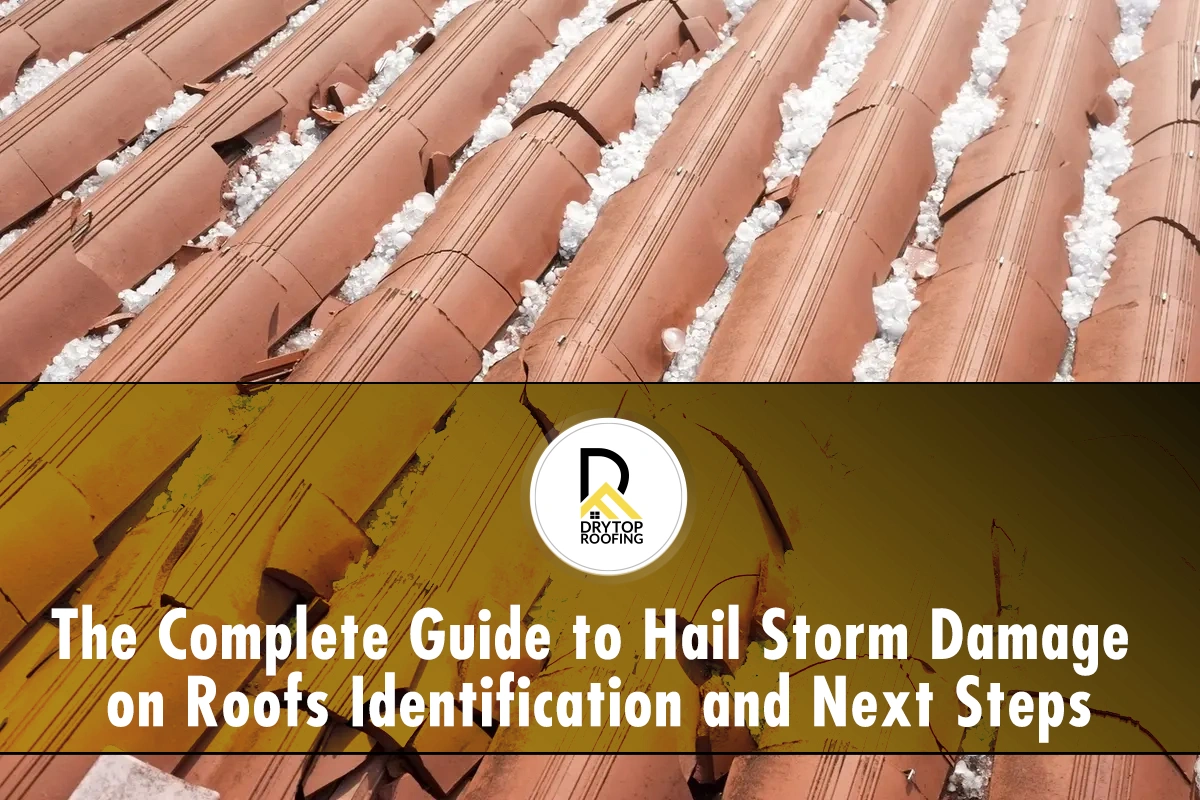
Hailstorm damage to roof surfaces is not always obvious from the ground, and a roof does not need to leak immediately to deserve attention. Hail can bruise shingles, crack tile, dent metal, and damage flashing. After a strong hail event in Prescott or Northern Arizona, document visible changes and have questionable conditions professionally inspected.
Key Takeaways
- Asphalt shingles: Look for localized granule loss, bruised impact marks, exposed asphalt, tears, or damaged edges.
- Concrete or clay tile: Look for fresh chips, fractures, broken corners, or displaced pieces.
- Metal roofing: Hail may dent panels; check whether seams, flashing, coatings, or water-shedding details were affected.
- Gutters, vents, and skylights: Impact marks can confirm hail exposure, but do not prove the roof needs replacement.
- Insurance: Photograph visible damage, review your policy, and contact your insurer promptly if you believe a covered loss occurred.
Why Hailstorm Damage to Roof Systems Can Be Easy to Miss
Hailstorm damage to roof systems can range from cosmetic marks to functional damage. Results vary with hail size, impact energy, wind, roof material, and existing wear. The Insurance Institute for Business & Home Safety explains that hail damage varies by roof covering, documenting dents, tears, granule displacement, tile cracking, and metal denting.
Hail size is useful context, not a diagnosis. The National Weather Service Flagstaff hail-size reference identifies quarter-size hail as 1 inch and golf-ball-size hail as 1.75 inches, with 1-inch hail meeting severe criteria. Actual roof damage still depends on material, condition, and impact pattern.
How Hail Damage Appears by Roofing Material
A useful inspection looks for fresh impact patterns and separates storm effects from aging, foot traffic, installation defects, and previous repairs. Hailstorm damage to roof materials should not be diagnosed from one mark.
Asphalt Shingles
Asphalt shingles may show granule loss, dents, tears, bruising, exposed asphalt, or irregular marks. IBHS identifies denting, tearing, and granule displacement as hail damage modes. Significant damage can affect water shedding, while minor marks may be cosmetic.
Granules in a gutter do not automatically prove hail damage because shingles also shed granules with age or after installation. A roofer should compare suspected impacts across slopes and other exposed surfaces.
Suspected shingle damage is best confirmed through a pattern of evidence, not one dark spot or a small amount of loose granules.
Concrete and Clay Tile
Tile roofs can show fresh chips, cracks, broken corners, or shattered pieces. IBHS notes that large hail can crack or shatter tile, with severity varying by thickness, material, and impact location.
A broken tile also raises a second question: what condition is the system beneath it in? The underlayment should be considered rather than treating every broken tile as an isolated issue. Learn more about tile roof underlayment and when replacement becomes necessary.
Metal Roofing
Metal roofing often shows dents or dimples. IBHS notes that denting does not automatically mean the roof has lost functionality, so the inspection should focus on seams, fasteners, penetrations, flashing, coatings, and drainage details.
A dent in an intact panel is different from an impact that distorts a seam or flashing connection. Metal panels should be judged by both performance and appearance.
Gutters, Skylights, Vents, and HVAC Components
Gutters, downspouts, vents, skylight frames, painted metal, and HVAC fins may also show impact marks.
Treat these marks as supporting evidence, not automatic proof of replacement. Photos of several affected surfaces can help compare damage patterns.
What Hail Size Means for Roof Damage Risk
The National Weather Service uses 1-inch hail as the threshold for severe hail and provides standard size references for storm reporting. That threshold describes storm severity, not a universal roof-damage threshold. Roof performance depends on material, condition, installation, impact energy, and other variables.
|
Hail reference |
Approximate diameter |
Practical takeaway |
|
Pea |
0.25 inch |
Usually lower concern, but older or fragile materials may still show isolated effects. |
|
Penny |
0.75 inch |
Check exposed metal, gutters, and older roofing for new marks. |
|
Quarter |
1 inch |
Meets the NWS severe-hail threshold and warrants closer attention after the storm. |
|
Golf ball |
1.75 inches |
Represents a larger impact event and increases concern for exposed roof components. |
Hailstorm damage to roof materials cannot be confirmed from a size chart alone. If large hail affected your neighborhood, document visible changes and schedule an inspection when new impacts, leaks, displaced materials, or other concerns appear.
What to Do After Hailstorm Damage to Roof Surfaces Is Suspected
If you suspect hailstorm damage to roof surfaces, start with safety and documentation. Inspect from the ground where possible instead of climbing onto a wet, steep, tile, metal, or visibly damaged roof.
Photograph gutters, downspouts, siding, window screens, visible skylights, outdoor equipment, and any roofing damage you can safely see. Inside, look for new ceiling stains, damp areas, or signs of water entry after rain. Keep any pre-storm photos because they can help distinguish fresh changes from older wear.
Then arrange a professional inspection. The purpose is to determine whether the event caused localized repairable damage, broader functional damage, or mainly cosmetic effects. DryTop Roofing provides roof inspections for homeowners who need a clearer assessment after hail.
Things to Know Before Filing a Hail Insurance Claim
Insurance decisions should be based on your actual policy. The Arizona Department of Insurance and Financial Institutions explains that homeowners’ policies generally cover hail damage, while also warning that policies can contain exclusions, deductibles, and coverage limitations.
Arizona DIFI also recommends documenting damage immediately and contacting the insurance company before permanent repair, replacement, cleaning, or disposal so the insurer has an opportunity to evaluate the loss. If temporary work is necessary to prevent further damage, ask what documentation the insurer requires and keep receipts.
Do not assume every hail mark qualifies for replacement. A roofing inspection documents physical conditions; the insurer determines coverage. Review your deductible, endorsements, and whether losses are settled at replacement cost or actual cash value.
For additional guidance, review DryTop’s insurance claim filing process and its explanation of whether insurance covers roof replacement in Arizona.
Repair or Replace After Hailstorm Damage to Roof Materials?
Hailstorm damage to roof materials does not automatically mean replacement. The right recommendation depends on the extent and location of damage, the roof’s age, material availability, underlayment condition, previous repairs, remaining service life, and whether damaged sections can be reliably restored.
Localized damage may be repairable, while broader functional damage may justify larger repairs or replacement. Inspectors should separate fresh shingle impacts from normal aging, evaluate damage beneath tile, and check metal seams, flashing, coatings, and water-shedding details instead of judging dents alone.
If replacement is already appropriate, compare impact-resistant products with Arizona priorities such as UV exposure, maintenance, appearance, and long-term cost. DryTop’s guide to the best roofing material for Arizona can help frame that decision.
Schedule a Post-Hail Roof Inspection
Post-storm roof conditions are easier to evaluate when documented soon after the event. Do not assume the worst, but do not ignore new damage simply because the ceiling is still dry.
DryTop Roofing serves Prescott, Dewey-Humboldt, and surrounding Northern Arizona communities. If hail affected your property, schedule a roof inspection to identify storm effects, evaluate vulnerable components, and determine whether monitoring, repair, or replacement is appropriate.
Frequently Asked Questions
Can hail damage a roof without causing an immediate leak?
Yes. Hailstorm damage to roof components can affect shingles, tile, flashing, or other exposed materials without producing an immediate interior leak. IBHS research shows that hail can dent, tear, crack, or displace roofing material. Whether those impacts affect performance depends on their severity and location, so the absence of a leak does not, by itself, confirm that the roof is undamaged.
How can I check for hail damage without climbing on my roof?
Look from the ground for new dents in gutters or downspouts, damaged screens, chipped surfaces, displaced roofing, or visible skylight damage. Photograph changes, and check ceilings or safely accessible attic areas for moisture. Leave detailed roof-surface evaluation to a qualified roofer.
Does one-inch hail mean my roof is damaged?
Not necessarily. One-inch hail meets the National Weather Service severe hail criterion, but it is not a guarantee of functional roof damage. Material type, roof condition, impact energy, wind, and installation all affect the outcome. Use hail size as a reason to pay attention, not as proof that replacement is necessary.
How quickly should I report possible hail damage to my insurer?
Review your policy and contact your insurer promptly after discovering possible covered damage. Arizona DIFI recommends documenting damage immediately and, when possible, allowing the insurer to evaluate it before any permanent work is performed. Your policy controls specific notice requirements, so avoid relying on a universal reporting deadline.
Will insurance cover a complete roof replacement after hail damage?
It depends on the policy and documented loss. Hailstorm damage to roof surfaces may result in repair, partial replacement, full replacement, or no covered payment depending on the scope of damage, deductible, exclusions, settlement method, roof condition, and policy terms. The insurer decides coverage, while a roofing inspection documents the physical condition.