
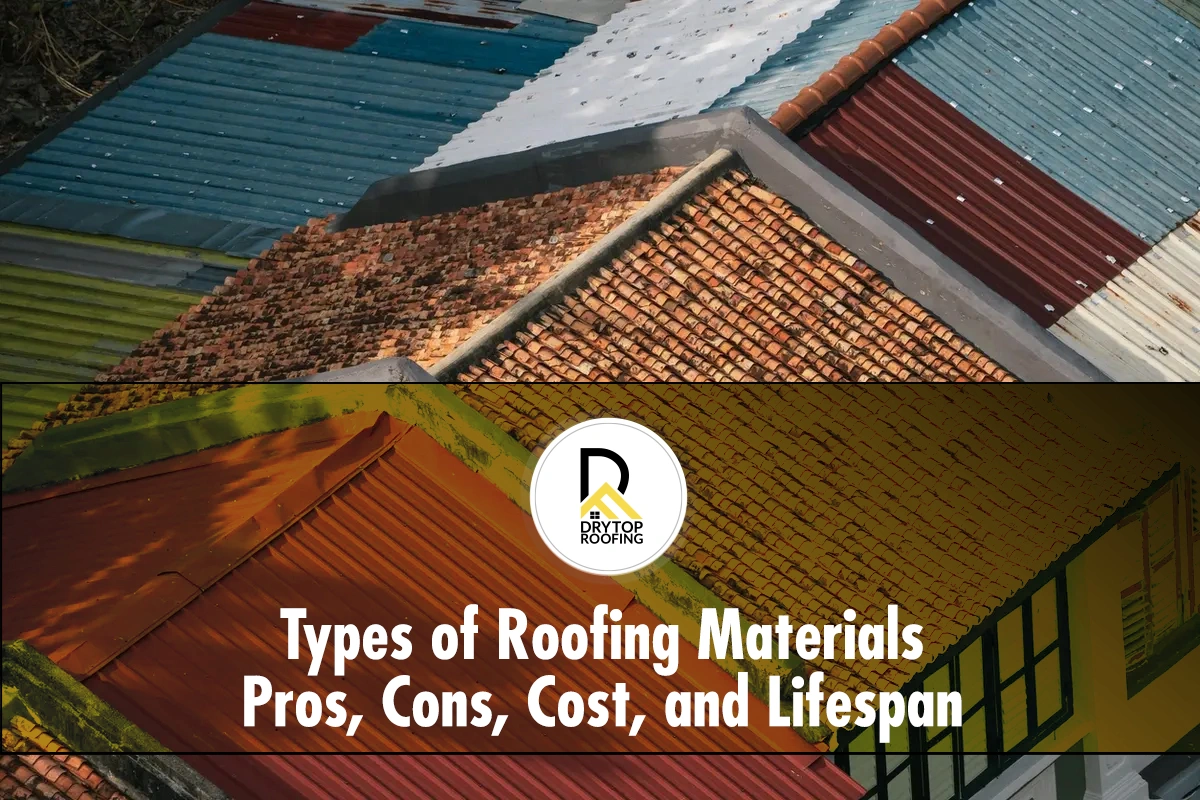
The types of roofing materials you choose affect your energy bills, repair frequency, and your roof’s lifespan. With Arizona’s intense sun, monsoon storms, and wide daily temperature swings, making the wrong choice could cost you more over time. In this guide, you’ll discover every major material: what it costs, how long it lasts, and where each one works best for you.
Key Takeaways
- Asphalt shingles cost $3.40 to $5.95 per sq ft and last 15 to 30 years, making them the most affordable entry point.
- Metal roofing costs $6 to $24.50 per sq ft but lasts 40 to 70 years with minimal maintenance.
- Tile roofs cost $6.30 to $12.30 per sq ft and can last 50 to 100 years in Arizona’s climate.
- Slate costs $23.49 to $31.77 per sq ft and lasts 75 to 150 years, the longest of any common material.
- Installation quality matters as much as the material itself for long-term performance
Types of Roofing Materials
Asphalt Shingles: The Budget-Friendly Standard
Asphalt shingles top American homes more than any material. They install fast, in one to two days, and most roofers use them daily. Knowing the three main types and their price differences is vital when comparing options:
- 3-tab shingles: $3.43 to $4.65 per sq ft. The most basic option lasts 15 to 20 years.
- Architectural shingles: $4.11 to $5.57 per sq ft. Thicker, more durable, with a 30-year warranty.
- Premium architectural shingles: $4.39 to $5.95 per sq ft. The strongest asphalt option, with a lifespan of up to 50 years.
Pros
- Fast installation, broad contractor availability, and wide color selection.
- Individual shingles can be replaced without redoing the entire roof.
Cons
- Absorbs heat rather than reflecting it, which raises cooling costs in Arizona.
- High winds can lift shingles during the monsoon season.
- A shorter lifespan means more frequent replacement than with metal or tile.
For a direct comparison that matters to you in desert conditions, see the best roofing material for Arizona. Next, let’s look at how metal roofing compares in these environments.
Metal Roofing: Long-Term Investment
Modern metal roofing offers more than one style. Standing seam panels and metal shingles often mimic the appearance of traditional materials. Most applications use one of three main types:
- Corrugated aluminum: $6.03 to $8.15 per sq ft. The most affordable metal option.
- Metal shingles: $7.69 to $10.41 per sq ft. Combines the look of shingles with the durability of metal.
- Standing seam: $4.59 to $28.50 per sq ft. The most weather-tight option, with panels that interlock along raised seams.
Pros
- Reflects solar heat instead of absorbing it, reducing cooling costs by 10 to 25 percent.
- Panels are more securely fastened than shingles, making them significantly more resistant to high winds.
- Resists fire, does not crack or curl, and stands up to hail better than most materials.
- It can often be installed over an existing roof, saving on removal costs.
Cons
- Upfront costs are two to three times higher than for asphalt shingles.
- Requires specialized installation, which increases labor costs.
- Rain and hail create noise; proper insulation helps but does not eliminate it.
- Color matching for repairs becomes difficult as finishes fade over time.
See how metal roofing could work for you in extreme heat at the best roofing materials for hot climates.
Tile Roofing: Arizona’s Classic Choice
Clay and concrete tiles naturally resist desert conditions and outlast most other materials. The top two options are:
- Concrete tiles: $6.27 to $8.49 per sq ft. Designed to look like clay tiles, and are easier to install.
- Clay tiles: $9.09 to $12.29 per sq ft. Valued for its longevity and appearance, clay can last 50 or more years in Arizona’s dry climate.
Pros
- Naturally resists fire, insects, and rot with minimal moisture absorption.
- Thermal mass helps regulate home temperature, keeping it cooler during the day and warmer at night.
- Color holds for decades without fading and adds curb appeal, supporting resale value.
Cons
- Heavy-weight may require structural reinforcement before installation, increasing project costs.
- Individual tiles crack if walked on incorrectly or struck by large debris.
- Repairs require matching tiles that may be discontinued if your style is no longer produced.
For detailed lifespan data that applies to your situation, see how long a tile roof lasts in Arizona.
Slate Roofing: The Premium Option
Natural slate is the longest-lasting roofing material available. At $23.49 to $31.77 per sq ft installed, the upfront cost is high. The return is a roof that can last 75 to 150 years. Some slate roofs installed over a century ago still protect homes today.
Pros
- The longest lifespan of any common roofing material, with documented cases exceeding 150 years.
- Completely fire-resistant. Does not rot or attract insects.
- Natural color variation never fades. Minimal maintenance beyond occasional inspections.
Cons
- Extreme weight requires structural reinforcement on most homes, adding thousands to the project cost.
- Installation requires specialized expertise that few roofers possess.
- Replacement tiles must be quarried and matched, making repairs expensive and time-consuming. Due to these challenges, many homeowners consider slate only for premium projects. Next, let’s consider wood roofing for Arizona’s climate.
Wood Shingles and Shakes: Limited Use in Arizona
In Arizona, wood roofing is a poor fit for your home. The dry climate causes splitting and cracking. Fire risk is high during wildfire season. Wood requires regular treatment to resist decay and insect damage. Most Arizona building codes restrict or prohibit wood roofing in fire-prone areas. For most homeowners here, you’ll find that another material is a better investment.
How to Choose the Right Material for Your Home: Calculate Cost Over Time, Not Just Upfront
A $7,000 asphalt roof replaced every 20 years ends up costing you more over 60 years than a $20,000 tile roof that lasts the same period with minimal maintenance. Factor in how often you’ll need to replace your roof, expected maintenance, and how long you plan to own your home. For a full cost breakdown, see what it costs to replace a roof on a 2,200 sq ft house in Arizona.
Match the Material to Arizona’s Climate
You need materials that can handle extreme heat, intense UV exposure, occasional hail, and monsoon winds. Reflective surfaces can help you reduce cooling costs. Impact-resistant materials protect your home from storm damage. Both tile and metal work well in desert conditions. While asphalt works, you’ll find it needs more frequent attention in Arizona than in milder climates.
Account for Maintenance Reality
Metal and tile require minimal routine maintenance from you. Asphalt shingles demand regular inspections and occasional repairs. Wood requires frequent treatment. Think honestly about how much time and money you want to spend on upkeep, and pick a material that matches your capacity.
Talk to DryTop Roofing AZ About Your Options
At DryTop Roofing, we’ve installed every material type in desert conditions like yours. We’ll give you honest recommendations based on your roof, your budget, and your timeline—without pressure. Contact us for a free consultation and detailed estimate. Need to extend your current roof’s life while you plan? Our professional maintenance services keep your system running until you’re ready to replace it.
Frequently Asked Questions
What is the cheapest roofing material?
Three-tab asphalt shingles are the most affordable option at $3.43 to $4.65 per sq ft installed. The lower upfront cost comes with a shorter lifespan of 15 to 20 years, which means more frequent replacement and higher long-term spending compared to tile or metal.
Which roofing material lasts the longest?
Natural slate lasts the longest, from 60 to 150 years or more. Clay tile and standing-seam metal follow, both in the 40- to 70-year range, depending on climate and maintenance. Asphalt shingles have the shortest lifespan at 15 to 30 years.
What are the five most common roofing materials?
The five most commonly used residential roofing materials are asphalt shingles, metal roofing, clay tile, concrete tile, and natural slate. Asphalt shingles remain the most popular in North America due to lower cost and easier installation. Metal is valued for durability and energy efficiency. Clay and concrete tiles are known for longevity. Slate is considered a premium material for its exceptional lifespan.
Are slate roofs expensive to insure?
Slate roofs can carry higher insurance costs because slate is a high-value material and repairs require specialized labor. Some insurers offset this by assigning lower risk ratings, since slate is extremely durable and fire-resistant. Premiums vary by location, policy type, and how your insurer assesses replacement value.
What roof type lasts the longest?
Natural slate lasts the longest of any common roofing material, with properly installed roofs often lasting more than 100 years. Clay tile and standing seam metal are the next most durable, typically lasting 50 to 70 years in Arizona’s climate.
What are the six common roof style types?
The six most common residential roof styles are gable, hip, flat, mansard, gambrel, and shed. Gable roofs have two sloping sides that meet at a peak. Hip roofs slope on all four sides. Flat roofs are common in modern and commercial construction. Mansard and gambrel styles create additional attic space. Shed roofs feature a single sloping plane, often used in contemporary designs.