
ArchieSEO
What Is the Most Durable Roofing Material for Arizona Homes
The most durable roofing material is slate, with a proven lifespan of 75 to 200 years under proper installation and maintenance. For Arizona homeowners, clay tile is the top practical choice, lasting 50 to 100+ years in desert heat and monsoon conditions. Your roof faces extreme UV radiation, 160+ degree surface temperatures in summer, and heavy monsoon downpours. Choosing the right material can save you thousands in repairs and replacements over your home's lifetime. This article breaks down each option by lifespan, cost, and real performance in Arizona's climate. Key Takeaways Slate roofing lasts 75 to 200 years, making it [...]

How to Choose the Right Roofing Material for Your Home: Expert Tips
Choosing a roof for an Arizona home is a practical decision with long-term consequences. The roofing material you pick determines how well your home handles extreme heat and UV exposure, how much your cooling bills run, and how often you face replacement costs. Once you understand what each material does in desert conditions, the choice gets straightforward. Key Takeaways Arizona's climate demands materials that handle extreme heat, UV exposure, and monsoon storms. Asphalt shingles are less expensive upfront but may need replacement sooner in hot climates than more durable tile or metal options, potentially leading to higher total costs over [...]
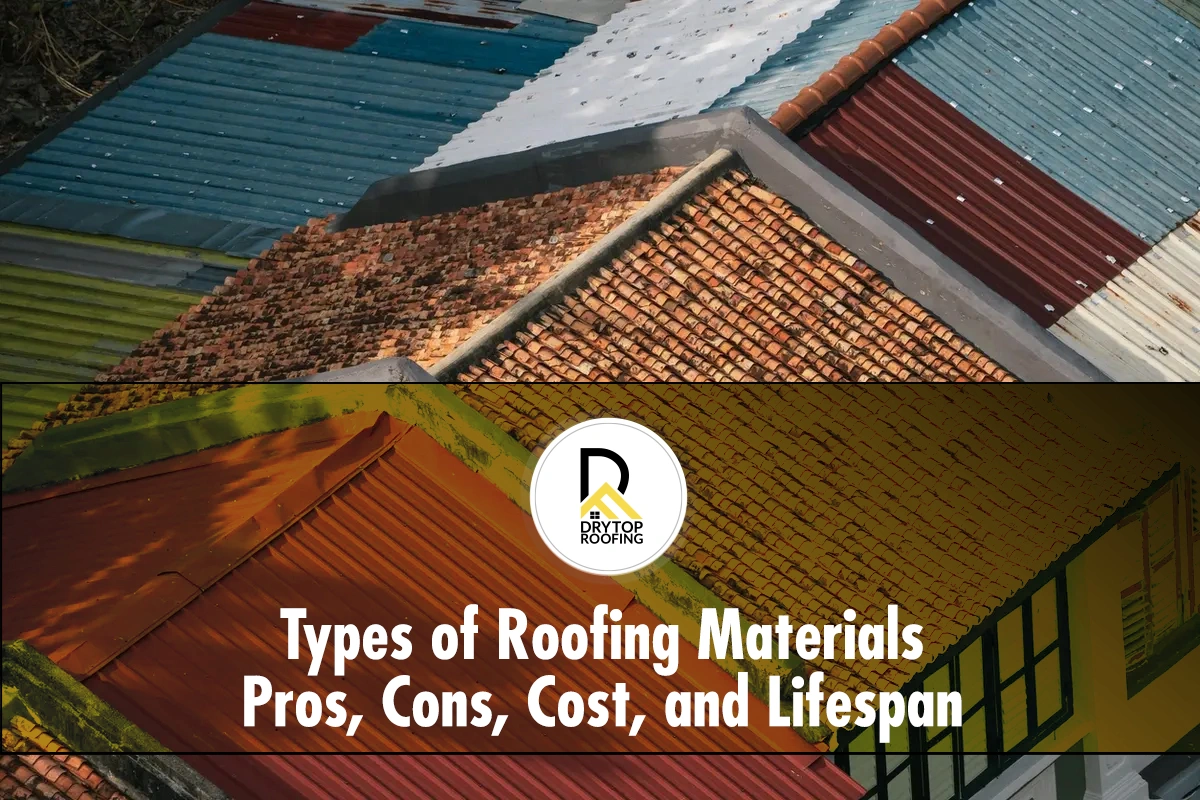
Types of Roofing Materials: Pros, Cons, Cost, and Lifespan
The types of roofing materials you choose affect your energy bills, repair frequency, and your roof's lifespan. With Arizona's intense sun, monsoon storms, and wide daily temperature swings, making the wrong choice could cost you more over time. In this guide, you'll discover every major material: what it costs, how long it lasts, and where each one works best for you. Key Takeaways Asphalt shingles cost $3.40 to $5.95 per sq ft and last 15 to 30 years, making them the most affordable entry point. Metal roofing costs $6 to $24.50 per sq ft but lasts 40 to 70 years [...]
Post-Storm Roof Inspection: 8 Signs of Storm Damage to Look For
The most critical signs of roof damage after a storm include missing shingles, granule loss, cracked surfaces, damaged flashing, dented gutters, ceiling stains, soft spots on the deck, and damaged ridge caps. According to the Insurance Institute for Business and Home Safety (IBHS), when a roof is damaged during a storm, the damage can cascade — including water intrusion that leads to costly repairs. Key Takeaways What to Inspect What to Look For Who Should Check It Shingles and tiles Missing, lifted, curled, or cracked surfaces Homeowner from ground; roofer on surface Gutters and downspouts Granule buildup, dents, or detached [...]
Roof Damage: Storm Signs, Leak Causes, and Prevention
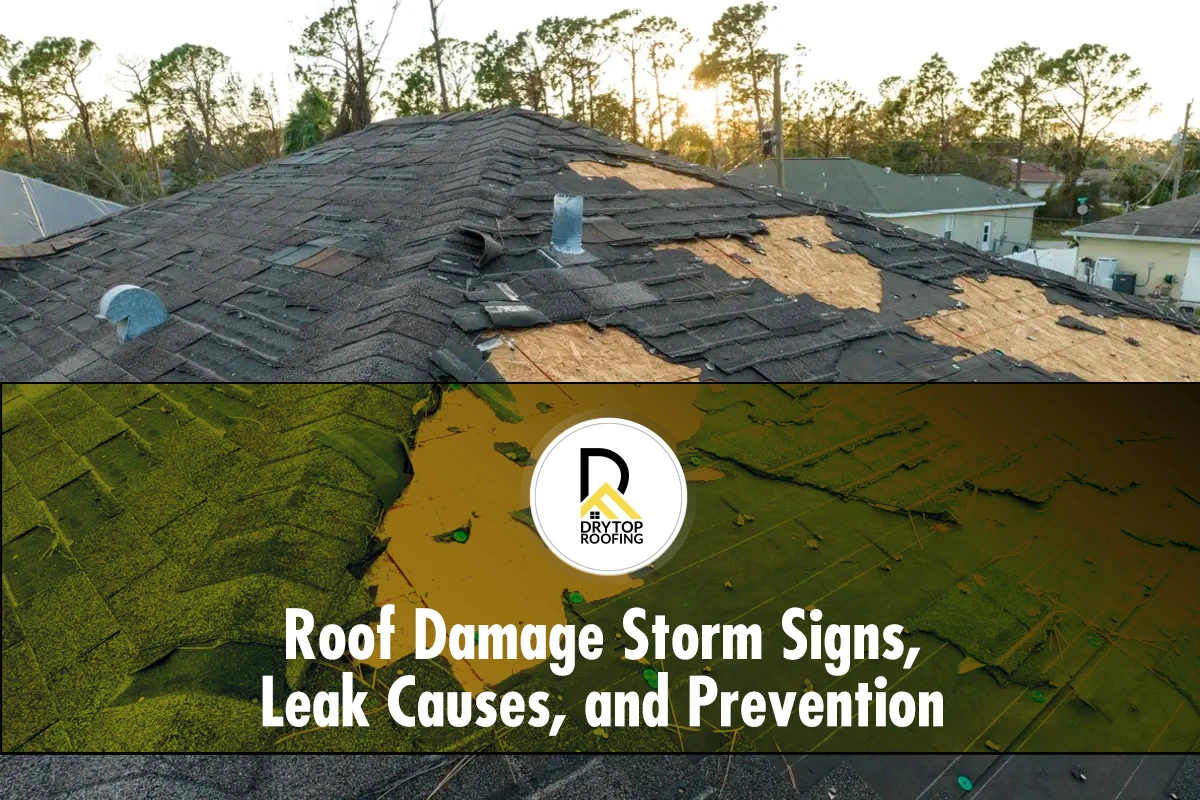
Roof damage starts small and spreads fast. A lifted shingle, a bent flashing edge, or a tiny gap at a vent boot can turn one hard storm into a leak, wet insulation, stained drywall, and swollen framing. In Arizona, damage often follows monsoon wind, hail, and heavy rain. Heat then bakes whatever the storm weakened. You need a clear system to spot problems early, stop leaks, and prevent the next repair cycle. Here is how to do it. Key Takeaways Most leaks start at edges, joints, and penetrations, not in the middle of a roof plane. Interior signs, such as [...]
What Is Ice and Water Shield Roofing? Everything You Need to Know
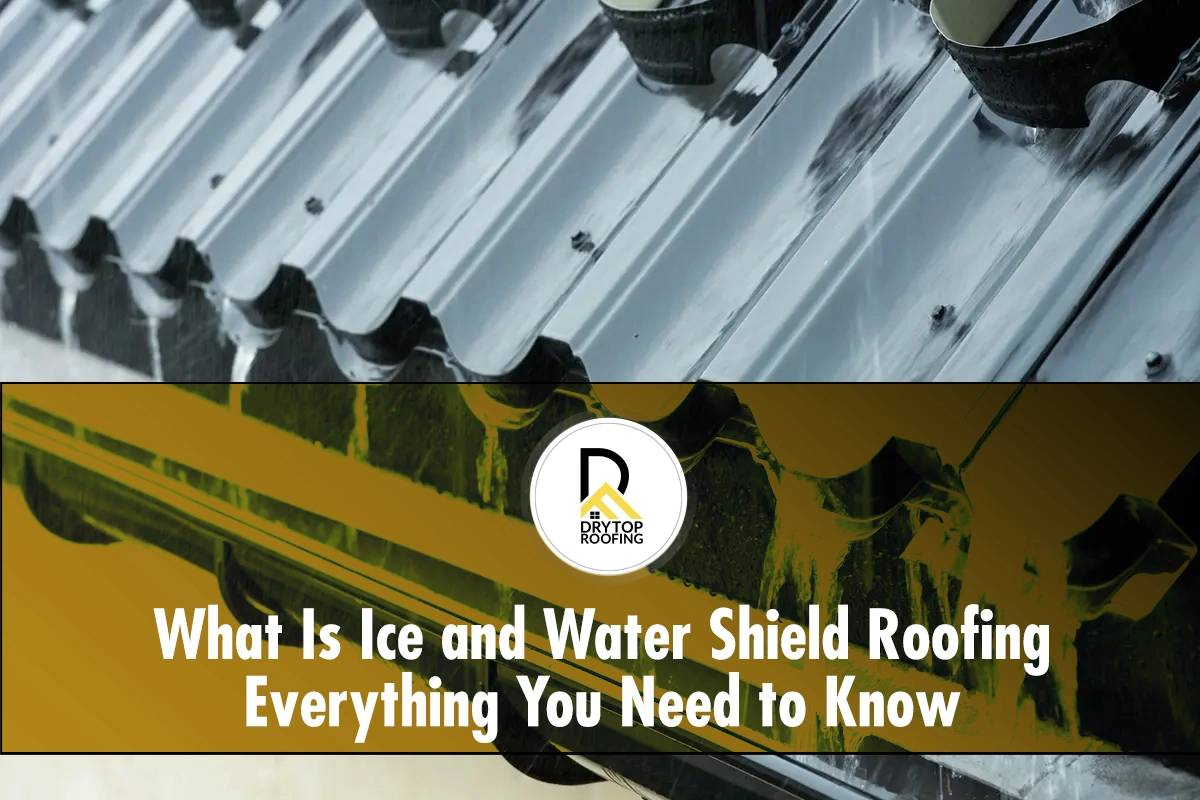
Your roof takes a beating from Arizona weather. Monsoon rains, intense heat, and hailstorms all pressure your home's first line of defense. Beneath your shingles or tiles, ice and water shield roofing can mean the difference between a minor roof issue and major interior water damage. That protective layer is called ice and water shield, a self-adhesive waterproof membrane. Despite its name, ice and water shield roofing is crucial for Arizona homes. It guards against wind-driven rain from monsoons, prevents water backup in roof valleys, and stops leaks around roof penetrations, such as vents and chimneys. Key Takeaways Ice and [...]
Roof Ventilation Explained: Why It Matters and How It Works
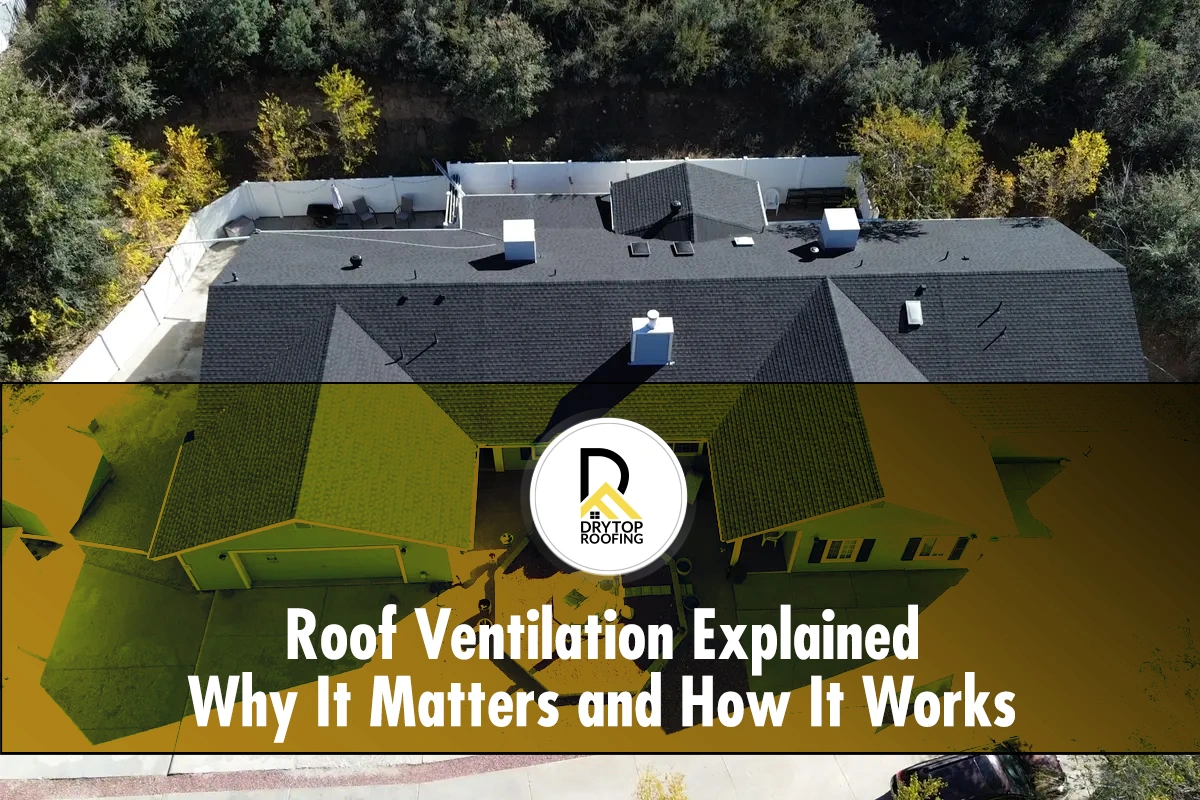
Your roof does more than block rain and sun. Its ventilation system constantly protects the roof structure and keeps your home comfortable. Most homeowners ignore roof ventilation until costly damage appears. Proper roof ventilation extends roof life and controls energy bills. In Arizona, where summer temperatures exceed 100 degrees, ventilation is essential for roof longevity. Key Takeaways Roof ventilation moves hot, moist air out of your attic and draws in cooler outside air. Proper ventilation extends roof lifespan and lowers cooling costs by preventing heat buildup. Arizona homes need balanced intake and exhaust vents to handle extreme temperatures. Poor ventilation [...]
What Is Roof Underlayment and Why Does Your Roof Need It?
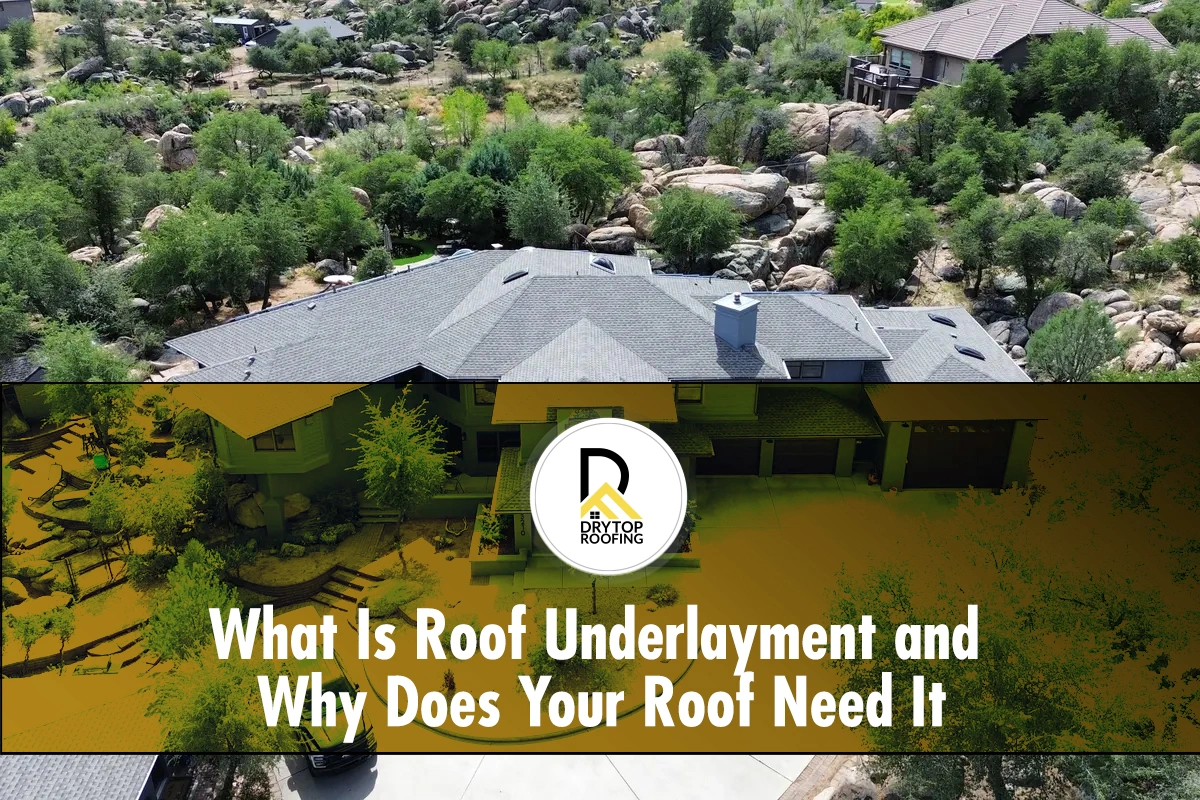
Your roof is more than the shingles or tiles you see from the street. Beneath that outer layer sits a component most homeowners ignore until water appears on their ceiling. Roof underlayment is a protective barrier installed directly on the roof deck, between the decking and the outer roofing material. It stops moisture, heat, and wind-driven rain from reaching the wood structure of your home. If you are planning a roof replacement or want to understand what protects your home, knowing how underlayment works can save you thousands in repairs. Key Takeaways Roof underlayment is a water-resistant or waterproof barrier [...]
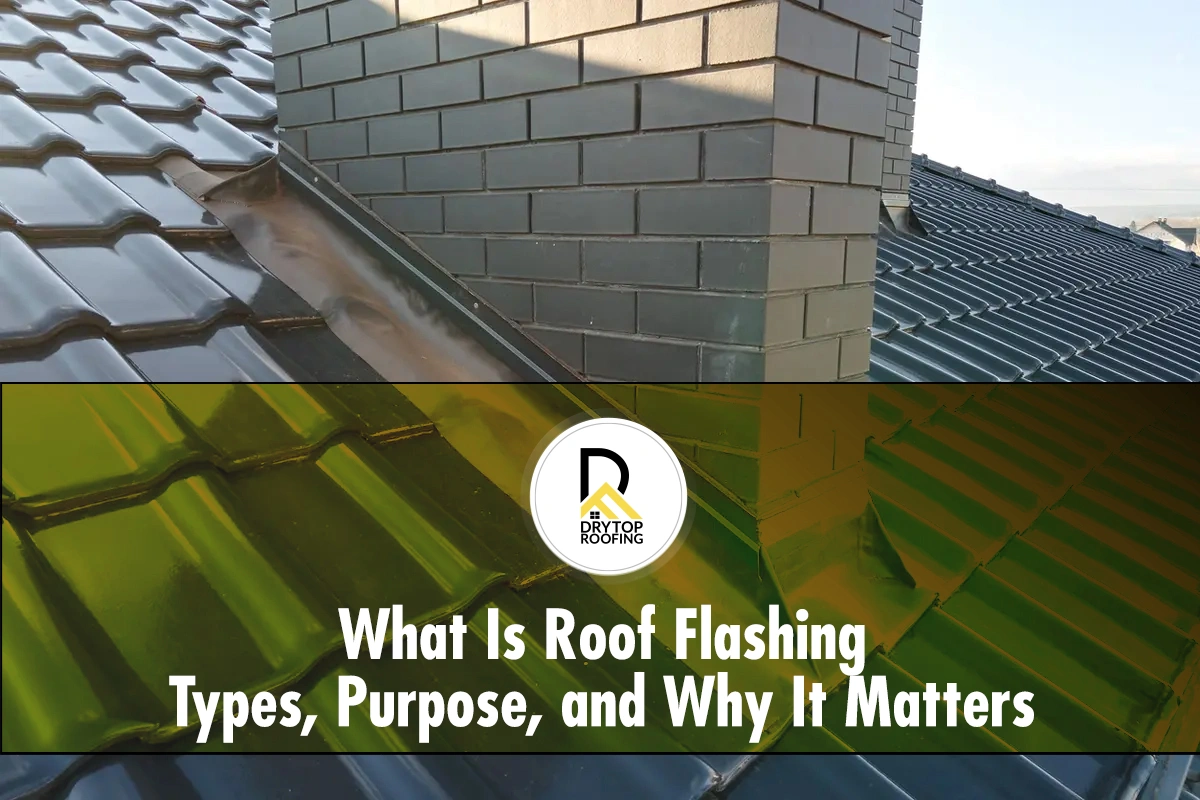
What Is Roof Flashing? Types, Purpose, and Why It Matters
Roof flashing is often overlooked but crucial for preventing leaks. This thin metal barrier sits at every seam, joint, and penetration, directing water away before it enters your home. If you see water stains near your chimney, rust around vent pipes, or leaks during Arizona monsoons, failing flashing is likely the cause. Knowing how flashing works helps you make smarter maintenance decisions. Key Takeaways Roof flashing is thin metal installed at vulnerable roof areas to redirect water and prevent leaks. Common types include step, valley, drip edge, chimney, and pipe flashing. Arizona's extreme heat causes flashing to warp, crack, and [...]

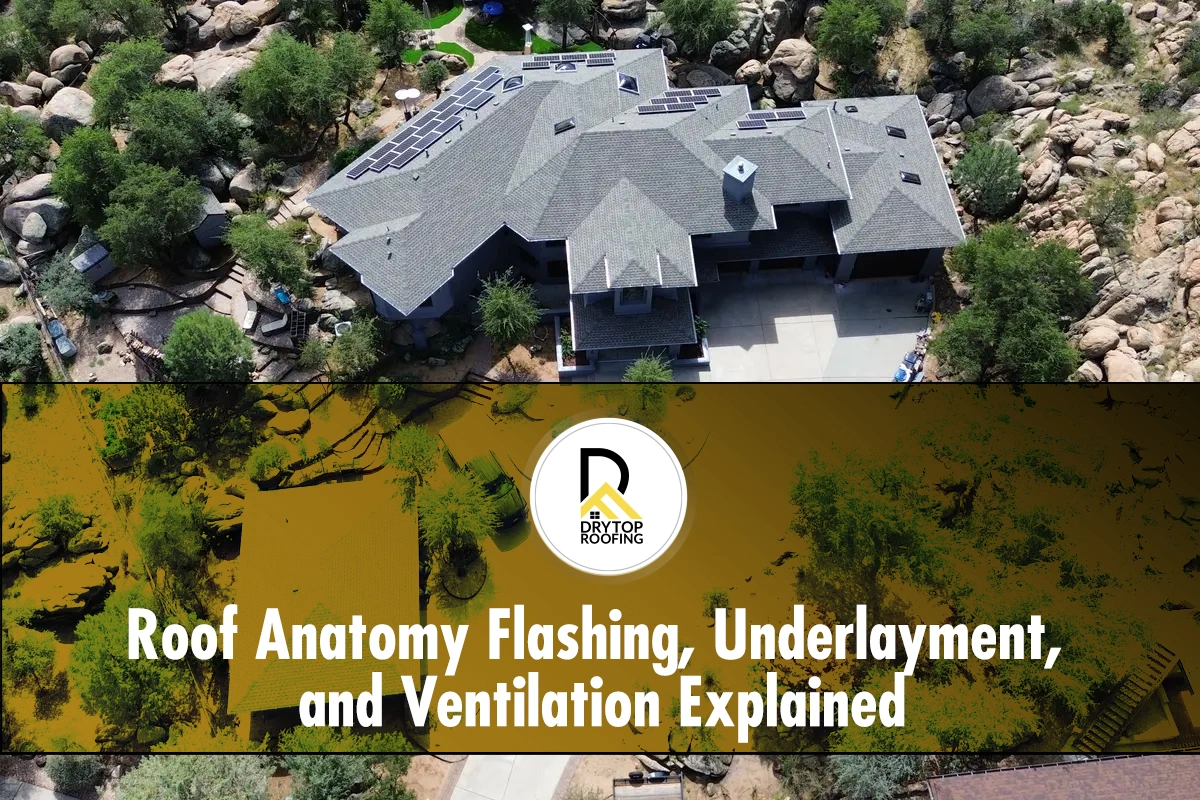
Roof Anatomy: Flashing, Underlayment, and Ventilation Explained
Your roof is more than shingles. Understanding roof anatomy helps you see how each layer works together to keep your Arizona home dry, cool, and sound. Beneath the surface lies a system of layers, including flashing, underlayment, and ventilation, each serving a unique purpose. If one fails, the rest are affected. Knowing their roles lets you detect issues early, ask smarter questions, and make better repair decisions. Before we explore underlayment and ventilation, let’s first break down the role of roof flashing and why its placement and condition are vital for your home’s protection. Flashing is thin metal installed at [...]