

The best time to replace a roof in Arizona is between October and December, when temperatures are cooler and the monsoon season has passed. This period offers the most favorable conditions for roofing projects, reducing weather delays and ensuring better material performance and workmanship. Scheduling during these months can help homeowners save time, avoid heat-related risks, and extend the life of their new roof.
When is the best time to replace a roof in Arizona? This article explains why timing and season matter, and highlights how materials, permits, and inspections impact your project. You’ll also find advice on when to replace your roof, a quick checklist, and key safety and contractor tips to ensure a smooth, successful installation.
Why Season Matters in Arizona
Arizona’s extreme climate makes timing crucial for roof replacement. Summer brings intense heat, which can soften shingles and adhesives, making installation more difficult and increasing the risk of material damage or poor workmanship.
Monsoon season, running from June through September, adds another layer of risk with sudden heavy rains, high winds, and dust storms that can delay projects and damage partially completed roofs. Choosing cooler, drier months ensures safer working conditions, better material performance, and a smoother, more efficient installation.
Quick Answer on The Best Time to Replace a Roof in Arizona
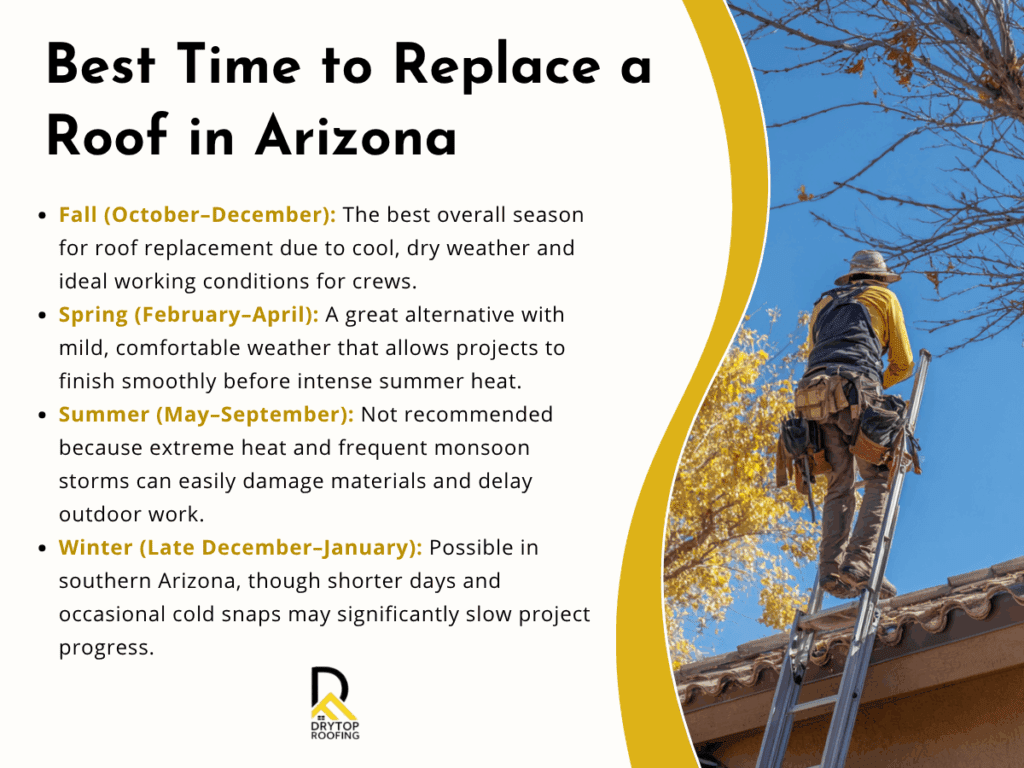
Choosing the right time for roof replacement is essential in Arizona’s extreme climate. Each season offers different advantages and challenges, so timing your project wisely can make a big difference in cost, quality, and safety.
1. Fall (October–December)
This is the best time to replace a roof in Arizona. Temperatures are cooler, the monsoon season has ended, and contractors can work efficiently without heat or weather interruptions. These conditions help ensure better installation quality and longer-lasting materials.
2. Spring (February–April)
Spring is another great time for roof replacement. The weather is mild, and homeowners can complete projects before the extreme summer heat begins. It’s also an ideal window for scheduling inspections and maintenance.
3. Summer (May–September)
Summer is not recommended for full replacements due to extreme heat and monsoon storms. High temperatures can cause roofing materials to soften, while sudden rain and winds create safety hazards and delays. Only emergency repairs should be done during this season.
4. Winter (Late December–January)
Winter can be a decent option in southern Arizona where freezing is rare. However, shorter daylight hours and occasional cold snaps can slow down projects in some areas.
Overall, the most reliable time to replace your roof in Arizona is during fall or early spring, when the weather is stable, materials perform best, and roofing crews can deliver top-quality results.
Best Roofing Material for Arizona: Choosing the Right Roof for Your Home
Replacing a roof on a 2,200-square-foot house in Arizona requires careful planning that accounts for materials, labor, and environmental conditions. Understanding regional pricing helps homeowners balance cost with performance and longevity.
Selecting durable materials suited for Arizona’s heat and storm cycles ensures that the investment holds value over time. Partnering with licensed, reputable contractors further protects both property and finances.
For those evaluating long-term options and regional durability, Best Roofing Material for Arizona explores which roofing types offer the greatest return on investment. Informed decisions about design, materials, and maintenance preserve comfort, safety, and value for years to come.
Material Choice Matters (Arizona-Specific Lifespans & Tradeoffs)
Arizona’s intense sun, heat, and seasonal storms can shorten the lifespan of certain roofing materials, making the right choice essential for durability and efficiency. Here’s how the most common roofing materials perform in Arizona’s climate.
- Asphalt Shingles: The most affordable option, lasting around 15–25 years in Arizona. However, high temperatures can cause faster fading, curling, and material breakdown over time.
- Clay or Concrete Tile: Highly durable and heat-resistant, often lasting 40–50+ years. While tiles themselves last decades, the underlayment may need replacement every 15–20 years.
- Metal Roofing: Reflects heat effectively and offers a long lifespan of 30–50 years. It’s lightweight, energy-efficient, and performs well against Arizona’s sun and storms.
- Foam Roofing (for flat roofs): Common in Arizona, foam roofs provide excellent insulation and UV resistance, lasting about 20–30 years with regular maintenance and recoating.
Choosing the right roofing material based on Arizona’s weather conditions ensures better longevity, energy savings, and long-term value for your home.
Permits, Inspections, Insurance & Hoa : Don’t Forget These
Before starting a roof replacement in Arizona, it’s important to take care of the legal, safety, and regulatory requirements that can affect your project timeline and budget. Here’s what homeowners should keep in mind.
- Permits: Many Arizona cities require roofing permits, especially for full replacements or material changes. Always check with your local building department to avoid delays or fines.
- Inspections: City inspectors may review your project to ensure it meets code standards and safety requirements, helping you protect your investment and warranty coverage.
- Insurance: Home insurance typically covers storm or accidental damage but not normal wear and tear, so review your policy before filing a claim or starting work.
- HOA Rules: Many homeowners’ associations have specific guidelines on roof colors, materials, and contractor approvals—get HOA clearance before scheduling your project.
Taking care of these details early helps prevent costly setbacks, ensures compliance with local regulations, and keeps your roofing project running smoothly from start to finish.
Signs You Need a Replacement (Don’t Wait for a Big Leak)
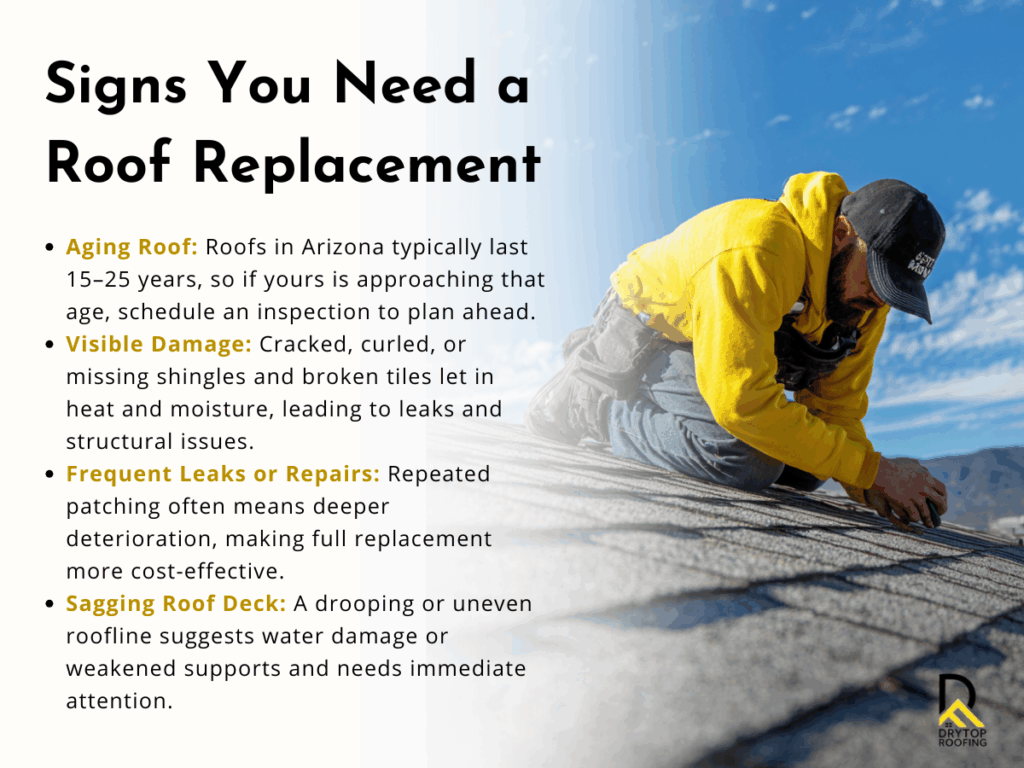
Knowing when to replace your roof can save you from costly repairs and interior damage. Arizona’s heat, sun, and storms can wear down materials faster, so catching early warning signs is key.
1. Aging Roof
Most roofs in Arizona last between 15 and 25 years depending on material and maintenance. If your roof is nearing this age, it’s time to schedule an inspection to plan for replacement before problems develop.
2. Visible Damage
Cracked, curled, or missing shingles and broken tiles are clear signs of wear. These allow heat and moisture to penetrate, which can lead to leaks and structural damage over time.
3. Frequent Leaks or Repairs
If you find yourself patching the same spots repeatedly, it may be more cost-effective to replace the entire roof. Persistent leaks often indicate widespread deterioration beneath the surface.
4. Sagging Roof Deck
A drooping or uneven roofline signals possible water damage or weakened support structures. This issue should be addressed immediately to prevent more serious and expensive damage.
Recognizing these signs early lets you plan your roof replacement on your own timeline, avoiding emergency repairs during Arizona’s harshest weather seasons.
How to Choose the Right Time for Your House : Short Checklist
Choosing the right time to replace your roof helps you avoid weather delays, secure better pricing, and ensure high-quality installation. Use this quick checklist to plan effectively and confidently.
- Check Roof Age & Condition: Schedule a professional inspection to determine if your roof is nearing the end of its lifespan or showing early signs of damage.
- Avoid Monsoon & Heat: Steer clear of the June–September window, when storms and extreme heat make installation risky and inefficient.
- Confirm Permits & HOA Rules: Verify all requirements early to prevent approval delays or costly rework later.
- Review Warranty & Materials: Some roofing materials and warranties have specific installation temperature limits—always check before scheduling.
- Gather Multiple Estimates: Get at least three quotes to compare pricing, materials, and timelines for your project.
- Plan for Ventilation & Insulation: Upgrading these during roof replacement improves energy efficiency and roof longevity.
- Schedule During Ideal Months: Aim for October–December or February–April for the best weather and contractor availability.
By following this checklist, you can confidently plan your roof replacement for maximum efficiency, quality, and long-term value.
Typical Timeline & What to Expect
Understanding what to expect during a roof replacement helps you prepare for the process, minimize disruptions, and keep your project on schedule. Here’s a breakdown of the typical timeline from planning to completion.
1. Inspection and Estimate (1–2 weeks)
A roofing contractor will assess your roof’s condition, discuss materials, and provide a detailed estimate. Getting multiple quotes during this stage ensures you find the best balance of quality, cost, and timeline.
2. Permitting and Scheduling (1–3 weeks)
Once you approve the bid, the contractor will secure any necessary permits and schedule your installation. The timeline may vary depending on your city’s permit process and the contractor’s workload.
3. Preparation and Delivery (1–2 days)
Roofing materials are delivered, and your property is prepped by protecting landscaping and removing old materials. This step ensures a clean, safe workspace for the installation crew.
4. Roof Installation (1–5 days)
The new roof is installed, with timing depending on your home’s size, roofing material, and any required repairs. Experienced crews can typically complete most residential roofs in just a few days.
5. Final Inspection and Cleanup (1–3 days)
After installation, the contractor conducts a final inspection, ensures quality standards are met, and cleans up all debris. You’ll then receive warranty information and documentation for your records.
By understanding each phase of the process, you can better coordinate with your contractor, avoid surprises, and ensure a smooth, successful roof replacement from start to finish.
Safety & Contractor Tips
Roof replacement can be hazardous work, especially in Arizona’s extreme weather. Prioritizing safety and hiring the right contractor ensures a smooth, high-quality, and worry-free project.
1. Hire Licensed and Insured Roofers
Always choose contractors who are properly licensed, bonded, and insured. This protects you from liability and ensures they meet Arizona’s professional and safety standards.
2. Verify Experience and References
Ask for recent project photos and customer reviews, especially for roofs similar to yours. An experienced local roofer understands Arizona’s climate challenges and can recommend the best materials and timing.
3. Confirm Safety Procedures
Make sure your contractor follows OSHA safety guidelines, uses proper equipment, and has heat or weather contingency plans in place. This minimizes risks to workers and your property during installation.
4. Get Everything in Writing
Have a detailed contract outlining materials, costs, timelines, warranties, and cleanup responsibilities. Clear documentation helps prevent misunderstandings and protects your investment.
5. Plan for Weather Interruptions
Arizona’s weather can change quickly, especially during monsoon season. Ensure your contractor has a plan to secure your roof and materials in case of sudden rain or high winds.
By choosing qualified professionals and emphasizing safety from start to finish, you’ll protect your home, your investment, and everyone involved in your roofing project.
Final Thoughts
Replacing a roof in Arizona requires careful planning and timing to ensure durability. The best windows are the cooler, drier months October to December or February to April. Using the right materials, hiring a licensed contractor, and securing permits helps create a long-lasting, energy-efficient roof.
Planning ahead minimizes weather risks, extends your roof’s lifespan, and protects your home’s value. Regular inspections and maintenance keep your roof performing well year-round, providing peace of mind against Arizona’s harsh climate.