

Arizona homes face a climate that wears out roofs faster than many people expect. Long stretches of intense sunshine, high temperatures, and yearly monsoon storms put pressure on every type of roofing material.
Most roofs in the state last between fifteen and twenty five years, although the exact number depends on maintenance, ventilation, and the material used. How often should a roof be replaced in Arizona? This guide explains how long roofs really last, how homeowners can recognize aging signs early, and what to expect during a replacement.
How Often Should a Roof Be Replaced in Arizona
Many homeowners begin asking this question once their roof passes the fifteen year mark. The answer depends on the type of roof, the slope of the home, and how much direct sunlight the roof receives throughout the year.
Arizona’s heat causes shingles to dry out faster and underlayment beneath tile roofs to break down sooner, which shortens the lifespan compared to other states. The best way to predict timing is to combine your roof’s typical lifespan with regular inspections from a professional.
Arizona’s climate affects each material differently. Asphalt shingles tend to wear out the fastest because their protective granules loosen in the heat, making them more vulnerable to wind and storm damage.
Tile roofs last longer but rely on underlayment that usually needs replacement much earlier than the tiles themselves. Foam roofs perform well when they are maintained properly but deteriorate quickly when recoating is delayed.
Knowing how different materials age helps you plan ahead. Some homeowners wait until they see interior leaks before taking action, but exterior signs of wear often appear years earlier. Replacing a roof before major damage occurs helps protect both the structure and the interior of the home.
Typical Lifespans for Arizona Roofing Materials
| Roofing Material | Typical Arizona Lifespan | Key Detail |
|---|---|---|
| Asphalt Shingles | 15 to 25 years | Heat and UV shorten lifespan |
| Tile underlayment | 15 to 20 years | Fails long before tiles |
| Concrete or clay tiles | 40 to 50 years | Tiles rarely the reason for replacement |
| Wood Shakes | 30 to 50 years | Performs well with good attic ventilation |
| Foam roofing | 20 to 30 years | Must be recoated consistently |
These ranges are helpful for planning but not exact. Your own timeline depends on the home’s location, shade, ventilation, and level of care over the years. Annual or biannual inspections make it easier to understand how much life your roof has left.
How to Tell When Your Roof Is Wearing Out
Roofs in Arizona tend to show exterior signs of aging long before leaks reach the interior. The sun slowly weakens the protective layers, and storms can loosen materials even when the roof still appears intact. Small exterior changes often reveal much larger issues underneath the surface. Common signs of wear include cracking, curling, soft spots, or unusual discoloration after heatwaves or storms.
Shingle roofs often exhibit curling edges when the material begins to dry out. This happens because the sun pulls moisture from the shingles and weakens the adhesives that keep them secure. Missing granules also appear as bald spots that expose the layer below, making the roof more vulnerable to water penetration.
Tile roofs behave differently. Instead of curling, they may develop cracks from heat pressure or storm impact. When tiles shift out of place, the underlayment becomes exposed, and this is often the main reason water eventually reaches the interior. Foam roofs usually show deterioration through soft areas or small dips where water collects.
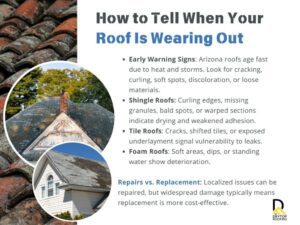
Signs Arizona Homeowners Should Watch For
- Shingles that look warped or curled when viewed from the street
- Cracked tiles or small openings where underlayment is visible
- Dark streaks or color changes after rain
- Soft or spongy spots that sag slightly under weight
- Debris from roof materials around the yard after storms
These indicators do not always mean immediate replacement is necessary. However, when several appear at the same time, the roof is usually approaching the end of its useful life.
A professional inspection can help determine whether repairs are still practical or if the roof has reached a point where replacement is the safer choice.
When Repairs Are No Longer Effective
Repairs work well early in a roof’s life, especially when the problem is isolated. Replacing individual shingles, tiles, or sections of underlayment can extend the roof’s lifespan.
Once underlying damage becomes widespread, repairs often fail to hold up against Arizona’s climate. At that stage, repeated patching becomes more expensive than planning a full replacement.
What Arizona Homeowners Should Expect During Replacement
Roof replacement in Arizona follows a predictable process that becomes easier to manage when homeowners understand the steps. Contractors begin with an inspection, provide an estimate, and guide you through scheduling based on weather conditions. The timeline usually ranges from one to five days depending on the type of roof and the size of the home. A smooth experience starts with clear communication and proper preparation before the crew arrives.
The first step after scheduling is preparation of the property. Contractors protect landscaping, move equipment into place, and create safe access points for disposal and delivery. Tear off begins next, which includes removing old shingles, tiles, underlayment, and other layers. Once the roof is cleared, the deck is inspected to check for any water damage or soft areas that need repair.
After the deck is ready, the new underlayment and flashing are installed. This is a critical stage because these layers provide the primary protection against moisture. The final step is installing the new roofing material, followed by a cleanup process that includes collecting nails, sweeping the walkways, and clearing leftover debris.
Preparing Your Home for the Project
Simple steps can make the process easier for both you and the crew. Move vehicles away from the driveway so trucks and materials can access the home. Cover or relocate outdoor furniture that sits close to the work area.
Secure items in the attic because vibrations and dust may shift stored belongings. If you have pets, keep them indoors or in a calm space because the noise can be stressful.
Typical Replacement Timeline
Most Arizona homeowners can expect a straightforward schedule. Day one usually involves tear off and inspection of the deck. The next day focuses on underlayment and preparation for the new materials.
Installation generally takes one to three additional days depending on the roof type. Tile roofs may take longer because each tile must be placed individually. Foam roofs need steady weather conditions for the material to cure properly.
Understanding this timeline helps you plan for noise, debris, and crew presence around your property. Roofing crews in Arizona often begin early in the morning to avoid the strongest midday heat.
Cost and Timing Considerations for Arizona Roofs
Roof replacement costs vary depending on material choice, roof size, and the level of work required. Arizona homeowners also see seasonal patterns in pricing and availability.
Contractors tend to be busiest during spring and fall when the weather is more comfortable for outdoor work. Planning ahead helps you secure favorable scheduling and gives you time to compare estimates. Replacing your roof during cooler months often leads to smoother installation and better long term performance.
Material cost is the largest factor. Asphalt shingles are the most affordable and widely used. Tile roofs cost more and require additional labor but offer a long lifespan with proper maintenance.
Metal roofs sit higher in price but provide strong heat reflection, which is valuable in Arizona’s climate. Foam roofing is common on flat homes and falls in a moderate price range, although periodic recoating adds long term maintenance costs.
Ventilation upgrades also influence the total price. Homes with poor attic airflow experience higher temperatures that shorten the life of any roof material. Adding ventilation during a roof replacement helps maintain a stable environment under the roof, which can extend the lifespan of both the roof and the insulation.
Typical Pricing for Common Roof Types
| Roofing Material | Approximate Cost per Square Foot |
|---|---|
| Asphalt Shingles | Three to five dollars |
| Tile roofing | Seven to fifteen dollars |
| Metal roofing | Nine to sixteen dollars |
| Foam roofing | Five to eight dollars |
Costs increase for complex roof designs or homes with multiple skylights, chimneys, or intersecting sections. These features require extra labor and detailed installation. Getting at least three estimates helps you understand the range of prices in your area.
Choosing the Best Time to Replace Your Roof
The best months for roof replacement in Arizona are typically October through March. Temperatures are milder, and roofing materials install more cleanly during cooler weather. Some homeowners choose early spring so their roof is ready before the monsoon season. Replacing a roof before storms arrive reduces the risk of emergency repairs during heavy rains or high winds.
Planning the replacement early also gives you time to consider material upgrades. If you have had heat buildup in your attic or high summer cooling bills, this is a good time to explore energy-saving materials or improved ventilation. These upgrades help your home perform better in Arizona’s hot climate.
Does Insurance Cover Roof Replacement in Arizona
Insurance may cover roof replacement when the damage is caused by a sudden and unexpected event. Examples include strong wind lifting shingles, flying debris from a storm, or a fallen tree branch. Regular aging and wear from heat or sunlight are not covered because they are considered maintenance issues. If your roof has storm-related damage, documenting the condition quickly and contacting your insurer promptly helps support your claim.
Most insurance companies ask for photos, an inspection report, and a clear description of what caused the damage. If your claim is approved, the insurer typically issues an initial payment to begin work and a final payment once the project is complete.
Policies vary, so reviewing your deductible and coverage limits helps you understand what your plan includes. This knowledge prepares you for future weather seasons and helps you protect your home more effectively.